7-J1, Main Canal Bank, Johar Town, Lahore.
 Info@farmdynamics.pk
7-J1, Main Canal Bank, Johar Town, Lahore. Info@farmdynamics.pk


 November 17, 2026
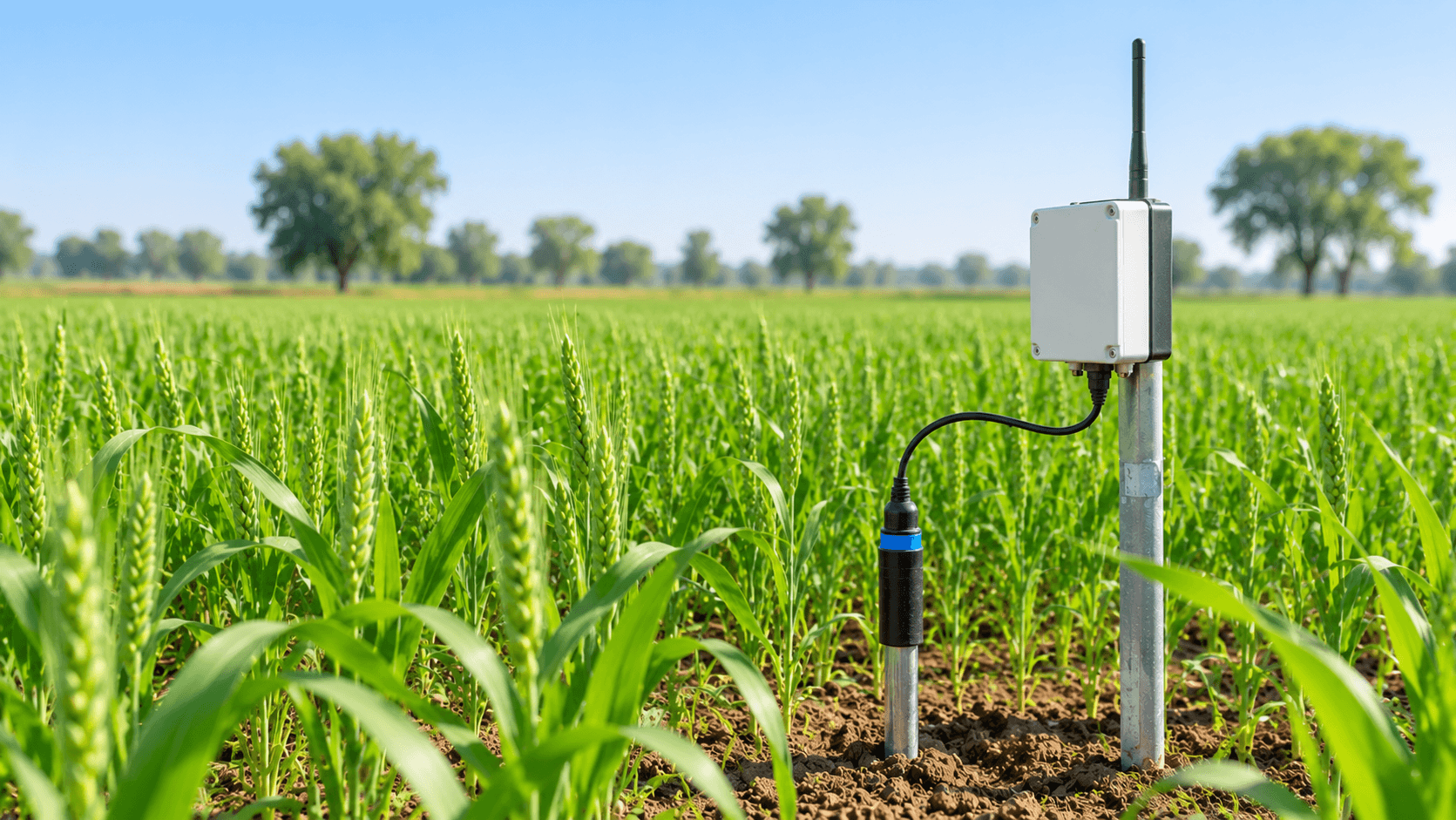
Water is the most valuable input on any farm in Pakistan, and it is getting scarcer every year. Falling groundwater levels, uneven canal supply and rising electricity and diesel costs mean that every irrigation matters. Yet most farmers still decide when to irrigate by looking at the crop, checking the surface of the soil or following a fixed schedule. These methods are familiar, but they are guesswork. Soil moisture sensors replace that guesswork with real data from the root zone.
In this guide you will learn how soil moisture sensors work, how they save water and improve yields, and how to start using them on your own farm.
The surface of the soil can look dry while there is plenty of moisture a few inches below. It can also look wet while the roots deeper down are starving for water. When farmers cannot see what is happening underground, two costly mistakes follow.
Over-irrigation. Applying too much water wastes water, fuel and electricity. It also pushes nutrients such as nitrogen below the root zone, where the crop can no longer use them. Waterlogged soil starves roots of oxygen, encourages disease and can add to salinity problems over time.
Under-irrigation. Irrigating too late stresses the crop at critical growth stages. Even a short period of water stress during flowering or grain filling can reduce the final yield.
Both mistakes lower profits. The solution is to irrigate precisely: the right amount, at the right time, in the right place.
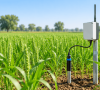
A soil moisture sensor is a probe placed in the field that measures how much water is available in the soil. Advanced sub-surface monitoring systems, such as the Enviroscan sub-surface monitoring system offered by Farm Dynamics Pakistan, use sensors installed at multiple depths along a single probe. This gives a complete picture of how water moves through the soil profile, from the surface down to the deeper root zone.
The readings are sent automatically to a screen or software, so the farmer or farm manager can see what is happening in the field without digging or guessing. For a fuller picture, many farms combine soil data with weather monitoring and soil profiling. This joined-up approach is known as Integrated Crop Management (ICM), where soil, water, nutrients and pests are managed together.
Think of the soil as a water tank for your crop, and the sensor as the gauge that shows how full it is. Three terms help you read the data:
Different soils behave differently, which is why one irrigation schedule rarely suits every field:
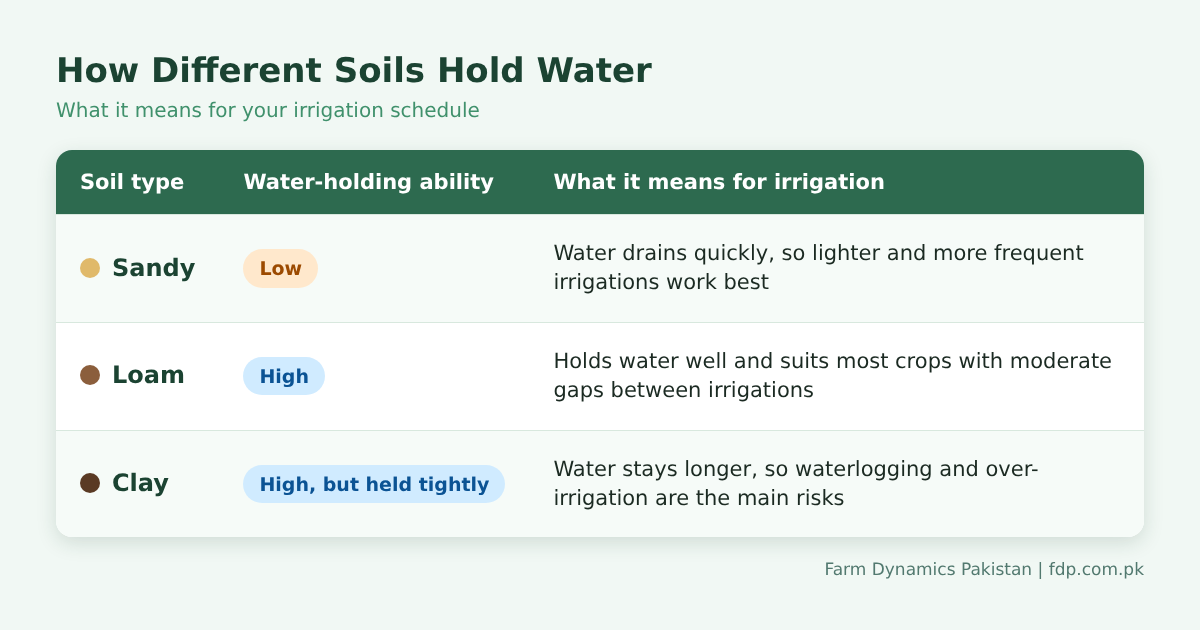
Because every field is different, readings from your own soil are more reliable than general rules of thumb. A soil and crop profiling check before installation helps you understand the soil you are working with.
1. You irrigate only when the crop needs it.
Instead of following a calendar, you irrigate when the data shows that moisture has dropped to a set level. If the soil still holds enough water, you can safely wait.
2. You stop irrigating at the right moment.
Sensors show when the soil has reached its ideal moisture level, so you can stop before water is lost below the root zone.
3. You see how deep the water really goes.
Multi-depth readings reveal whether irrigation is reaching the roots or draining past them. This helps you fine-tune the duration of each irrigation.
4. You reduce pumping costs.
Fewer unnecessary irrigations mean fewer hours of running tube wells and pumps, which directly cuts electricity or diesel expenses.
Saving water is only half of the benefit. A crop that receives the right amount of water at the right time grows better.
Soil moisture monitoring is useful on almost any farm, but it is especially valuable for:
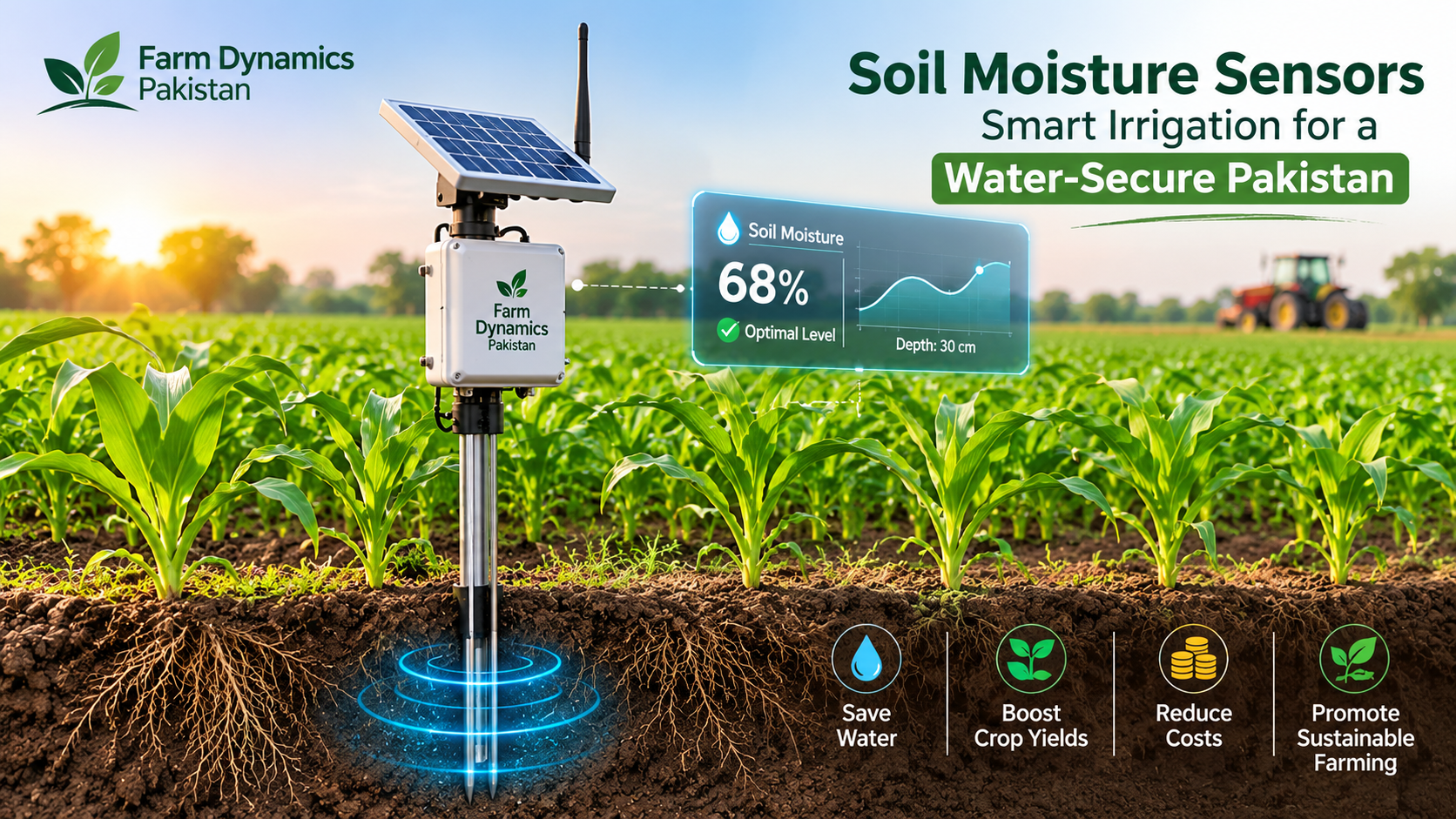
Sensors tell you when and how much to irrigate, and your irrigation system delivers the water. The two work best together:
You do not need to change your whole farm at once. A practical approach is:
Many farmers find that a single season of data is enough to understand their soil and make smarter irrigation decisions in every field.
As water becomes more limited and input costs continue to rise, farms that measure will outperform farms that guess. Soil moisture sensors give you the information you need to save water, lower costs and protect your yield, season after season.
Farm Dynamics Pakistan offers sub-surface soil moisture monitoring along with complete irrigation solutions, advanced machinery and quality farm inputs, backed by expert advice and after-sales service. To find out which monitoring system suits your crop and soil, contact our team, call 03000 405 405 or email Info@farmdynamics.pk.
It depends on how uniform your fields are. A good starting point is one probe for each area with similar soil, crop and irrigation method.
No. Small and medium farms can start with a single field, see the results, and then expand.
No. Sensors support your decisions with data, but your knowledge of the crop and the field still matters.
Soil moisture matters for every crop, but the ideal range differs between crops and growth stages, so thresholds should be set for each one.