7-J1, Main Canal Bank, Johar Town, Lahore.
 Info@farmdynamics.pk
7-J1, Main Canal Bank, Johar Town, Lahore. Info@farmdynamics.pk


 October 28, 2026
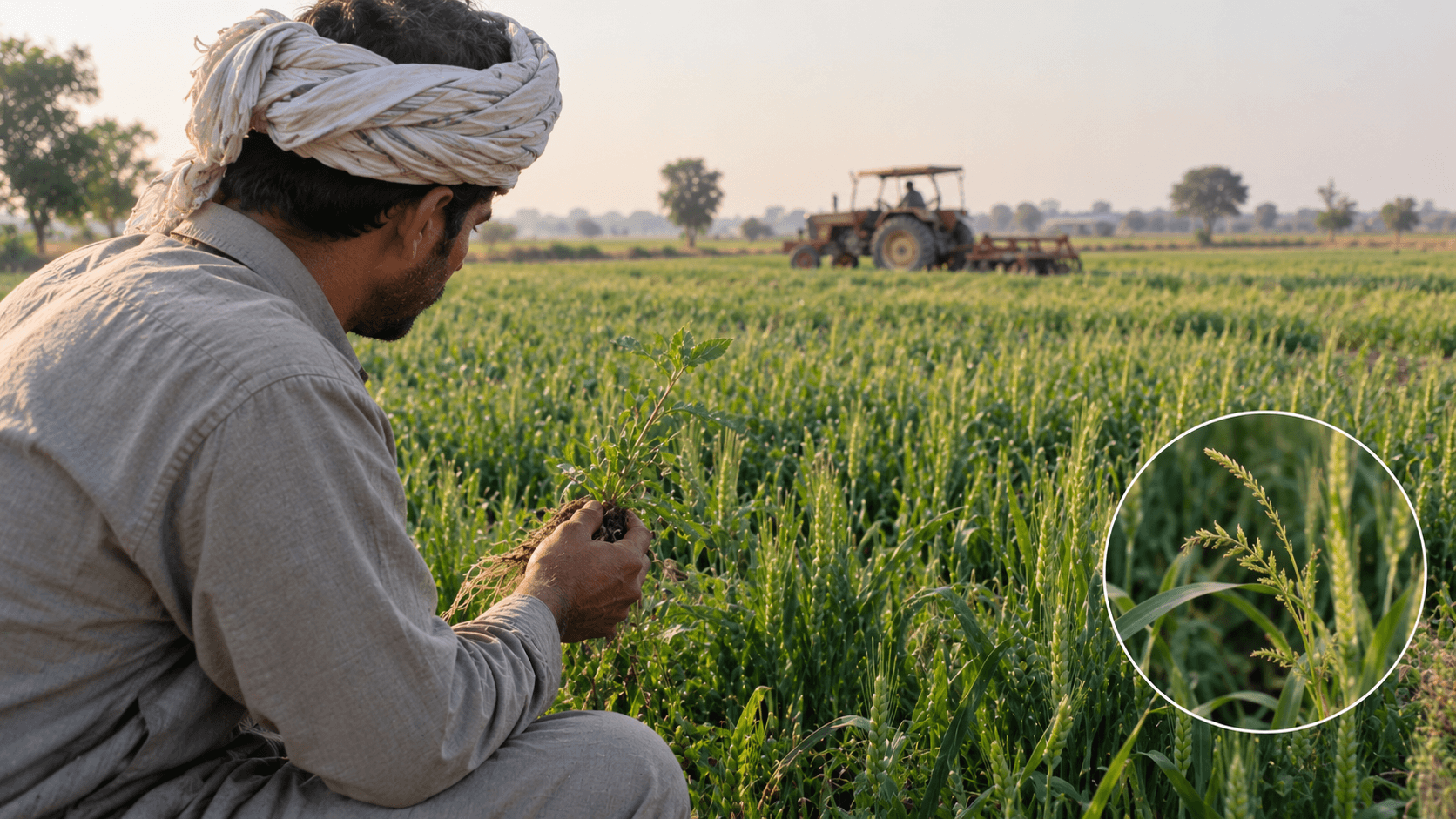
Wheat sowing is a crucial stage of the farming season, as the right decisions at planting time can significantly affect crop growth and final yield. For farmers in irrigated Punjab, sowing wheat within the recommended period, selecting a suitable variety and using quality seed are important steps towards establishing a healthy crop. Proper field preparation and timely irrigation also help create better conditions for germination and early plant growth. For the 2026–27 wheat season, the recommended sowing window for irrigated areas of Punjab is November 1–20, with a seed rate of 40–45 kg per acre for timely sowing. However, the best variety and cultivation practices may vary depending on the district, soil conditions, water availability and sowing method.
In this guide, Farm Dynamics Pakistan covers the essential wheat sowing practices for Punjab farmers, from selecting the right seed and preparing the land to managing fertilizer, weeds and the first irrigation. These practical guidelines can help farmers plan the sowing process more effectively and avoid common mistakes during the early stages of crop establishment.
For irrigated areas of Punjab, the recommended sowing window is November 1 to November 20. Rain-fed areas follow a different schedule because farmers depend on residual soil moisture after the monsoon. Check the recommended dates for your district and selected variety rather than treating one date range as suitable for every field.
Late sowing can shorten the crop’s effective growing period. Cooler soil may slow emergence and reduce tillering, while later grain filling can expose the crop to rising temperatures. Heat during grain filling can reduce grain weight and final yield. Agricultural advisories have cited an approximate yield penalty of 15–20 kg per acre for each day of delay after November 20. Treat this as a general field estimate, not a guaranteed loss for every farm: actual effects depend on variety, weather, soil moisture and crop management.
Not necessarily. In irrigated fields, sowing too early may encourage excessive early growth and can alter the timing of crop development. Rain-fed farmers may need to sow earlier to make use of available moisture. Follow the recommended window for your area and variety.
Practical tip: If the previous crop is delaying field clearance, arrange machinery and inputs in advance. Where rice residue is present, consider a suitable residue-management sowing system rather than burning the stubble.
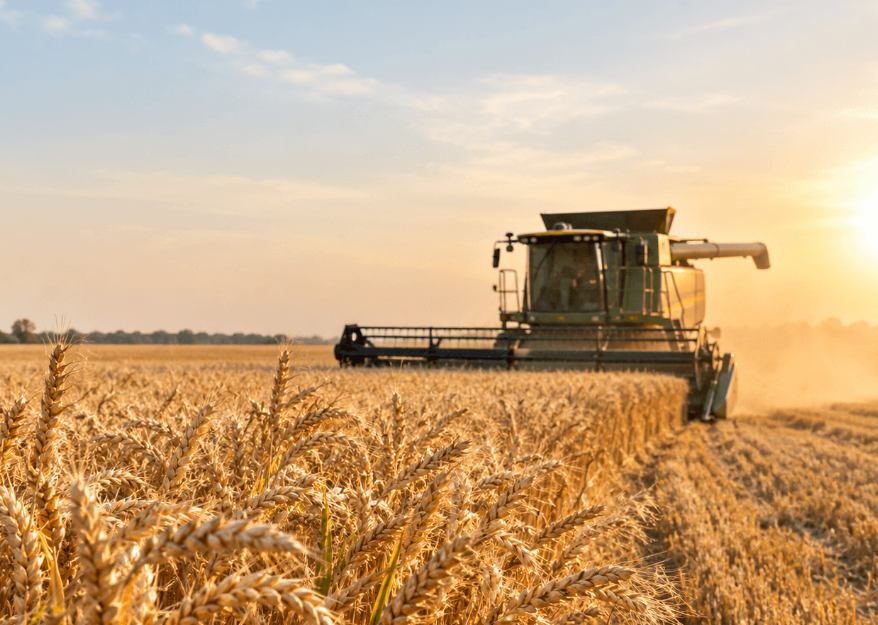
Selecting the right wheat variety is an important step towards achieving a healthy crop and good yields. However, the best choice depends on more than yield potential alone. Farmers should consider the variety’s current approval status, local growing conditions, water availability and expected sowing date before making a decision. Choosing a variety suited to your farm can help improve crop establishment and reduce risks during the growing season. Consider these factors when selecting a wheat variety:
Purchase seed from Punjab Seed Corporation outlets, registered seed companies or authorized dealers. Keep the receipt and seed-bag tag so you can verify the variety and seed lot. The source guidance uses 85% germination as the minimum reference point. You can estimate germination by placing 100 seeds in a moist cloth and counting the seeds that sprout after five to seven days. For an official recommendation, use a recognized seed-testing service where available. If germination is below the recommended level, ask an agriculture officer how to adjust the seed rate.
A level field and a fine, moist seedbed help seeds emerge evenly and make irrigation more efficient. Field preparation should reflect soil texture, compaction, residue and the previous crop.
Rice stubble can make conventional field preparation difficult and time-consuming. Burning residue contributes to air pollution and removes organic material from the field. Where suitable for the field and available agricultural machinery, a Super Seeder or Happy Seeder can manage residue and sow wheat in one operation. Ask a local service provider or extension officer which system is appropriate for your soil and residue load.
Green manuring with suitable legumes, such as guar or jantar, can support soil structure and nutrient cycling when incorporated at the right stage. It requires advance planning—typically well before the next wheat crop—so consider it while planning the coming Kharif season.
Use the following figures as the starting point in the supplied guidance, then confirm the rate for your variety, sowing date and method.
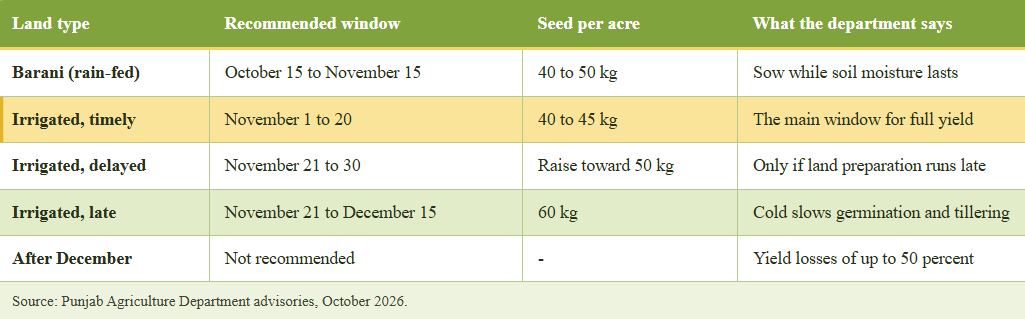
These figures assume good-quality seed. Germination, seed size, sowing method and field conditions can affect the final rate.
The source draft gives this calculation for seed lots below the 85% reference germination level:
Adjusted seed rate = Recommended rate × (85 ÷ actual germination percentage)
Example: If the recommended rate is 45 kg per acre and the seed lot tests at 75% germination:
45 × (85 ÷ 75) = 51 kg per acre (approximately)
Use this calculation as a guide and confirm adjustments with an agriculture officer, especially if the seed lot is poor or the sowing conditions are unusual.
A seed drill places seed in rows at a more consistent depth and spacing. This usually supports more uniform emergence and makes later crop management easier. Broadcasting (chatta) can produce uneven placement: some seed remains exposed, while some may be buried too deeply. Where broadcasting is unavoidable, follow local guidance on the rate and ensure seed is covered appropriately.
Seed treatment can help protect wheat against seed-borne diseases such as loose smut and bunt. Use only a product currently recommended and registered for the intended use, and follow its label and local agricultural advice for dose and handling.
Do not guess chemical doses or combine products unless the label or a qualified adviser specifically permits it.
For many Punjab farms, row sowing with a drill offers more consistent seed placement than broadcasting. The appropriate machine depends on the previous crop, residue level, soil condition, available equipment and service cost.
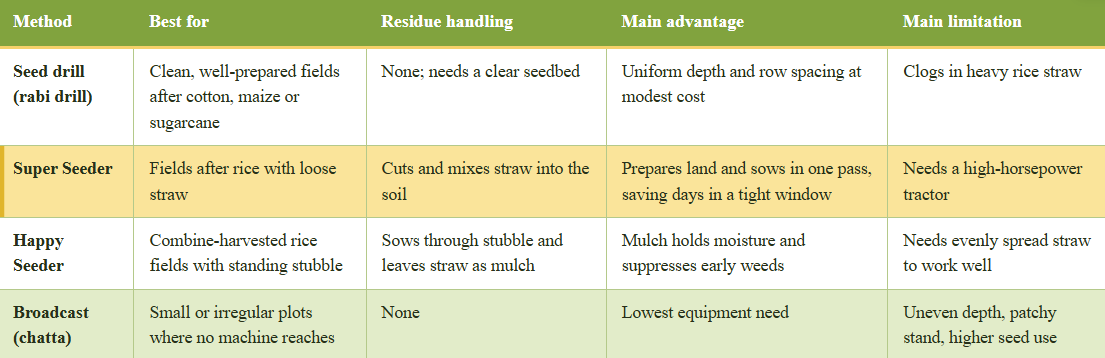
The source draft cites a typical sowing depth of around 4–5 cm for drill sowing. Actual depth should suit soil moisture, texture and equipment settings; check the machine and variety recommendations rather than relying on a single depth for every field.
For smaller farms, hiring a drill or Super Seeder from a local service provider may be more practical than purchasing equipment. Before the sowing season, check machinery availability, per-acre service charges, and whether the equipment is suitable for your field conditions. A Super Seeder generally requires a high-horsepower tractor with sufficient power to operate the machine effectively. Farmers considering support through programs such as the CM Punjab Green Tractor Scheme or Kissan Card should check the current eligibility criteria and official terms before making financial decisions.
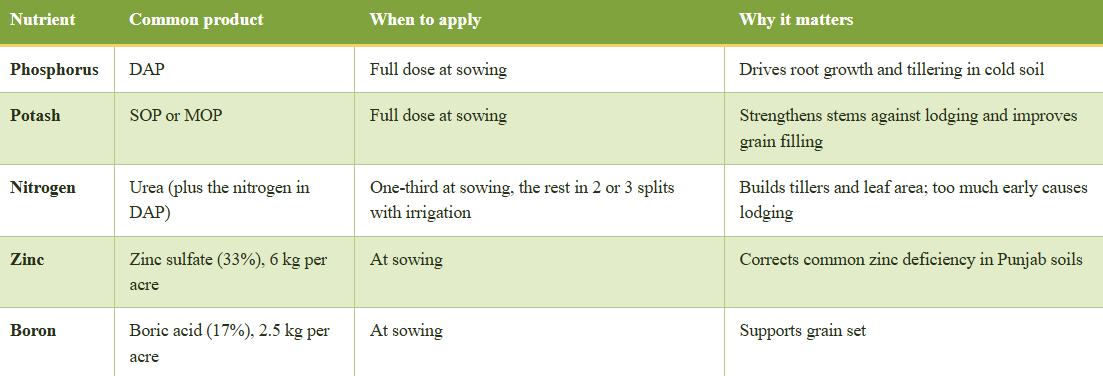
Fertilizer requirements vary depending on soil fertility, the previous crop, irrigation and yield targets. A soil test can help determine the nutrients your field needs and prevent unnecessary fertilizer costs. For irrigated wheat, a general approach is to apply phosphorus and potash, along with one-third of the nitrogen, at sowing, then split the remaining nitrogen between the first and second irrigations. Actual rates and timing should follow soil test results and current local agricultural recommendations.
Where suitable, use a seed drill for proper fertilizer placement. Placing fertilizer near the seed row can improve nutrient availability, but it must be positioned correctly to avoid seed damage. For more accurate fertilizer planning, collect representative soil samples from different parts of the field and submit them to an Agriculture Department soil and water testing laboratory or another recognized facility, following its sampling instructions.
The first six weeks are important for crop establishment. A uniform stand, timely irrigation and early weed monitoring can reduce competition while wheat plants are developing.
The supplied guidance places the first irrigation at around 20–25 days after sowing, when crown-root development begins. The actual date should be adjusted for soil texture, weather, rainfall, sowing depth and the field’s moisture condition. Water stress at this stage can limit tillering, while excessive irrigation can cause waterlogging. Sandy soils may need water sooner or more frequently than heavier soils. On clay soils, avoid over-irrigation and check the field before applying water. Check the weather forecast as part of irrigation planning.
If fertilizer is to be applied with irrigation, follow the locally recommended nitrogen schedule and dose for your field.
A dense, evenly established wheat crop can help suppress some weeds. Walk the field early and identify the weeds before deciding on a control method; grassy and broadleaf weeds may require different approaches.
Where a post-emergence herbicide is needed, choose a product registered for the weed and crop stage in your district. The source draft notes that spraying is often considered after the first irrigation when weeds are at the two-to-four-leaf stage, but the correct timing depends on the specific product label and field conditions.
Never choose or dose a herbicide based only on a general online schedule.
Before sowing, check your plan for these common problems:
Maintaining accurate field records helps farmers understand what works best for their land and improve decisions in future growing seasons. Record the sowing date, wheat variety, seed rate, sowing method, fertilizer applications, irrigation dates and any pest or disease problems. At harvest, note the yield from each field to compare results and identify which practices deliver better performance. These records can help farmers improve input use, identify recurring problems and plan more effectively for the next season. Farm Dynamics Pakistan supports growers exploring precision-agriculture approaches, including automated pest monitoring. Combine monitoring information with regular field scouting and advice from qualified agricultural professionals to identify crop problems early and make informed decisions about treatment, rather than relying on routine spraying alone
Before the drill enters the field, make sure you have:
A successful wheat crop starts with timely sowing, quality seed and proper field preparation. Farmers should select a suitable wheat variety, use the recommended seed rate and manage fertilizer, irrigation and weeds according to their field conditions. Paying attention to these basic practices can help establish a healthy crop, reduce avoidable input costs and improve yield potential. For irrigated Punjab, November 1–20 is the key sowing window used in this guide for the 2026–27 wheat season. However, farmers should also consider their district, soil conditions, water availability and the variety being planted. If sowing is delayed, seek local advice on adjusting crop management practices rather than following the same recommendations without changes.
Regular field monitoring is equally important throughout the growing season. Check crop emergence, soil moisture, weed growth and signs of pests or diseases so that problems can be addressed early. Keep records of field operations and crop performance to identify which practices work best for your farm. Farm Dynamics Pakistan encourages farmers to make informed, field-specific decisions and adopt practical farming approaches that support better crop management. With careful planning and timely operations, farmers can make better use of available resources and give their wheat crop a stronger start.
The Punjab Agriculture Department asks irrigated-area farmers to finish by November 20. It allows sowing until November 30 if land preparation runs late, and late sowing up to December 15 with a higher seed rate. Sowing after December can cut yield by up to half.
Use 40 to 45 kg per acre for timely irrigated sowing, 40 to 50 kg in barani areas, and 60 kg for late sowing after November 20. Raise these amounts if your seed germinates below 85 percent.
No single variety wins everywhere. Yield depends on your sowing date, water supply and local rust pressure. Choose from the department’s approved list, such as Akbar-19, Dilkash-20, Urooj-22 or the newer Falak-24 and Sawera-24 for irrigated land, and confirm the sowing range with your local extension office.
Yes, up to December 15, but expect a lower yield. Raise the seed rate to 60 kg per acre, prepare the seedbed quickly, and give the first irrigation on time to protect the tillers the crop does produce.
As of late September 2026, neither the federal food ministry nor the Punjab government had announced a support or indicative price for the 2026-27 crop. Check the Ministry of National Food Security and Research for updates before you finalize your sowing area.
After rice, yes, because it handles straw and prepares land in the same pass. In clean fields after cotton or maize, a standard drill does the job at lower cost.