7-J1, Main Canal Bank, Johar Town, Lahore.
  Info@farmdynamics.pk
7-J1, Main Canal Bank, Johar Town, Lahore. Info@farmdynamics.pk


 September 8, 2026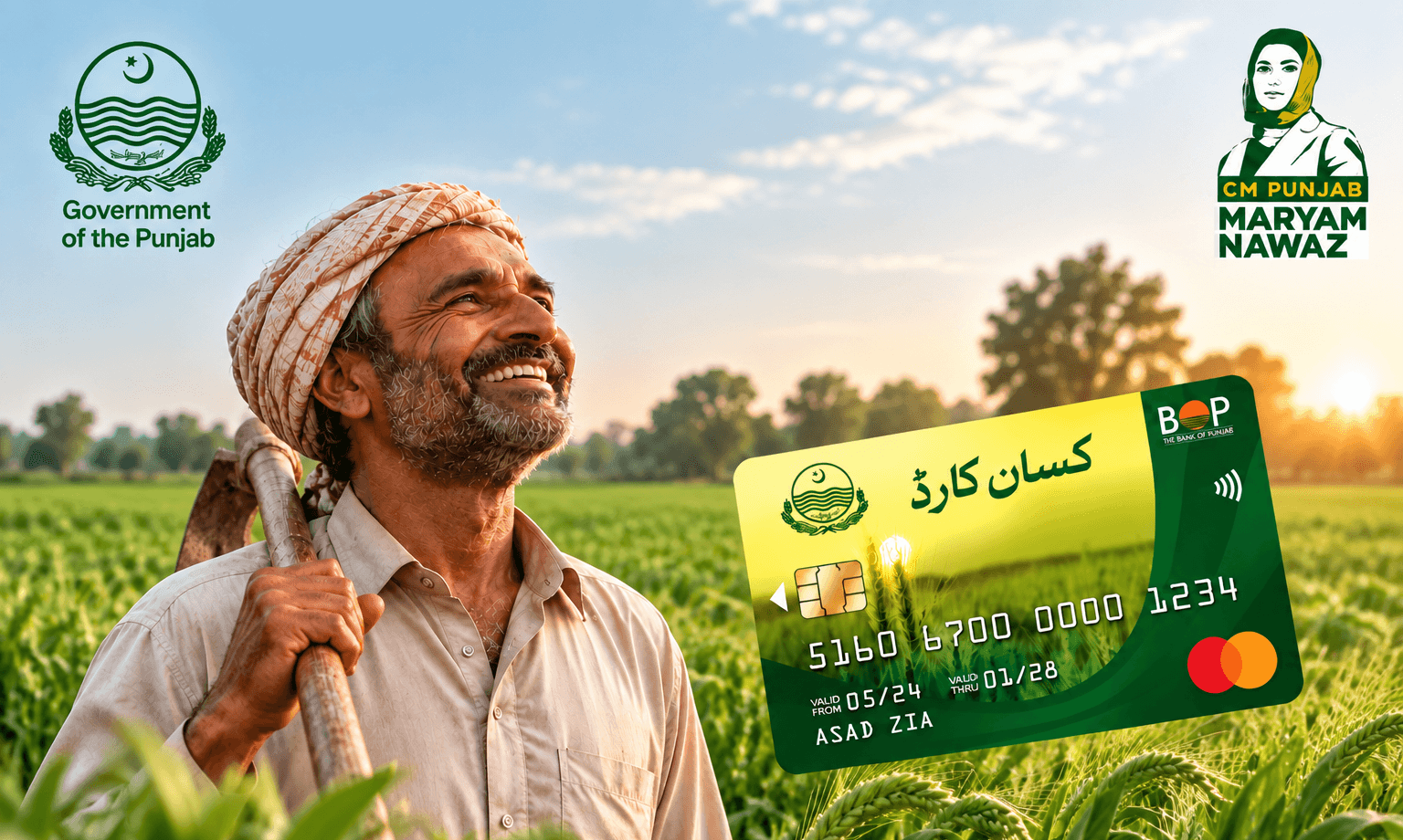
The CM Punjab Kissan Card has become one of Punjab’s major agricultural financing programs, giving farmers access to interest-free crop-production credit through a formal digital system. Instead of depending entirely on informal borrowing or arranging the full cost of seed, fertilizer and other inputs before sowing, eligible farmers can use the card to finance important seasonal farming expenses. The scheme has changed since its original launch. Earlier versions mainly targeted smaller landholders and offered lower financing limits. Under the Agriculture Department’s current development plan, Chief Minister Punjab Kissan Card Phase-II runs from 2026–27 to 2027–28. The government has set a target of providing interest-free loans to 1 million Kissan Card holders, with financing of up to Rs. 360,000 per cropping season for three cropping seasons.
Because several older Kissan Card pages still appear in Google, farmers may find conflicting information about eligibility, acreage, loan limits and registration. This guide separates older scheme information from the latest official program targets and explains what farmers should check before applying or using their card.
The CM Punjab Kissan Card is a government-supported agricultural financing facility designed to give Punjab farmers easier access to crop-production credit. The original program described the facility as an interest- and collateral-free crop production loan delivered through a digitally integrated system. The Agriculture Department said its purpose was to give small farmers timely financial support for agricultural inputs and improve farm productivity and livelihoods. The Bank of Punjab plays an important role in the card system. Farmer information goes through digital verification, including checks linked with land records and identity information, before eligible applicants receive the card. The original official registration framework connected the farmer database with the Punjab Land Records Authority, NADRA and other verification systems.
The card therefore works as more than a normal subsidy card. It connects farmer identification, verified agricultural land, banking and approved agricultural purchases within one system.
The most important point for farmers searching today is that the scheme has expanded beyond its original limits. According to the Punjab Agriculture Department’s current Chief Minister Initiatives page, Phase-II covers 2026–27 to 2027–28. The overall targets include interest-free financing for 1 million Kissan Card holders and loans of up to Rs. 360,000 per cropping season for three cropping seasons. Current official development documents also show that the government continues to treat Kissan Card as an active agricultural program. The Agriculture Department advertised recruitment specifically for the Chief Minister Punjab Kissan Card Phase-II project in August 2026, while its tender records show financial audit and verification work connected with Phase-II transactions.
Understanding the different phases is important because many websites still quote the original limits. Under the earlier scheme, official Punjab information stated that farmers holding up to 12.5 acres could qualify. The maximum loan stood at Rs. 150,000 per farmer per season, calculated at Rs. 30,000 per acre for up to five acres. Farmers could use that financing mainly for agricultural inputs such as fertilizer and seed.
By February 2025, the Agriculture Department reported that 1.4 million farmers had applied, around 535,000 cards had been approved and delivered, and the Bank of Punjab had approved Rs. 54 billion in loans. The same government publication also reported a 30% cash withdrawal facility for other crop needs. Phase-II then widened the program. Government development material for 2025–26 described 1 million farmers with landholdings of up to 25 acres as the target. During 2025, officials also announced higher financing limits and expanded card usage. Reporting on Phase-II stated that farmers could use part of the facility for diesel and withdraw part in cash. The program has since moved further. For 2026–27, the official Agriculture Department now lists a maximum of Rs. 360,000 per cropping season.
This progression explains why a farmer may see Rs. 150,000, Rs. 300,000 and Rs. 360,000 quoted on different websites. They refer to different stages or versions of the program.
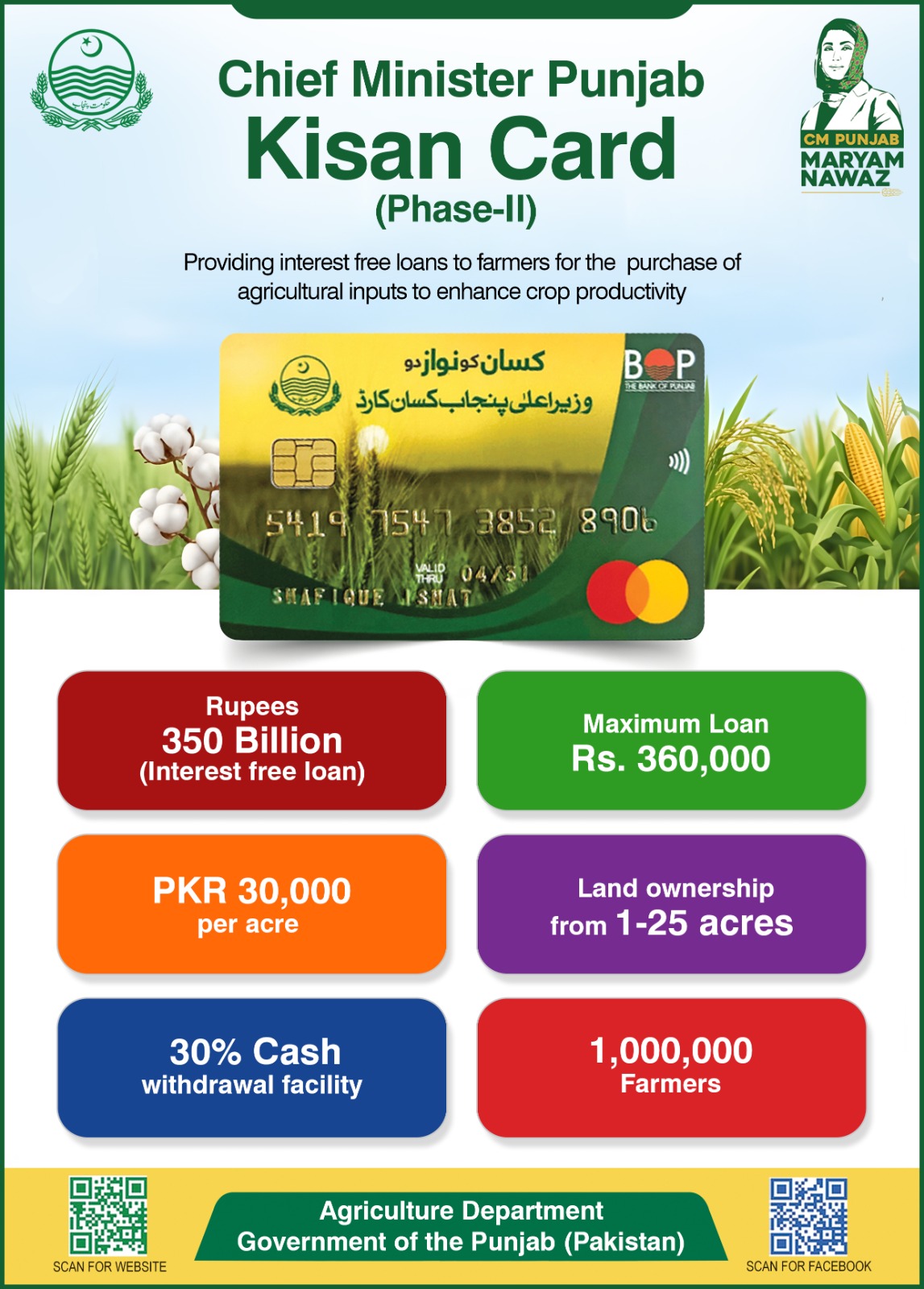
The Agriculture Department currently describes Phase-II financing as interest-free loans for Kissan Card holders. This makes the scheme different from a normal commercial crop loan where a farmer generally pays financing charges according to the lender’s terms. Interest-free, however, does not mean farmers can ignore repayment requirements. Kissan Card financing remains a loan facility. Farmers should understand their approved amount, repayment deadline and any conditions linked with receiving credit for the following season. Earlier Phase-II implementation also linked timely repayment with eligibility for subsequent benefits and financing cycles. Farmers should therefore treat the Kissan Card as seasonal agricultural credit, not free money.Check the eligibility criteria on Punjab Portal.
Eligibility has changed as the program has expanded. The original official registration criteria required the applicant to hold agricultural land in Punjab, have land records available with the Punjab Land Records Authority and use a mobile SIM registered against their own CNIC. The verification process also included NADRA, land records and credit-related checks. Earlier rules limited eligibility to landholdings of up to 12.5 acres. Later Phase-II government material expanded the program target to farmers owning land of up to 25 acres. A farmer preparing to register should therefore make sure that their CNIC, mobile SIM and agricultural land records match correctly.
Common requirements associated with the scheme include:
Farmers should rely on the latest message from the Agriculture Department or Bank of Punjab for final approval because historical eligibility limits remain visible on older government pages.

The government’s established SMS registration method uses the 8070 short code. Official Punjab guidance instructs farmers to type PKC [space] 13-digit CNIC number and send it to 8070 the South Punjab Agriculture Department also confirms this application method and says applicants should enter their CNIC without dashes. After submission, the system checks the farmer’s information.
The Agriculture Department explains that land records undergo PLRA verification and CNIC details undergo NADRA verification. Once the card becomes ready, the farmer receives further instructions. The Agriculture South Punjab guidance says applicants may then need to visit the relevant Agriculture Extension office and complete biometric verification with bank staff when collecting the card. One caution is necessary here: do not rely on a third-party website that asks for unnecessary personal information, payment or banking credentials to “guarantee” approval. Start with the official 8070 channel and government Agriculture Department information.
Some third-party Kissan Card pages instruct farmers to visit HBL Connect and create a Kisan Wallet. That information should not automatically be treated as the current official CM Punjab Kissan Card process. The Punjab government’s own Kissan Card documentation identifies the Bank of Punjab as the bank issuing the Chief Minister Kissan Card after verification. Current Agriculture Department information also maintains district-wise registered input dealers and PSO filling stations specifically linked with the Kissan Card program. For this reason, farmers should follow instructions received through official Punjab Agriculture or Bank of Punjab channels rather than assuming that every private application guide reflects the latest procedure.
The scheme originally focused on essential agricultural inputs. Official program records identify seed, fertilizer and pesticides among the main items purchased through the card. Phase-II later expanded the system to include diesel. Punjab Agriculture Department development material listed facilities for purchasing seeds, fertilizer, pesticides and diesel and referred to thousands of agricultural input dealers participating in the system. This matters because seasonal crop expenses extend beyond seed alone. A farmer may need to arrange fertilizer, crop protection, fuel and other operating costs within a short period. Easier access to formal seasonal financing can help farmers complete important field operations at the right time.
Farmers should still purchase only through dealers and fuel outlets currently authorized under the scheme.
A cash withdrawal facility has formed part of the program during its expanded phases. An Agriculture Department review of the earlier program recorded a 30% cash withdrawal facility for other crop needs. Phase-II reporting in 2025 also stated that farmers could withdraw 30% of the loan amount in cash, while other portions supported inputs and diesel purchases. Your supplied Phase-II material also shows a 30% cash withdrawal facility. However, farmers should check the current seasonal transaction rules before planning their spending, because the latest 2026–27 Agriculture Department summary confirms the overall Rs. 360,000 loan ceiling but does not provide a detailed public breakdown of the cash, diesel and input percentages on that summary page.
The Punjab Agriculture Department maintains lists of district-wise registered dealers where Kissan Card holders can purchase agricultural inputs. The current official Kissan Card page lists dealers across districts including Lahore, Faisalabad, Multan, Sargodha, Bahawalpur, Gujranwala, Vehari, Khanewal, Rahim Yar Khan and many others. The same official resource also provides information about registered PSO filling pumps. Farmers should check that a dealer participates in the Kissan Card program before making a purchase. This reduces the risk of reaching a shop that cannot process the card or does not fall under the scheme’s approved merchant network.

Crop production requires cash before a farmer earns anything from the harvest. Seed must go into the ground at the right time. Fertilizer applications cannot always wait until cash becomes available. Crop-protection measures may need immediate action. Diesel expenses can rise during land preparation, irrigation and harvesting periods. This timing creates a financing gap, especially for smaller farms. The Kissan Card aims to reduce that gap by connecting verified farmers with seasonal agricultural credit. The government designed the original program specifically to provide timely and adequate credit so farmers could meet agricultural requirements without facing the same level of financial difficulty. Access to financing does not guarantee a successful crop. Farmers still need suitable seed, correct fertilizer use, good irrigation, timely field operations and appropriate agricultural machinery. But easier access to working capital can help them perform those activities when the crop actually needs them.
The Kissan Card does not operate in isolation. Punjab currently runs several agriculture programs involving tractors, agricultural machinery, solarization of tube wells and other farming investments. The 2026–27 Agriculture Department development plan lists Kissan Card alongside new phases of the Green Tractor Program and other agricultural initiatives. For farmers, this creates an important distinction. The Kissan Card primarily supports seasonal crop-production financing. Programs such as the Green Tractor Scheme or hi-tech mechanization financing focus more directly on machinery and longer-term farm assets.
A farmer should therefore choose a government program according to the actual need. Seed, fertilizer and seasonal crop expenses belong to a different financing category from purchasing a tractor, combine harvester, baler or other major agricultural machine.
Before sending an application, check that the name and CNIC information connected with your agricultural land are accurate. Make sure the SIM you use belongs to your own CNIC. If land records contain an error, fixing the record first can prevent verification problems later.Farmers who already hold a Kissan Card should also check previous repayment obligations before expecting financing for another season. Earlier phases linked continued access to seasonal credit with repayment performance.
Keep official SMS messages and receipts from card transactions. These records can help if a transaction, PIN, card activation or account issue appears later.
A Kissan Card application can face difficulty even when the farmer genuinely owns agricultural land. The issue may come from mismatched records rather than basic eligibility. For example, the mobile SIM may not belong to the applicant’s CNIC, the PLRA record may contain different information, identity verification may fail, or the applicant may not satisfy the current banking checks. Existing cardholders can also face practical problems such as a lost card, forgotten PIN, blocked card, damaged card or activation issue. The Agriculture South Punjab guidance specifically identifies these as issues for which farmers can seek help through Kissan Card helpdesks.
This is particularly important in 2026. A farmer searching “Kissan Card loan limit” can still find an official page showing Rs. 150,000. Another source may show Rs. 300,000. Newer material now shows Rs. 360,000. These figures do not necessarily mean that one source fabricated the information. They often reflect different stages of the program. The older Punjab Portal still describes the original Rs. 150,000 scheme. In 2025, Phase-II reporting described financing of up to Rs. 300,000 and eligibility extending to 25 acres. The Agriculture Department’s current 2026–27 initiative now states up to Rs. 360,000 per cropping season. For that reason, always check the date and phase of any Kissan Card information before acting on it.
Farm Dynamics Pakistan is not the authority responsible for approving or issuing the CM Punjab Kissan Card. Farmers should use Punjab Agriculture Department and relevant banking channels for official applications, eligibility decisions and card-related transactions. FDP’s role in agriculture is different. Farm Dynamics Pakistan provides agricultural machinery, irrigation technologies, seeds and modern farming solutions that support improved farm productivity.
Government financing and agricultural technology can complement each other, but farmers should first confirm what purchases their specific Kissan Card facility permits. A government crop-input financing card should not automatically be assumed to cover every type of machinery, equipment or farming product.
Yes, but the reason for rejection should be corrected first. This may involve fixing land records, CNIC details, SIM ownership, or other verification issues before applying again.
Eligibility mainly depends on verified land records under the current scheme. Farmers working on leased or rented land should confirm their status through the official Agriculture Department or Bank of Punjab channels.
Farmers should contact the issuing bank or official helpdesk rather than trying the PIN repeatedly. The bank can check whether the issue relates to activation, PIN attempts, account status, or card security.
Farmers should check the latest district-wise dealer information published by the Punjab Agriculture Department or confirm with the local Agriculture Office.
Eligibility mainly depends on verified land records under the current scheme. Farmers working on leased or rented land should confirm their status through the official Agriculture Department or Bank of Punjab channels.