7-J1, Main Canal Bank, Johar Town, Lahore.
  Info@farmdynamics.pk
7-J1, Main Canal Bank, Johar Town, Lahore. Info@farmdynamics.pk


 October 5, 2026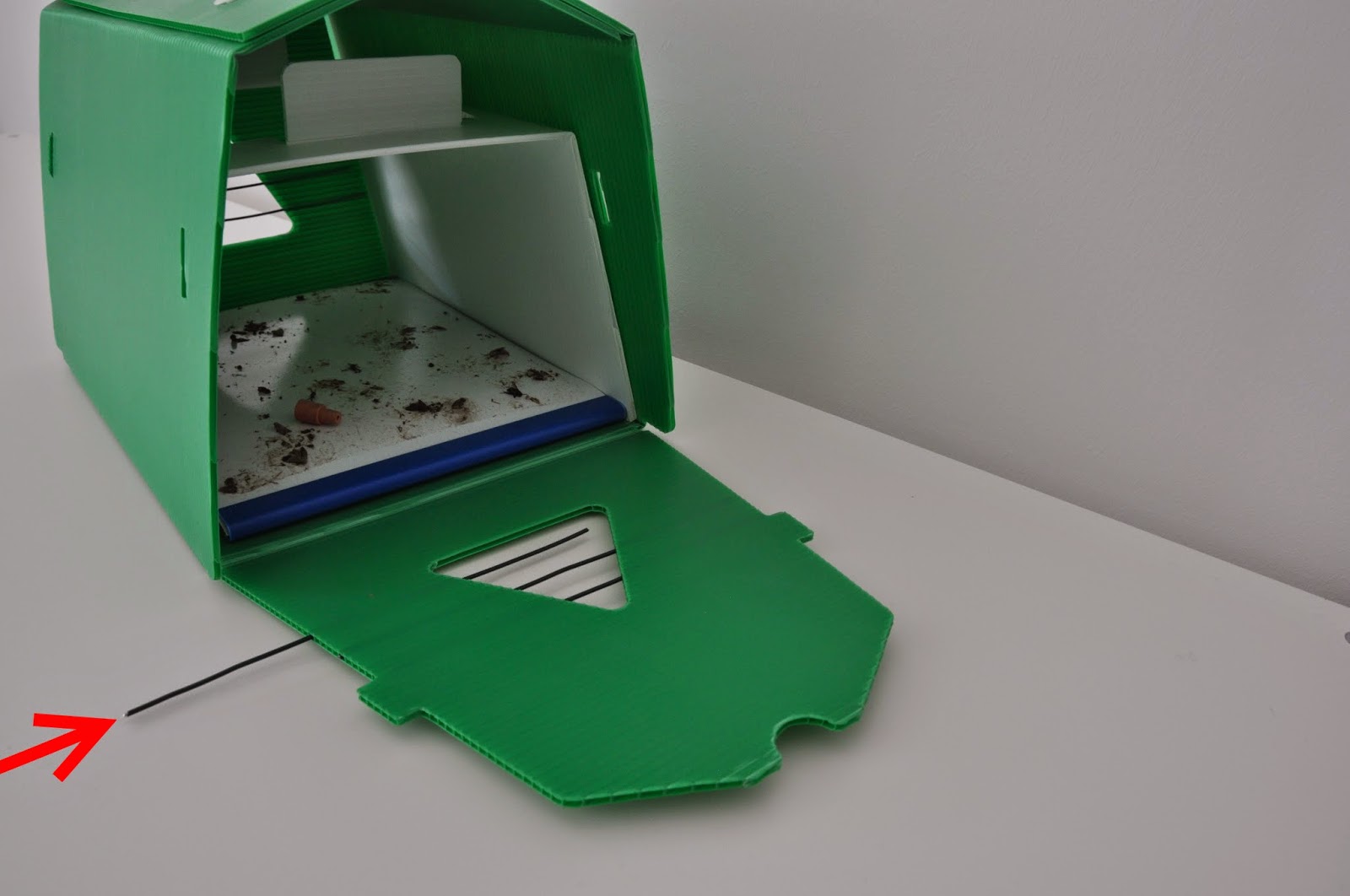
A pest population can change quickly. A field may show little activity during one inspection and require attention a few days later. Spray too early and you may spend money when pest pressure is still below the level that justifies treatment. Spray too late and the pest may have already caused economic damage or moved beyond the most suitable stage for control. This is one of the challenges Integrated Pest Management (IPM) is designed to address. IPM does not mean avoiding pesticides altogether. Instead, it combines monitoring, prevention, biological control, cultural practices, and chemical control so that each intervention is used when it is appropriate. Pesticides remain an important tool, but they are used as part of a decision-making process rather than automatically according to a calendar. That process depends on reliable information. Farmers need to know which pest is present, how its population is changing, where activity is concentrated, what stage of the crop is being affected, and whether the pest population has reached a level where control is economically justified.
This is where automated pest monitoring can become useful. Automated monitoring does not replace field scouting or the farmer’s judgement. Instead, it provides more frequent information about pest activity, helping farmers and advisers identify changes earlier and decide when closer field inspection or control may be necessary.
This guide explains what automated pest monitoring is, how it fits into IPM, how Trapview works, how pest activity data can support spray timing, and where automated monitoring can be particularly useful for farmers in Pakistan. It also covers the limitations of automated monitoring and the common mistakes that can reduce its value.
Automated pest monitoring uses connected traps, imaging technology, software, and data analysis to monitor insect activity in the field with much less manual checking than traditional trapping systems. Traditional pest monitoring normally requires a scout to visit a trap, inspect the captured insects, identify the target pest, record the count, and repeat the process at other locations. This remains an important part of crop protection because field scouting provides information that a trap cannot provide, such as crop damage, plant condition, beneficial insects, and disease symptoms. The limitation is frequency and coverage. A scout may only be able to visit a particular trap at certain intervals, especially when farms have multiple blocks or locations. A change in pest activity between two visits can therefore go unnoticed. Automated systems add another layer of information. A connected trap can capture images of the trap at regular intervals and transmit the information for analysis. Modern systems such as Trapview use automated image processing and pest-recognition technology to identify and count target insects, while the platform can present pest pressure and population trends to the user.
Trapview also combines monitoring data with forecasting and development-stage information for supported pests. This can help users understand not only what is being caught now, but also how pest activity may develop over the coming days. The important distinction is that automated monitoring does not replace IPM. It strengthens the monitoring and information-gathering part of IPM, while decisions still need to consider crop conditions, economic thresholds, weather, pest biology, natural enemies, and the recommendations applicable to the crop and region.
Quick fact: The Food and Agriculture Organization (FAO) defines Integrated Pest Management as the careful consideration of available pest-control techniques and the integration of appropriate measures to discourage pest populations while keeping pesticide use and other interventions at economically justified levels and reducing risks to human health and the environment. Monitoring is important because the presence of a pest does not automatically mean that treatment is necessary.
IPM is a decision-making process rather than a single treatment. Monitoring provides information that can support several parts of that process.
| IPM stage | What monitoring contributes |
|---|---|
| Identify the pest | Trap images and pest-recognition tools can help identify target pests and confirm their presence |
| Track activity | Repeated observations show whether pest activity is stable, increasing, peaking, or declining |
| Assess the need for action | Pest activity data can be compared with crop condition and relevant economic or action thresholds |
| Time the treatment | Population trends and pest development information can help identify when control may be most effective |
| Choose the response | Information about pest distribution can support decisions about where additional scouting or targeted treatment is needed |
| Review the result | Monitoring after treatment can show whether pest activity declined and whether further investigation is required |
The last step is particularly important. A pesticide application should not be considered successful simply because the field was sprayed. Continued monitoring can help determine whether pest pressure actually declined after treatment. If pest activity remains high, the farmer and adviser can investigate possible reasons, including incorrect pest identification, unsuitable timing, poor application coverage, resistance, reinfestation, or environmental conditions. Monitoring also provides a record that becomes more valuable over time. Previous pest activity can help farmers understand recurring patterns and improve monitoring and crop-protection planning in future seasons.
Put simply, IPM works better when decisions are based on current field information rather than assumptions. Automated pest monitoring can make that information more frequent, accessible, and easier to analyse.
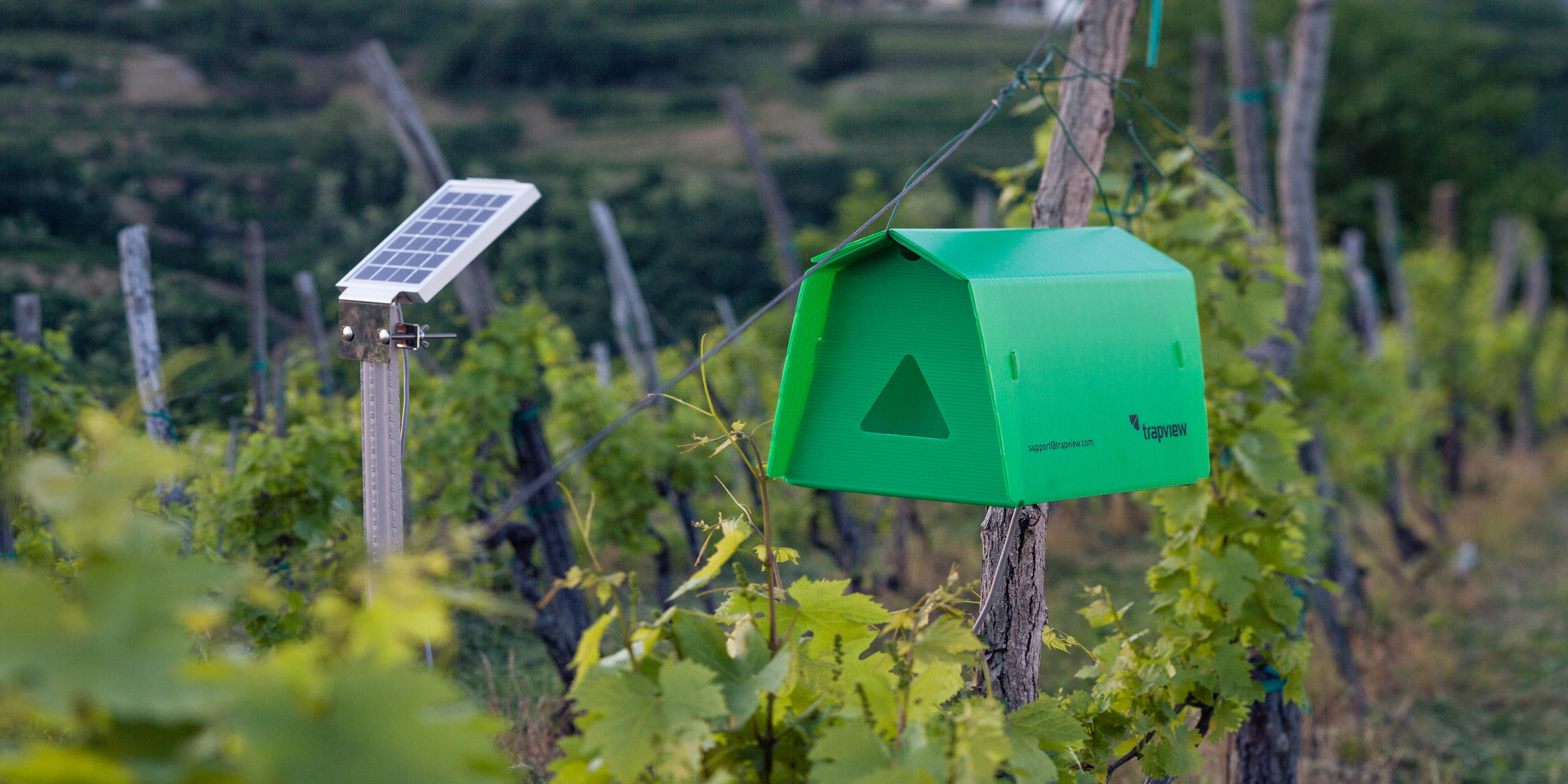
Trapview is a digital pest-monitoring and forecasting system that combines automated traps, image analysis, pest identification, data processing, and agronomic information. The process begins with traps positioned in the field according to the target pest and monitoring requirements. Trapview offers different trap designs for different insects and environments. Depending on the setup, traps can use different attraction methods, including pheromone-based or light-based systems. The trap captures images of the insects collected inside it. Those images are transmitted to the Trapview platform, where the system analyses the images and provides information such as pest identification and counts. Trapview states that its current system uses AI-based image recognition, with human verification available for pest identification. The resulting information can be viewed as pest counts and population-pressure trends rather than as isolated observations. This makes it easier to see whether pest activity is increasing, decreasing, or reaching a peak.
Trapview is designed to support:
The system should be viewed as a decision-support tool rather than an automatic spraying system. Trapview provides information about pest activity and development. The decision to treat still needs to consider the crop, pest, economic threshold, weather, natural enemies, pesticide label requirements, and advice from qualified crop-protection professionals.
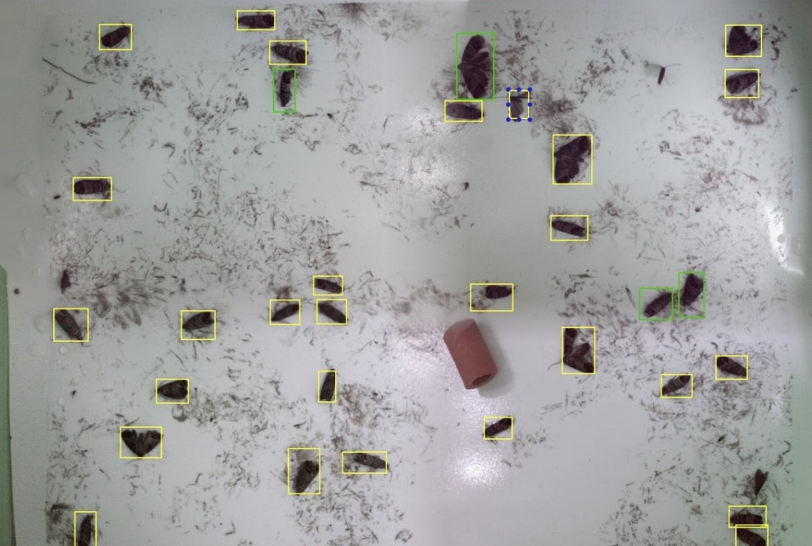
One of the most useful applications of pest monitoring is improving the timing of crop-protection decisions. Calendar-based spraying can be simple to manage, but pest populations do not always follow the same schedule. Pest development is influenced by temperature, crop stage, weather conditions, pest biology, and other factors. A treatment that is appropriate at one point in the season may not be necessary at another. Pest monitoring provides a way to replace assumptions with observations. The key is to look at trends rather than a single number. One unusually high catch does not automatically mean that an outbreak has developed. Similarly, a low count does not guarantee that the crop is safe. A series of observations can provide a much clearer picture of whether pest pressure is building, remaining stable, reaching a peak, or declining.
Trap data should also be interpreted alongside field observations. A trap can tell you that adult insects are active, but it cannot by itself tell you how much damage the crop is experiencing. Farmers should consider crop growth stage, visible pest damage, natural-enemy activity, weather, and the pest’s biology before making a treatment decision. Economic thresholds are particularly important. FAO describes the economic threshold as a way of linking pest pressure with the cost of control and the potential value of crop losses. The exact threshold varies according to the pest, crop, crop stage, local conditions, and economics. For some pests, development-stage information is also important. If a pest is most vulnerable at a particular stage, knowing when that stage is occurring can help improve treatment timing. After treatment, monitoring should continue. A decline in pest activity may indicate that control was effective, while continued or increasing activity may justify further investigation before another application is made.
It can help reduce unnecessary applications, but monitoring itself does not automatically reduce pesticide use. The benefit comes from using the information to make better decisions. If monitoring shows that pest activity remains below the relevant action or economic threshold, the farmer may have a basis for continuing to monitor rather than treating immediately. If activity is concentrated in certain areas, additional scouting can focus on those locations rather than assuming that the entire farm has the same pest pressure. This does not mean that every low trap count should result in a decision not to spray. Some pests can cause significant damage at low populations, and some crops or growth stages require particular protection. Preventive treatments may also be appropriate in specific production systems where local recommendations support them. The correct principle is therefore not simply “spray only when insects are present.” The better principle is to use monitoring and crop-specific thresholds to determine whether, where, and when control is justified.
Reducing unnecessary applications can lower expenditure on pesticides, fuel, labour, machinery use, and application time. It can also reduce unnecessary exposure of beneficial organisms to pesticides. There is another consideration for growers producing fruit and vegetables for demanding markets: pesticide residues. Farmers must follow the legal requirements, registered uses, pre-harvest intervals, and maximum residue limits that apply to their crop and market. Better monitoring can support more disciplined pesticide use, but it does not replace compliance with pesticide regulations or residue requirements.
Worth knowing: A pest monitoring system does not make a crop compliant with residue requirements by itself. Compliance still depends on using registered products correctly, following label directions, observing pre-harvest intervals, and meeting the requirements of the intended market.
The practical goal is not simply to spray less. It is to avoid applications that are not justified while making necessary applications at the right time and in the right way.
Pesticide resistance develops when repeated selection by an insecticide allows less-susceptible individuals in a pest population to survive and reproduce. Over time, the proportion of resistant individuals can increase, reducing the effectiveness of the product. This makes unnecessary pesticide use a concern for both farm economics and long-term pest management. Monitoring contributes to resistance management in several ways. First, it supports decisions about whether treatment is needed at all. Avoiding unnecessary applications reduces selection pressure where treatment is not justified. Second, monitoring before and after treatment helps farmers and advisers evaluate control. If pest populations remain high after an application, repeating the same treatment without investigating the cause may not be the best response. Third, good monitoring creates a record of pest activity and control actions. This information can support resistance-management planning and help advisers identify repeated control failures.
However, automated pest monitoring does not prevent resistance by itself. Resistance management requires a broader strategy. IRAC recommends integrating monitoring with economic thresholds and multiple control strategies, while using insecticides according to their labelled directions and rotating or alternating effective products from different modes of action where appropriate. The important point is that rotating modes of action, rather than simply changing brand names, is a key part of resistance management. Monitoring is therefore one component of a larger resistance-management programme. It helps answer an essential question: what is happening to the pest population before and after control?
Biological control is an important part of IPM. Predators, parasitoids, and other natural enemies can suppress pest populations and help keep them below damaging levels. This is one reason why unnecessary broad-spectrum pesticide applications can create problems. A treatment intended to control one pest may also affect beneficial organisms that contribute to natural pest control. Monitoring can support biological control by giving farmers a clearer picture of pest pressure and helping them determine whether immediate chemical intervention is actually required. For example, if pest activity is present but remains below the relevant action threshold and beneficial insects are also active, continued monitoring may be more appropriate than an immediate broad-spectrum treatment. The exact decision depends on the crop, pest, natural-enemy population, and local recommendations.
Automated traps do not normally provide a complete picture of the beneficial insect population in the crop. Field scouting is still necessary to assess predators, parasitoids, crop damage, and other biological factors. The strength of automated monitoring is that it can provide more frequent information about the target pest. Combined with field scouting, this information can help farmers use biological, cultural, and chemical control methods more selectively. This fits closely with the basic principle of IPM: use multiple control approaches and avoid unnecessary disruption of the crop ecosystem.
Both manual scouting and automated monitoring have an important role in pest management, but they provide different types of information. Understanding where each method works best can help farmers build a more efficient monitoring programme.
| Factor | Manual scouting | Automated pest monitoring |
|---|---|---|
| Frequency | Depends on the scouting schedule and available labour | Automated systems can provide frequent monitoring without every observation requiring a field visit |
| Labour | Requires regular field visits and manual observations | Reduces routine trap-checking requirements |
| Remote access | Information normally has to be collected in the field | Monitoring data and images can be accessed remotely |
| Trend tracking | Requires consistent records and comparison of observations | Automated data makes population trends easier to review |
| Data sharing | Notes and photographs can be shared manually | Digital monitoring information can be shared with advisers and other users |
| Field verification | Provides direct information about plants, damage, and field conditions | Still required to assess crop condition, damage, natural enemies, and other factors |
The final row is particularly important. An automated trap does not walk through the crop and inspect leaves, stems, fruit, weeds, disease symptoms, or beneficial insects. It also does not replace an agronomist’s understanding of the crop. A strong monitoring programme therefore combines both approaches. Automated traps can provide continuous or frequent information about target pest activity, while field scouting confirms what that activity means for the crop. This combination can make scouting more targeted. Instead of treating every part of the farm as if it has the same pest pressure, growers can use monitoring information to identify locations or periods that deserve closer attention.
Automated monitoring can be useful in many production systems, but its value is particularly clear where pest timing, crop value, or monitoring coverage makes frequent observation important.
The most important factor is not farm size alone. The value depends on the pest being monitored, the crop, the cost of scouting, the potential cost of pest damage, and how effectively the information is used in the farm’s IPM programme.
Automated monitoring can provide useful information, but the quality of the results depends on how the monitoring system is installed, maintained, and interpreted. A poorly positioned trap, an incorrect pest identification, or a decision made without considering crop conditions can lead to misleading conclusions. Farmers should also remember that monitoring is part of a wider IPM programme. Trap data is most useful when it is combined with field scouting, crop-stage information, weather conditions, natural-enemy activity, and appropriate pest-management thresholds. Avoiding the following common mistakes can help farmers get more reliable information from their monitoring programme and make better crop-protection decisions.
Farmers in Pakistan manage a wide range of field crops, vegetables, orchards, and other agricultural production systems. Pest pressure can vary significantly between crops, regions, seasons, and crop stages, which makes timely monitoring an important part of crop protection. Pakistan already has established pest-surveillance systems. For example, the Punjab Agriculture Department’s Directorate General Pest Warning & Quality Control of Pesticides conducts pest scouting and surveys, issues pest situation reports and forecasts, and provides guidance related to pest management. The department describes pest scouting as a way to determine insect-pest populations and crop losses in specific crop areas. Farm-level automated monitoring can complement this wider surveillance by providing information from individual traps and specific production areas.
Trapview can provide near real-time information about target pest activity, population trends, forecasts, and development stages for supported pests. This can help farmers and advisers identify changes in pest pressure and determine when closer field inspection or crop-protection action may be necessary. The technology is particularly relevant where farmers need frequent information but cannot manually inspect every trap at the same frequency. Instead of replacing local agronomic knowledge, automated monitoring can add another source of evidence to the decision-making process. For Pakistani growers, the most useful approach is therefore to combine automated monitoring with local pest-management recommendations, field scouting, economic thresholds, weather information, and appropriate crop-protection practices. Farm Dynamics Pakistan Pvt Ltd can support farmers by providing agricultural solutions and guidance that help integrate modern crop-management technologies into practical farm operations.
Government perspective: Punjab’s Agriculture Department already operates pest scouting, pest surveys, pest forecasting, and pest-warning services. Its monitoring programme includes field crops, vegetables, and orchards and provides pest situation reports and recommendations. Farm-level automated monitoring can complement these wider surveillance activities by providing more localized information from the grower’s own fields.
Farm Dynamics Pakistan was established in 2010 by second-generation farmers whose family has been involved in farming since 2000. The company focuses on agricultural solutions including Integrated Crop Management (ICM) technologies, modern mechanisation equipment, and agricultural inputs. Its ICM Technologies range includes automated pest monitoring alongside technologies for soil, weather, irrigation, and other aspects of crop management. The underlying approach is to provide farmers with better information so that decisions about crop production and resource use are based on actual field conditions. Trapview fits into this approach by providing automated information about pest activity. Instead of treating pest management as an isolated activity, the data can be considered alongside other crop and environmental information when planning crop-protection decisions.
Farm Dynamics also states that it provides guidance and support to farmers as part of its agricultural technology and service offering. This is important because automated monitoring is most useful when the information is correctly interpreted and connected to an appropriate crop-management programme. To learn more about Trapview, visit the automated pest monitoring, browse the wider range of ICM Technologies, or contact Farm Dynamics Pakistan directly.
Effective pest management starts with knowing what is happening in the crop. The presence of a pest does not automatically mean that a pesticide application is required, and the absence of visible damage does not necessarily mean that pest activity can be ignored. Good IPM depends on regular monitoring, accurate identification, knowledge of pest biology, crop-stage information, economic thresholds, natural-enemy activity, and appropriate control options. Automated pest monitoring can strengthen this process by providing more frequent information about target pest activity without requiring a person to manually inspect every trap each time. Systems such as Trapview add automated image analysis, pest counts, population trends, forecasting, and development-stage information to traditional trapping. The technology is not a replacement for the farmer, agronomist, or field scout. Its value comes from giving them better information at the right time.
When automated monitoring is combined with field scouting and other IPM practices, farmers can make more informed decisions about whether control is necessary, where attention is needed, and when an intervention is most appropriate. This can help reduce unnecessary pesticide applications, support resistance-management strategies, protect beneficial organisms, and improve the efficiency of crop-protection programmes.
The goal is not simply to use fewer pesticides or more technology. The goal is to make better pest-management decisions based on what is actually happening in the field.
Automated pest monitoring uses connected traps, cameras, image analysis, and software to monitor target pest activity in the field. It provides regular information about pest presence, counts, and population trends without requiring farmers to manually inspect every trap each time.
Automated pest monitoring supports Integrated Pest Management by providing timely information about pest activity. Farmers can combine this data with field scouting, crop stage, natural-enemy activity, weather conditions, and economic thresholds to make better pest-management decisions.
No. Automated monitoring and manual scouting work best together. Automated traps provide frequent information about target pest activity, while field scouting helps assess crop damage, beneficial insects, plant health, and other conditions that a trap cannot measure.
It can help reduce unnecessary pesticide applications by providing information that supports more informed treatment decisions. However, monitoring does not automatically reduce spraying. Farmers still need to consider pest thresholds, crop conditions, pest biology, and local recommendations before deciding whether treatment is required.
Yes. Automated monitoring can be particularly useful where farmers need frequent pest information across orchards, high-value crops, or large and widely distributed fields. It can complement existing field scouting and pest-warning services by providing more localized information from the grower’s own fields.
Farmers should consider trap placement, target-pest identification, crop stage, pest population trends, weather, natural enemies, field conditions, and relevant economic or action thresholds. The monitoring equipment should also be maintained properly so that data is collected consistently.
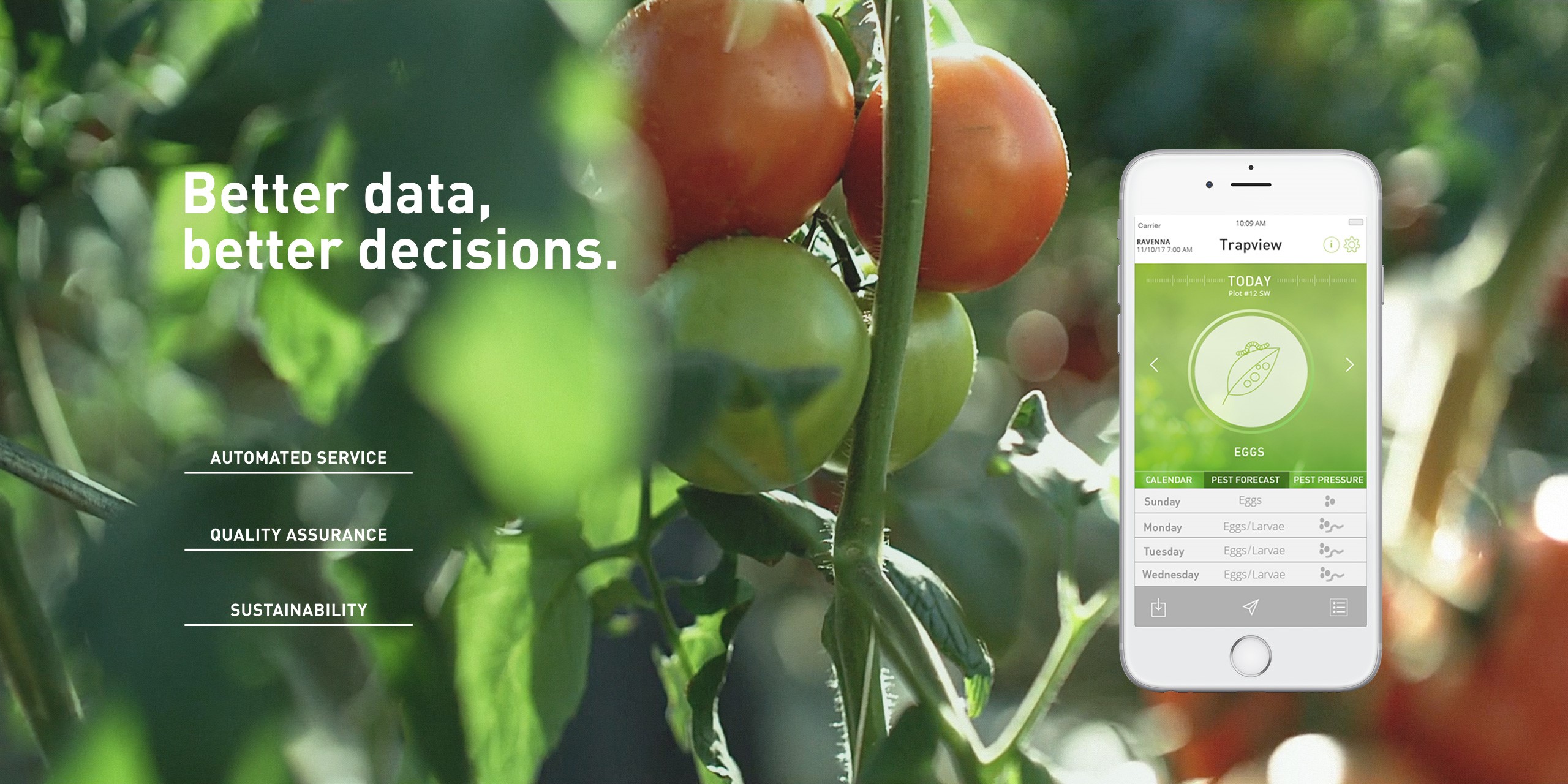
This blog explains how Trapview automated pest monitoring helps farmers in Pakistan detect pest activity, improve monitoring, and make better crop-protection decisions. It covers its benefits, working process, crop applications, and role in modern pest management.
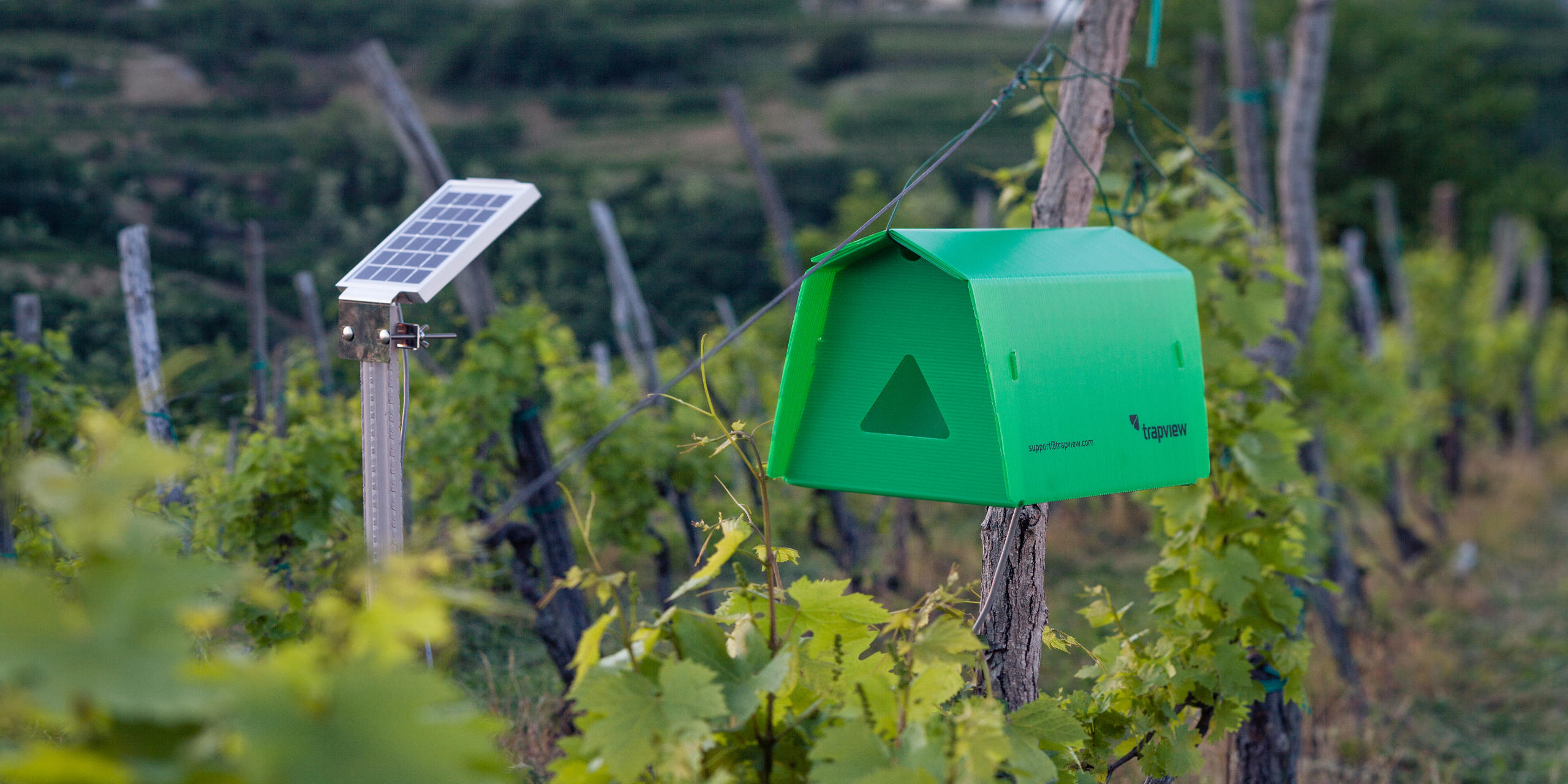
This blog explains the need for automated pest monitoring in Pakistan’s cereal crops and how it can help farmers manage pest activity. It covers the key benefits, how automated monitoring works, and its role in controlling agricultural and vertebrate pests.