7-J1, Main Canal Bank, Johar Town, Lahore.
  Info@farmdynamics.pk
7-J1, Main Canal Bank, Johar Town, Lahore. Info@farmdynamics.pk


 November 8, 2019
To combat insects, progressive farmers no longer rely solely on conventional pesticides. The use of mechanical and biological control methods has improved. While resistance to pesticides has driven much of this change in management philosophy, many growers are now finding out how well new control agents work and how they can be easily incorporated into pest management programs.
Beneficial and insect-parasitic nematodes have become more widely adopted as they are compliant with other pest control agents and insecticides due to their versatility for tank-mix applications. In order to help control insects and pests that are or may become resistant, they are often rotated with insecticides. That is why regular pest monitoring is necessary.
| Factor | Manual Pest Monitoring | Automated Pest Monitoring (Trapview) |
| Field scouting time | Requires daily/weekly physical visits to every field | Continuous monitoring with minimal field visits |
| Accuracy | It depends on the scout’s skill and can miss early signs | AI-based image analysis gives consistent, reliable results |
| Real-time alerts | Not possible; delays between scouting and reporting | Instant alerts are sent as soon as pest thresholds are crossed |
| Pest image records | Rarely documented, mostly based on memory or notes | High-resolution images are stored for every catch, building a historical record |
| Weather data support | Weather is tracked separately, if at all | Can be integrated with on-farm weather sensors for forecasting |
| Better spray timing | Based on estimates and past experience | Based on actual pest population data and forecasting models |
This comparison shows why more farmers in Pakistan are moving toward an automated pest monitoring system: it saves time, reduces human error, and gives farmers the confidence to act at the right moment instead of reacting too late.
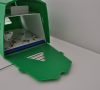
Each Trapview trap at Farm Dynamic Pakistan is fully automated, independent of energy and can be extended with basic weather data sensors. Integrated connectivity enables automatic data collection to be reliable.
Plant pest monitoring data is highly valuable because it underpins many other aspects of the automated monitoring system. These include:
An automated pest monitoring system is useful across almost every major crop grown in Pakistan. Some common examples include:
Trapview’s automated pest monitoring system helps farmers in cotton, rice, maize, vegetable, and orchard operations protect their yields with significantly less guesswork by tracking these crop-specific pests.
An automated pest monitoring system offers practical, everyday benefits that go straight to a farmer’s bottom line:
Farmers looking to reduce pesticide waste and protect crops at the right time can contact Farm Dynamics Pakistan pvt ltd for automated pest monitoring solutions and expert guidance.
With rising input costs, water scarcity, and increasing pest pressure, modern agriculture farming now depends on timely field data, early pest detection, and smarter crop protection decisions. Farmers, agri-input companies and forward-thinking growers are moving away from reactive pest control and towards data-driven decision-making. The advent of smart agriculture in cotton, rice and horticulture belts is making automated pest monitoring a core component of Integrated Pest Management (IPM) programmes, rather than an optional add-on. “The shift is also being driven by government extension programs, exporters and large corporate farms, as real-time pest data supports better compliance with residue limits and export quality standards.
The automated pest monitoring system market in Pakistan is anticipated to grow steadily over the next several years as connectivity and AI-based image recognition advance, making products like Trapview a sensible investment for farms of all sizes.
Trapview is a pest/insect monitoring and forecasting platform. Automated electronic traps enable effective maintenance and free monitoring of pests/insects. Modern artificial intelligence-based processing of trap data assists farmers to get accurate and real-time understanding of pest population dynamics as well as the forecast of pest development stages in a particular area. This showcase Trapview as a key decision support agricultural equipment for planning field activities and for optimal usage of yield protection.
Pest monitoring is the regular observation and recording of pest activity in a field or orchard to identify which pests are present, how many there are, and when they cross a level that requires action.
Regular pest monitoring helps farmers catch outbreaks early, choose the right control method, apply pesticides only when needed, and protect crop yield and quality throughout the season.
An automated pest monitoring system, like Trapview, uses electronic traps to capture pests and record images. Software then analyzes this data to identify pest species, track population trends, and alert farmers in real time.
Yes. Because Trapview provides accurate, real-time pest data, farmers can spray only when pest populations actually reach a damaging threshold, instead of spraying on a fixed schedule or on guesswork, which reduces overall pesticide use.
Most major crops can benefit, including cotton, rice, maize, vegetables, and orchard crops. Each of these faces specific pest threats, such as whitefly, brown planthopper, fall armyworm, fruit fly, and various moths that automated monitoring can track effectively.