7-J1, Main Canal Bank, Johar Town, Lahore.
  Info@farmdynamics.pk
7-J1, Main Canal Bank, Johar Town, Lahore. Info@farmdynamics.pk


 December 20, 2019
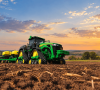
Pakistani farmers were urged to follow the Climate Smart Agriculture (CSA) approach to achieving food security and wider development goals in changing climate and rising demand for food. And to achieve this, farmers and entrepreneurs have inclined towards smart agriculture techniques. Smart agriculture is the essence of modern agriculture farming. There are many methods introduced in agriculture to increase yield and increase production. Modern farming is growing and developing for the commercialization of crops.
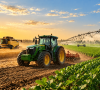
Smart agriculture involves cultivation activities with the introduction of the Internet of Things (IoT), cameras and others to increase the farm’s profitability. It further tackles the interlinked problems of food security and climate change and supports smallholder farmers by improving the productivity of inputs such as energy, seeds, and fertilizers and increasing food security. Smart farming practices help protect natural resources for future generations by protecting ecosystems and landscapes.
Smart farming is a modern concept of farming that uses the internet, soil scanning, data management to increase production. Shade net and greenhouse farming is part of modern farming and is used extensively, supporting smart agriculture farming and helping to select the right farming method depending on weather or water requirements.
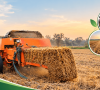
Mulch film can be considered when a soil test shows less moisture content and is a very good solution for plants requiring less water like bananas or strawberries.
Almost every aspect of Pakistan’s economy and society is intertwined with agriculture. It extends well beyond the farm gate.
| Indicator | Figure | Source |
| Agriculture’s share of GDP | ~24% | Pakistan Economic Survey 2023–24 |
| Labour force in agriculture | 37–40% | Pakistan Bureau of Statistics |
| Total cultivated area | ~22 million hectares | Ministry of National Food Security |
| Rice export earnings (FY2023) | USD 2 billion+ | PBS Trade Data |
| Livestock contribution to agri-GDP | ~60% | Economic Survey |
| Pakistan’s milk production rank | Top 5 globally | FAO 2023 |
| Agriculture’s share of freshwater use | ~90% | IRSA / World Bank |
Pakistan’s diverse climate, from the arid plains of Balochistan to the fertile river basins of Punjab and Sindh, supports a wide range of crops across two main seasons: Kharif (summer) and Rabi (winter).
Each of these crops faces its own specific pest, irrigation, and climate management challenges, which is exactly where smart agriculture tools deliver targeted value.
Understanding what holds Pakistani farming back is the first step to solving it. The challenges are real, interconnected, and worsening — but none of them are beyond reach with the right tools.
Real-time data access and decision support is the basic approach to smart farming. It constitutes of:
With the Internet of Things, smart agriculture enables farmers to better collect data on weather conditions, which holds a wealth of benefits. Better weather data enables farmers to avoid overwatering or underwatering, crop disease, and unnecessary field time.
Farm dynamics Pakistan deals with Pessl Instruments i.e., an on-farm climate & weather monitoring system offering efficient and real-time monitoring.
Greenhouse automation refers to the technology produced to optimize the behavior of the greenhouse mounted technological installations. The greenhouse machine not only provides the best circumstances for your plant to grow, but dramatically reduces operating expenses by taking into account the costs of these remedies.
Trapview is a renowned automated pest monitoring system that reduced spray cost and offers easy data sharing.
Crop management is the set of agricultural techniques used to improve crop growth, development, and yield. The combination, spacing, and order of the activities used depends on the crop’s biological characteristics (whether winter or spring crops), the cultivated shape (grains, green feed, and so on), sowing methods (row, circle, or wide-row), plant size, and soil, landscape, and weather conditions.
Use the latest precision technology to fine-tune your farming operation. Hilling, suckering, pinching and chopping are special crop management practices for individual crops. Other field practices include crop irrigation and mechanical, biological, and chemical methods for weed control, pest control, and disease control.
The contrast between conventional and smart farming is not about the size of the farm or the budget of the farmer. It is about access to information — and what that information makes possible.
| Factor | Traditional Farming | Smart Agriculture |
| Irrigation Decision | Fixed schedule or visual crop stress | Real-time soil moisture sensor data |
| Pest Management | Calendar-based or after damage appears | Early detection via automated traps |
| Weather Information | General city forecast (TV/radio) | On-farm hyper-local weather station |
| Fertilizer Application | Standard habit or blanket recommendation | Soil profiling + data-driven dosing |
| Crop Monitoring | Daily field walk, visual inspection | Remote sensors + smartphone dashboard |
| Record Keeping | Manual or none | Digital logs with season-on-season trends |
This is not about replacing the farmer’s knowledge. It is about giving every farmer the same quality of information that large commercial
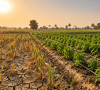
Pakistan’s farmers are facing tougher conditions each year. Water is becoming scarce, costs are rising, and the weather is harder to predict. In this situation, every mistake can lead to big losses.
Here is why smart agriculture is important:
Pakistan’s farming future will be shaped by three main realities: a growing population, changing and unpredictable weather, and limited water resources. Farmers who adapt early to new tools and smarter methods will stay ahead. The future will favor those who use data and technology, not just hard work.
At the national level, key changes will include:
Farm Dynamics Pakistan actively helps build that future by bringing tested global technologies to Pakistani farms and adapting them to local crops, climates, and farmer realities.
Founded in 2010 by second-generation farmers with roots going back to 2000, Farm Dynamics Pakistan was built by people who have managed farms, felt the weight of a poor harvest, and understood exactly what a Pakistani farmer needs, not what looks good in a brochure.
That background drives every product FDP selects and every service it delivers. Working with internationally recognized partners including John Deere, Pessl Instruments (Metos), Sentek, Goweil, and Trapview, FDP brings globally proven technology to Pakistani soil.
FDP’s portfolio covers the full farming cycle:
Beyond the equipment, Farm Dynamics Pakistan provides training, after-sales service, and technical support because technology only delivers value when farmers know how to use it effectively.
Pakistani farmers are among the hardest-working in the world. The land is productive. The knowledge runs generations deep. What has been missing until now is the data to match that dedication. Water is too precious to flood-irrigate on a guess. Pests are too costly to fight after they have already won. Fertilizer is too costly to use on a regular basis. And with climate change rewriting the seasonal rulebook every year, farming on instinct alone is a bet that gets riskier every season.
Smart agriculture does not ask you to abandon what you know. It asks you to back it up with real numbers from your soil, your weather, and your crops, so every decision you make is the best one it can be. Farm Dynamics Pakistan has been helping farmers across Punjab, Sindh, KPK, and Balochistan make that shift since 2010. From a single soil moisture sensor to a fully mechanized sugarcane operation, FDP builds solutions around your farm, not the other way around.
Agriculture is important because it provides food, employment, raw materials, and export revenue while supporting rural livelihoods.
Major crops include wheat, rice, cotton, sugarcane, maize, fruits, and vegetables.
Key problems include water shortage, climate change, pest attacks, high input costs, and low adoption of modern farming technology.
It helps farmers by using sensors, data, and automation to improve irrigation, crop monitoring, pest control, and overall productivity
The future lies in smart farming, precision agriculture, and sustainable farming practices that increase yield while conserving resources.
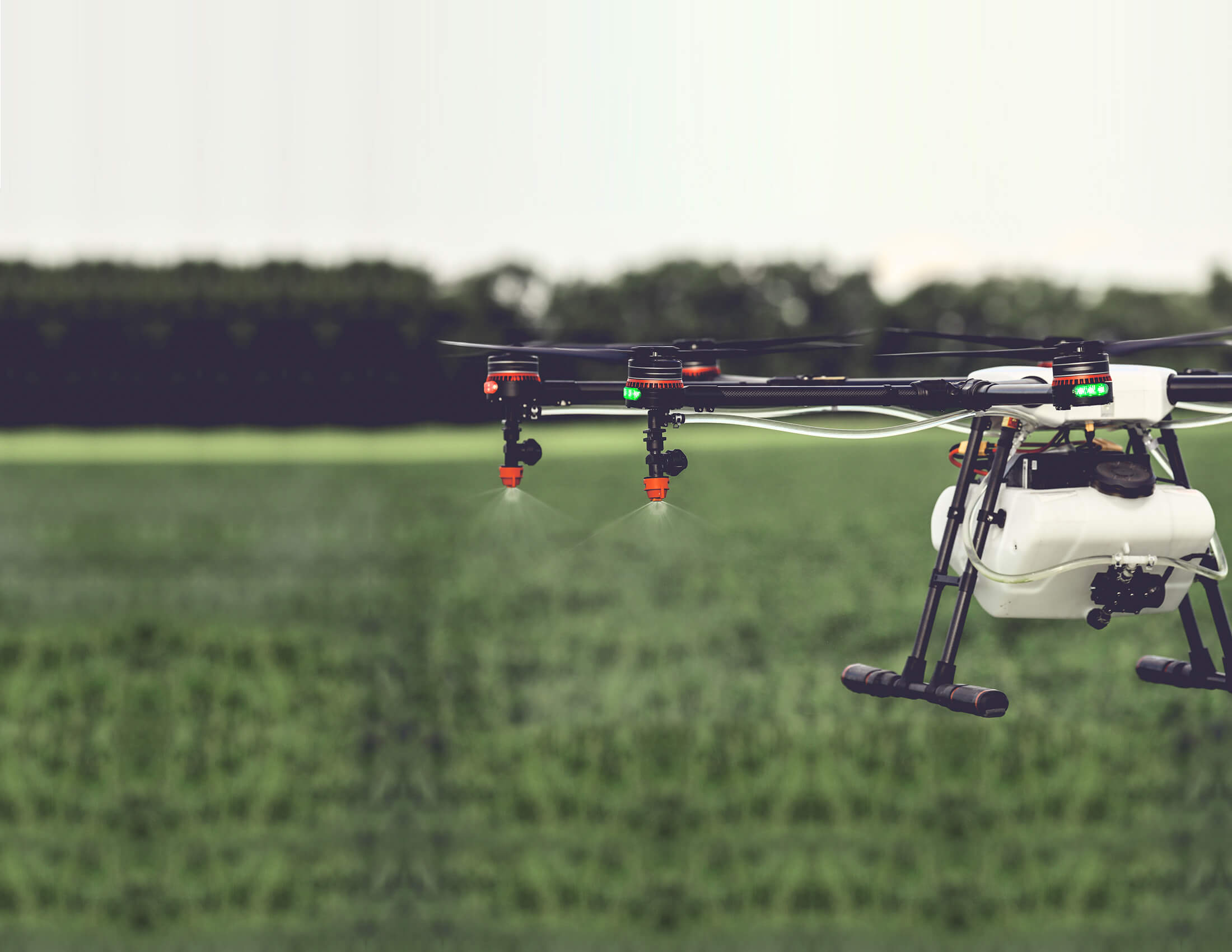
Modern farming is entering a smarter era with drones, AI, automation, blockchain, vertical farms, and advanced agricultural machinery. This blog highlights how these technologies help farmers save time, reduce waste, improve crop planning, and increase overall farm productivity.