7-J1, Main Canal Bank, Johar Town, Lahore.
  Info@farmdynamics.pk
7-J1, Main Canal Bank, Johar Town, Lahore. Info@farmdynamics.pk


 May 22, 2026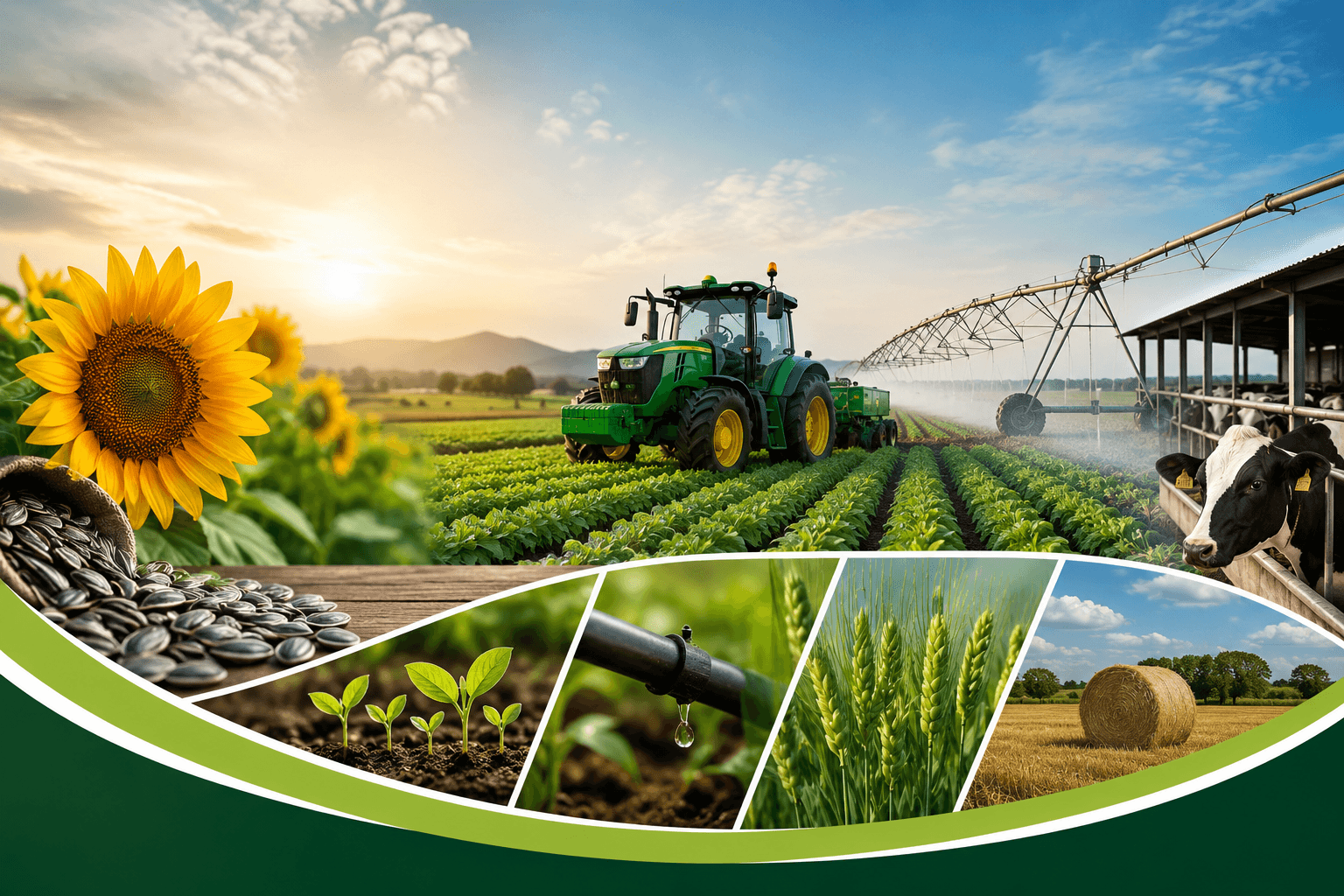
More and more farmers across Pakistan are turning to sunflower cultivation as a smart way to break out of traditional crop ruts and pull in better returns. It makes perfect sense. Our national demand for edible oil is skyrocketing, and sunflower seeds have quickly become one of the most reliable oilseed crops in Pakistan to plug that gap. The speed of the sunflower crop is its beauty. In just a few short months, you can have a substantial harvest if you properly prepare your soil, schedule your watering, and maintain field management.
This guide helps you make the best choices this season by breaking the process down into doable, tried-and-true steps.
High-yield oil extraction is the main reason we cultivate sunflower seeds. Sunflower oil is highly valued in Pakistani kitchens and food businesses due to its light quality and strong health profile.
The crop offers a grower the following clear benefits:
On a larger scale, expanding sunflower seed cultivation keeps hard-earned money in Pakistan by cutting down our massive national import bills for edible oil.
In Pakistan, adopting sunflower farming can be a wise and fulfilling decision to help stabilize your farm revenue. It fits seamlessly into your present land operations without requiring a major change in routine, and many growers find it intriguing as a dependable cash buffer during the off-seasons.
Why Do Sunflowers Make Financial Sense?
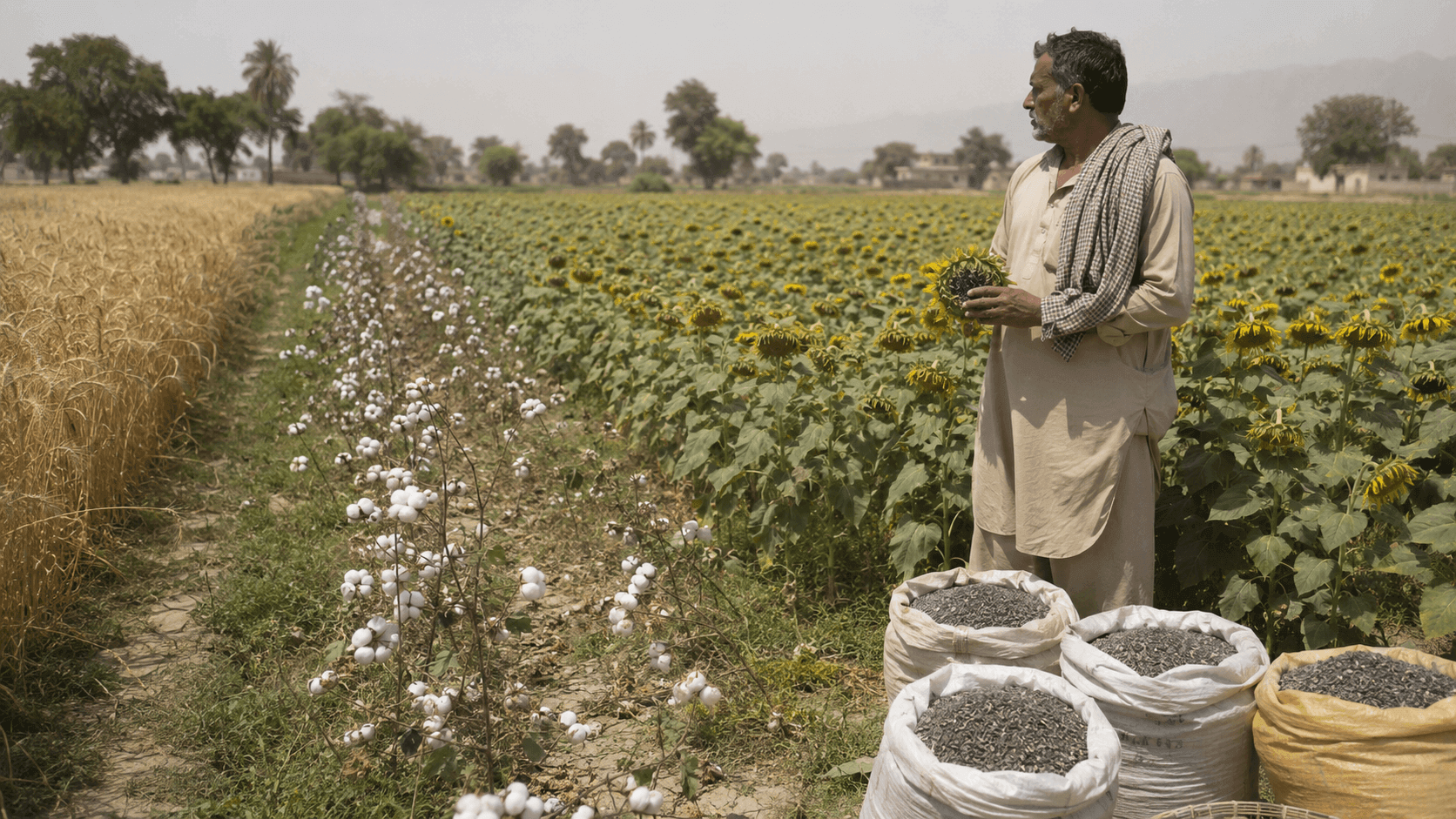
Choosing the optimal sunflower sowing season is the most important factor for ensuring full heads and heavy seeds. In Pakistan, there are two main seasons when you can plant your seeds, making it easier to plan your gardening activities.
Spring Window: February through March. This is widely considered the sweet spot because the mild temperatures encourage excellent pollination and steady growth
Summer Window: July through August.
| Season | Sowing Time | Harvest Time | Expected Yield |
| Spring | Feb – Mar | May – Jun | High |
| Summer | Jul – Aug | Oct – Nov | Medium |
Getting your timing right protects the young flowers from getting scorched by extreme peak-summer heat during seed formation.
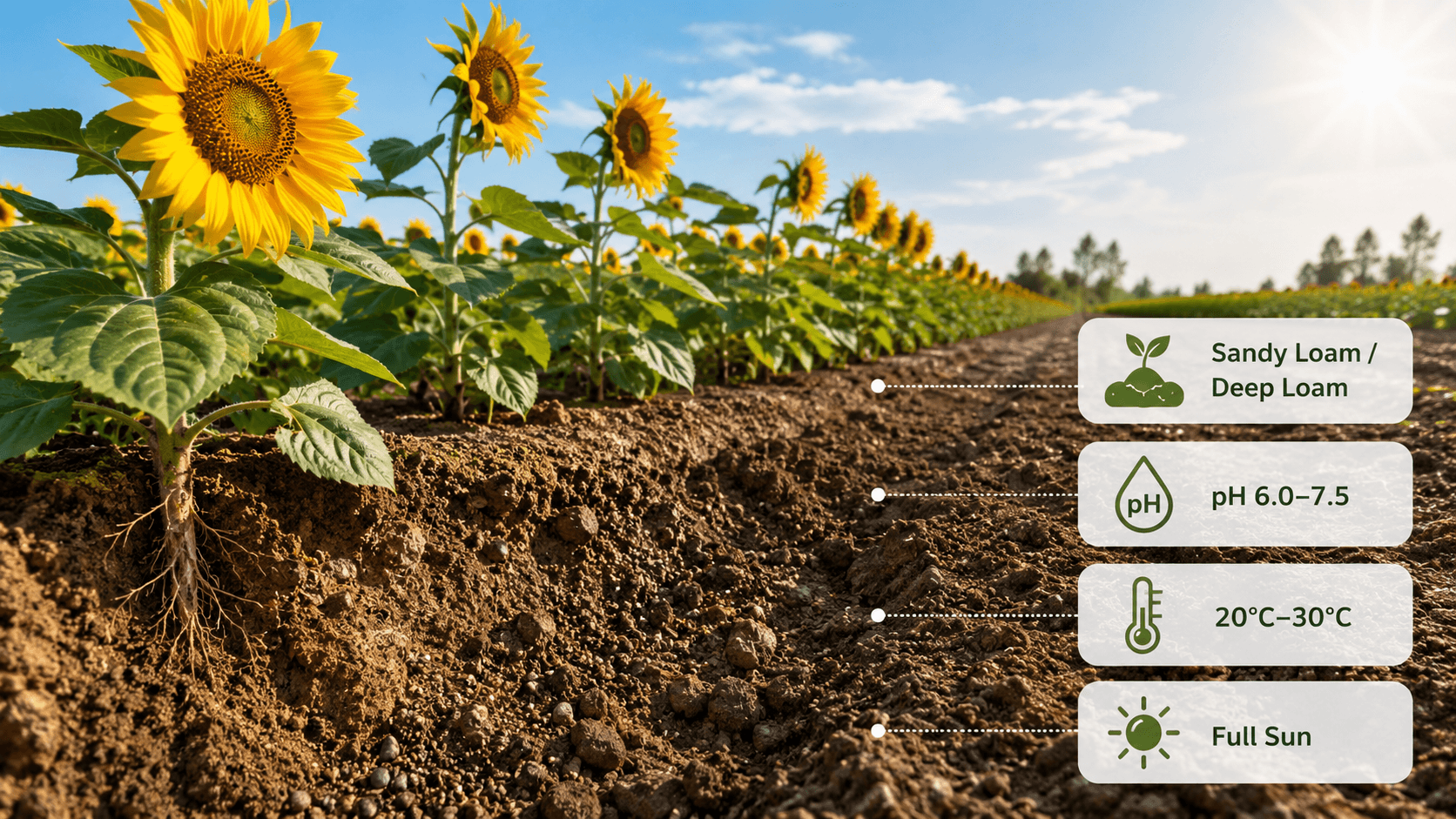
Although sunflowers can withstand a lot, they will definitely stall out in soggy, confined spaces. They require space for their roots to push deeply and breathe.
While the crop survives dry spells better than most, you will only see maximum profits if you give it a level, deeply cultivated seedbed that holds moisture without staying muddy.
Watering is where many growers accidentally compromise their yields. Knowing when to apply water directly dictates how much oil your seeds will carry at the mill.
Keep a close eye on these critical growth phases:
Mismanaging your water, either by starving the plants at flowering or flooding the fields blindly, creates the perfect environment for root diseases. To get around this, a growing number of progressive farmers are moving away from old-school flood methods and installing precision systems. Setting up high-efficiency drip irrigation solutions through Farm Dynamics Pakistan allows you to supply water straight to the root zones, cutting down evaporation losses entirely.
The way you handle your water on a daily basis will determine the best return on your investment. Remember these useful, tried-and-true suggestions to increase oil percentages and optimize seed weight:
Updating your water management not only helps you achieve your sunflower crop management goals, but it also protects your farm from Pakistan’s erratic weather patterns.
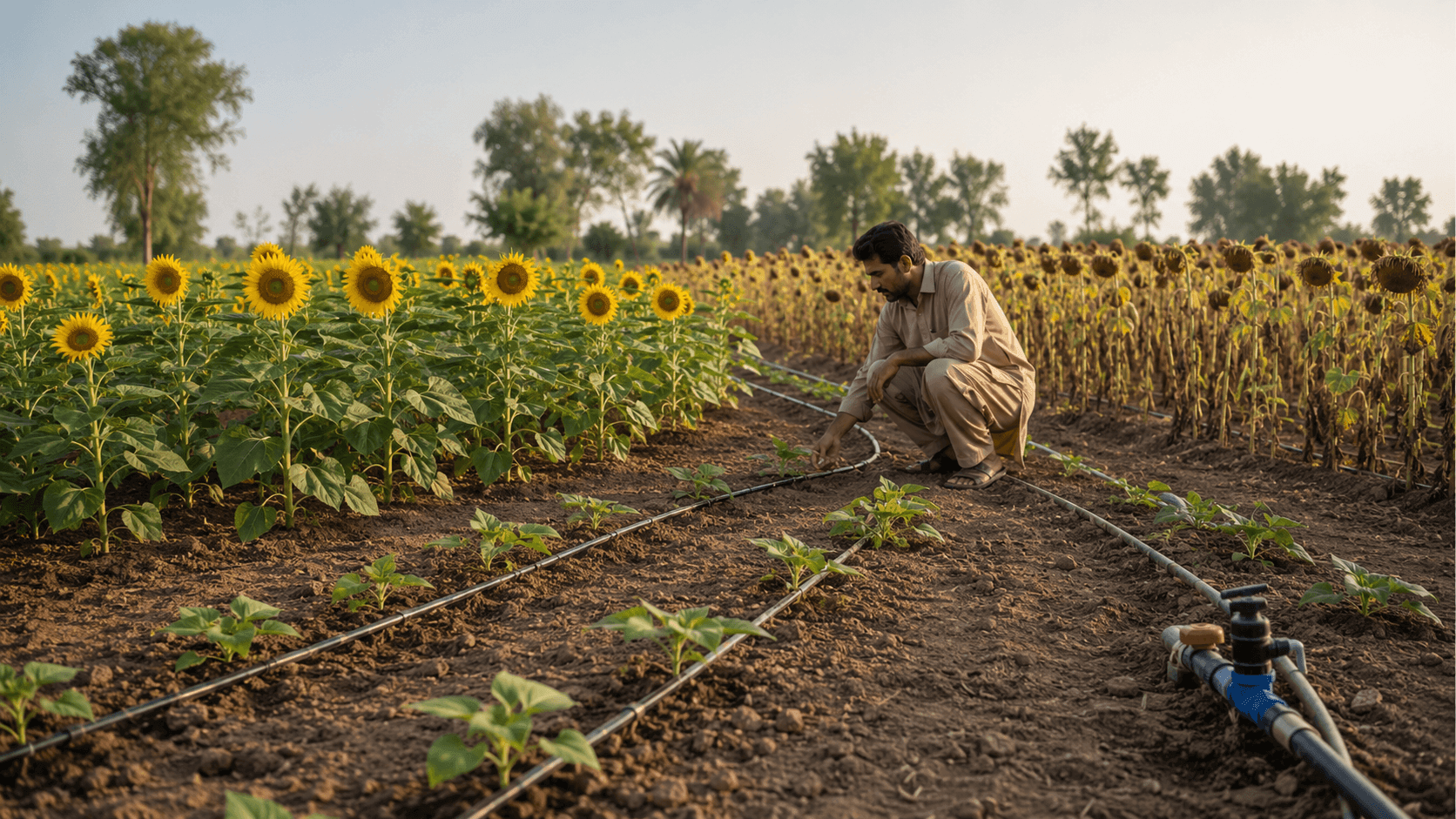
Maximizing your returns takes a bit of deliberate planning before the seed ever touches the soil. In our mixed farming landscapes, sunflowers do best when treated as a strategic rotational partner.
Remember these planning guidelines:
Achieving high yields is truly a result of your daily care and consistent dedication to your fields, rather than just luck.
If you want to take the guesswork out of the process, you can easily pull in professional agronomy advice. Utilizing the crop management and advisory support from Farm Dynamics Pakistan gives you access to precise field planning and execution data.
If you run an integrated operation, sunflowers provide excellent cross-over benefits to livestock. The crop’s deep root tracks improve the overall structure of the soil when it clears out quickly. In commercial dairy farm setups, the residual plant material can be safely used. Additionally, switching out sunflowers with hardy perennial forages like Rhodes grass breaks complex pest cycles, restores your soil, and maintains the smooth operation of your livestock feed pipeline all year long.
Scaling up your acreage means you eventually have to outgrow manual labor. Modern, mechanized tools are essential to keep your crop rotations profitable and your feed storage secure.
| Equipment | Primary Field Role | Practical Advantage |
| Combine Harvesters | Cutting and threshing heads | Cuts down field losses and saves manual labor |
| Fodder Cutters | Processing green chop | Preps uniform feed shapes for dairy cattle |
| Silage Balers | Sealing and storing forage | Keeps feed fresh for months without nutritional loss |
Because high-quality feed storage is critical for livestock survival, local business owners regularly check the price of silage baler machines in Pakistan when upgrading their storage setups to reduce spoilage.
In the end, sunflower farming offers a real opportunity for Pakistan’s agriculture sector. It is not just a crop choice but a practical way for farmers to improve income while also supporting the country’s need for locally produced edible oil.
When irrigation is managed properly, sowing is done at the right time, and fields are kept clean and well-maintained, the results become much more stable and profitable over time.
With the right technical guidance and machinery support from Farm Dynamics Pakistan, farming becomes easier to manage, moving away from traditional guesswork toward a more efficient, modern, and well-planned agricultural system.
Your best bet is the spring window from February to March, or the late summer window from July to August.
Most commercial hybrid varieties mature fully within 90 to 120 days.
Yes. Thanks to a short growing cycle and the high national demand for local edible oil, it offers excellent seasonal returns.
They require moderate watering overall, but you absolutely cannot let the soil dry out during the flowering and seed-packing stages.
Deep, fertile loam or sandy loam soils with good natural drainage will give you the best results.
Sunflowers work incredibly well when rotated in sequence with wheat, cotton, or major dairy fodder crops.
You can source certified imported machinery and custom drip irrigation setups directly through Farm Dynamics Pakistan.
DynaRYE Emmerson is a strong fodder option for dairy farmers, offering fast growth, better disease tolerance, and lower water needs than Berseem. This blog compares Berseem and Emmerson seed, covering climate needs, nutrition value, fodder yield, and milk production benefits for farmers in Pakistan.