7-J1, Main Canal Bank, Johar Town, Lahore.
 Info@farmdynamics.pk
7-J1, Main Canal Bank, Johar Town, Lahore. Info@farmdynamics.pk


 November 6, 2026
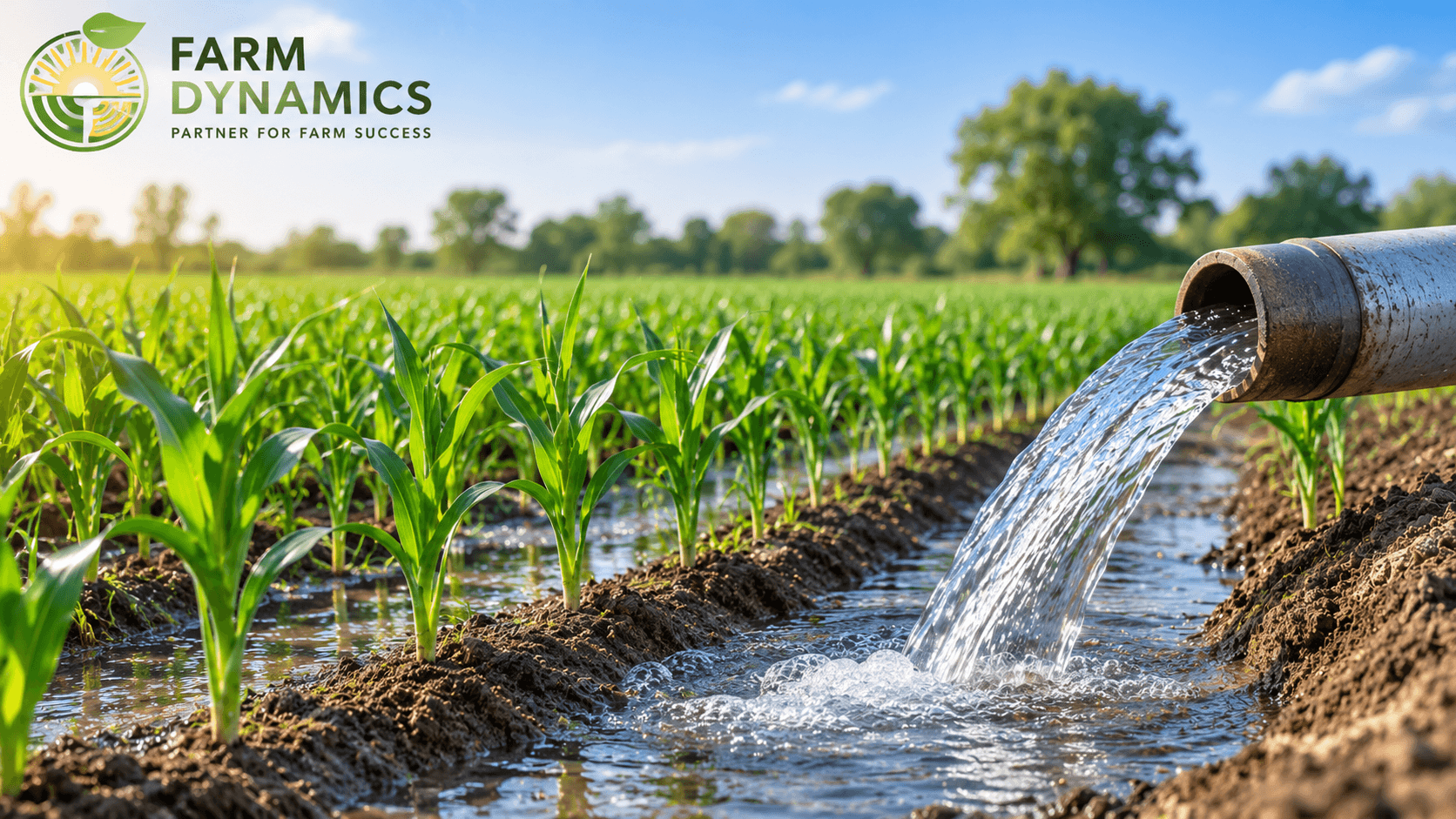
Wheat is a major cereal crop in Punjab, Pakistan, and its early growth stages play an important role in determining final crop performance. Among the different stages of wheat cultivation, the first irrigation is particularly important because it coincides with crown root initiation (CRI), a critical period of root development. The timing of the first irrigation directly affects soil moisture availability, root establishment, nutrient uptake and tiller development. Irrigation that is too early or delayed can influence crop growth, depending on soil type, sowing conditions and weather. For farmers, understanding the relationship between first irrigation and crown root development is essential for managing water efficiently and maintaining healthy wheat growth.
Under normal conditions in Punjab, the first irrigation is generally applied around 20–25 days after sowing. This period usually corresponds with the crown root initiation stage. However, the exact timing is not the same for every field. Soil texture, temperature, sowing depth, seedbed moisture and rainfall can influence how quickly the crop reaches this stage.
For example:
Rather than relying entirely on a fixed number of days, farmers should assess crop development and moisture conditions before irrigation.
Crown root initiation, commonly called the CRI stage, is an important phase in wheat development. During this stage, additional roots begin emerging from the crown region near the base of the plant. These roots are different from the initial seed roots that develop during germination. Crown roots gradually become an important part of the plant’s root system and help it absorb water and nutrients from the soil. The CRI stage generally occurs around 20–25 days after sowing under common growing conditions, although temperature, variety and planting conditions can affect its timing.
Adequate moisture during this period supports root establishment and helps the crop develop a stronger foundation for later growth.
The first irrigation is important because it helps maintain sufficient moisture during a critical period of early crop development.
Water availability during CRI supports the development of crown roots. These roots help the plant access moisture and nutrients from a larger soil area.
Tillering is the process through which wheat plants produce additional shoots from their base. Healthy early root development and suitable soil moisture support tiller formation.
The number of productive tillers eventually contributes to the number of grain-bearing spikes per unit area.
Soil moisture helps dissolve nutrients and makes them available for uptake by plant roots. Poor moisture conditions can restrict nutrient movement and absorption.
Sufficient moisture supports continued vegetative growth and helps plants establish themselves in the field.
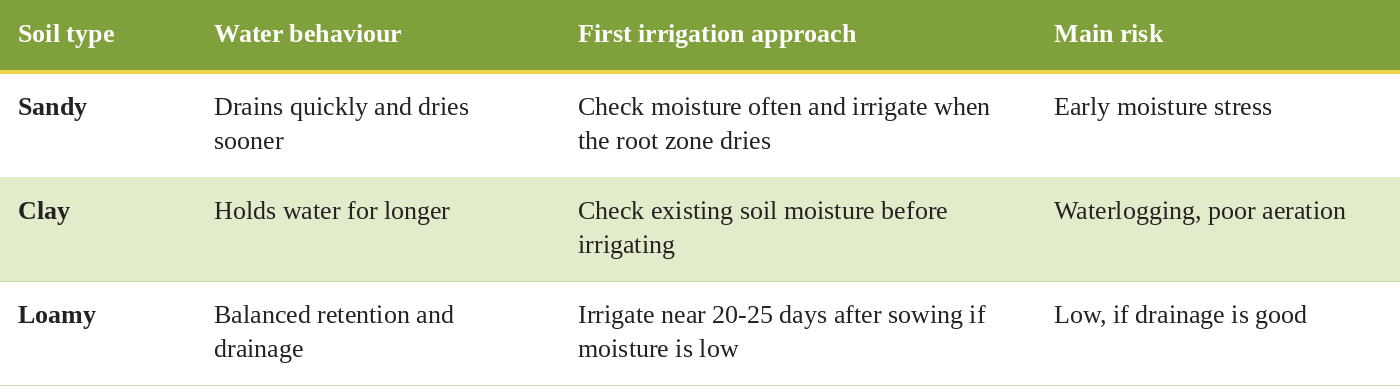
Soil type is one of the main factors influencing irrigation requirements in wheat cultivation. Different soils have different water-holding capacities, drainage rates and infiltration characteristics.
Sandy Soil
Sandy soil has larger particles and relatively large spaces between them. Water drains through it quickly, which means moisture may become limited sooner. Farmers growing wheat in sandy fields should monitor soil moisture more frequently.
Clay Soil
Clay soil contains smaller particles and generally holds more water. However, excessive irrigation can create waterlogging and reduce oxygen availability around the roots.
Loamy Soil
Loamy soil contains a balanced mixture of sand, silt and clay. It generally provides favourable moisture retention and drainage conditions for wheat cultivation.
Understanding soil characteristics helps farmers determine when irrigation is actually required.
Delaying the first irrigation beyond the appropriate CRI period can expose the crop to moisture stress.
Possible effects include:
The severity of these effects depends on the duration of moisture stress, soil conditions and the overall health of the crop. A delay is particularly concerning when the soil is already dry and rainfall is insufficient.
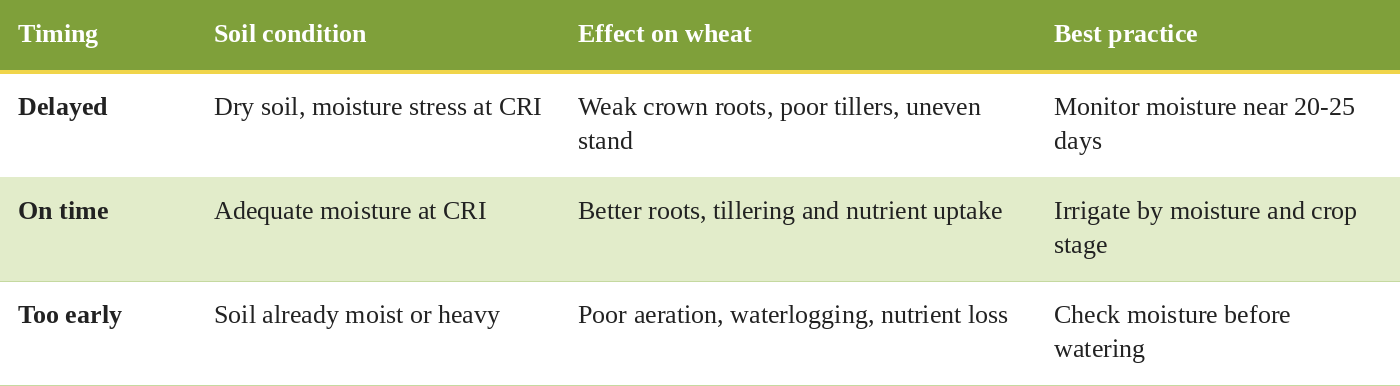
Applying irrigation before it is required can also create problems. Excess water may increase soil moisture beyond the crop’s requirements, especially in heavy soils with poor drainage. Potential consequences include:
Early irrigation does not automatically damage wheat. Its effect depends on the existing moisture level, soil texture and drainage conditions.
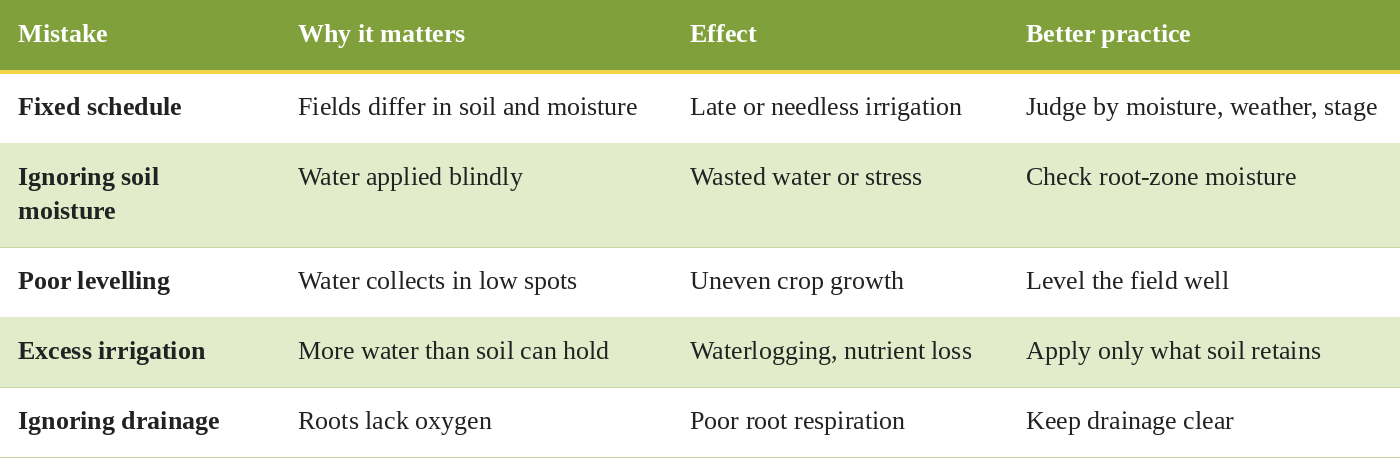
Several irrigation-related mistakes can affect early wheat development.
Not every field requires irrigation on exactly the same day. Farmers should consider soil moisture, weather and crop development.
Applying water without checking the existing moisture level can result in unnecessary irrigation or delayed watering.
Uneven fields can cause water to collect in lower areas while elevated sections remain relatively dry.
Applying more water than the soil can retain increases the risk of waterlogging and nutrient losses.
Poor drainage can affect root respiration and create unfavourable conditions for young wheat plants.
Farmers can assess irrigation requirements through regular field observation. Some useful indicators include:
Visual symptoms alone are not always reliable indicators of water requirements. Soil moisture assessment provides better information for irrigation decisions.
The first irrigation is an important part of wheat crop management because it supports development during the crown root initiation stage. In Punjab, this irrigation is generally required around 20–25 days after sowing under normal conditions. However, the ideal timing depends on soil moisture, soil texture, weather and crop development. Understanding these factors helps farmers avoid unnecessary irrigation, reduce moisture stress and support healthy root and tiller development. Farm Dynamics Pakistan aims to support farmers with practical agricultural knowledge, modern farming insights and information that helps improve crop management decisions. By staying informed about the right irrigation practices, farmers can work towards healthier wheat crops and better productivity.
Under normal conditions, the first irrigation is generally applied around 20–25 days after sowing, near the crown root initiation stage. The exact timing depends on soil moisture and growing conditions.
Crown root initiation supports the development of the permanent root system. These roots improve the plant’s ability to absorb water and nutrients and support further crop development.
Yes. Adequate moisture during early development supports tiller formation. Water stress during this period can restrict tillering.
Yes. Sandy soils generally lose moisture faster, while clay soils retain water for longer. Therefore, irrigation requirements may differ between the two soil types.
Yes. Excessive irrigation can cause waterlogging, poor soil aeration and nutrient losses, particularly in fields with inadequate drainage.
Seed roots develop from the germinating seed, while crown roots emerge from the crown region near the plant base. Crown roots become an important part of the mature wheat root system.