7-J1, Main Canal Bank, Johar Town, Lahore.
  Info@farmdynamics.pk
7-J1, Main Canal Bank, Johar Town, Lahore. Info@farmdynamics.pk


 December 23, 2019
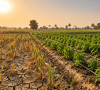
The irrigation system of Pakistan is really at the heart of the country’s farming life. Across millions of acres, crops depend on water coming from canals, rivers, tube wells, and different local water sources. Since rainfall doesn’t come evenly in many parts of the country, farmers can’t rely on the weather alone to grow their crops. Because of that, irrigation has always been necessary here. Earlier, most farming depended on basic methods that often wasted a lot of water. But things are slowly shifting now. Farmers are starting to use more modern systems like drip irrigation, sprinkler systems, center pivots, rain guns, and subsurface drip setups. These methods are helping in better water use, healthier crops, and less wastage overall.
In this changing situation, Farm Dynamics Pakistan is working with farmers to make irrigation more efficient and practical, especially for long-term agricultural needs.
Pakistan actually has one of the largest connected irrigation networks in the world, spread across more than 18 million hectares of farmland. It quietly supports the country’s agriculture in the background and plays a big role in making sure food keeps coming from farms.
What makes it even more important is how much people depend on farming here. Around 72% of Pakistan’s population is linked to agriculture in one way or another. So, when irrigation works well, it directly affects livelihoods, income, and food on the table for a huge part of the country.
Irrigation in Pakistan started developing in a more planned and scientific way in the late 19th century. At that time, the main idea was to simply reduce the risk of food shortages, improve crop production, and help keep stability in the region.
Even today, most of the system still depends on the Indus Basin network. It does a huge job of supporting agriculture, but at the same time, a lot of water is still lost. This usually happens because of traditional farming methods and weak management at the field level.
Modern irrigation systems are therefore essential for improving water efficiency and encouraging long-term agricultural growth.
Pakistan employs both conventional and contemporary irrigation techniques. Among the primary kinds are:
Ⓐ Canal irrigation: This is the most common source of irrigation in Pakistan. Large farming areas depend on canal water that comes from the Indus Basin system. It supports millions of acres of farmland across the country.
Ⓑ Tube well irrigation: In many areas where canal water is not easily available, farmers use tube wells. This system pumps underground water to irrigate crops, especially in dry regions.
Ⓒ Flood irrigation: This is a very old and simple method where fields are flooded with water. It is still widely used, but it wastes a lot of water and is not very efficient.
Ⓓ Center pivot system: This system is used on large commercial farms. It rotates around a central point and irrigates crops in a circular pattern. It is fully mechanized and saves time and labor.
Ⓔ Lateral move system: In this system, equipment moves in a straight line across large fields. It is suitable for wide and flat agricultural land.
Ⓕ Subsurface drip irrigation: This advanced method delivers water directly below the soil surface to plant roots. It reduces evaporation and is very efficient for high-value crops.
Each irrigation system has its own use depending on land size, crop type, soil condition, and water availability.
Sophisticated and high-efficiency irrigation methods of water application are used in larger irrigation systems. There are two basic methods:
Artificial rainfall is provided by irrigation by the sprinkler. A pipe system in which the liquid is under pressure guides the water to the ground. The spraying is accomplished using multiple spinning sprinkler heads or spray nozzles or a single gun type sprinkler. Sprinkler System is subdivided into Centre Pivot, Rain Gun and Lateral Move System.
Suitable for:
Appropriate for a wide range of field crops like wheat, pulses, gram, as well as vegetables, cotton, tea, coffee, soya bean, and other fodder crops. Also, suitable for residential, industrial, hotel, public & government enterprises, resorts, golf links, and racecourses.
Through drip irrigation, also referred to as trickle irrigation, a pipe system leads the water to the ground. A pipe is mounted on the field next to the line of plants or trees. A hole is created in the tubing and fitted with an emitter at regular intervals between the plants or branches. The water is distributed through these emitters gradually, drop by drop, to the crops.
Suitable for:
Appropriate for irrigation of row crops like Sugarcane, banana, strawberry, vegetables, cotton, spices and floriculture. Also recommended to use in nurseries and greenhouses, used for widely spaced horticultural plants like citrus, mango, guava, apple, etc.
The irrigation system of Pakistan is the backbone of the country’s food production. Since rainfall is not reliable in many regions, irrigation ensures stable farming throughout the year.
A strong irrigation system helps farmers:
Without proper irrigation, agriculture in Pakistan cannot survive at its current level.
A proper irrigation system is not installed randomly. It is planned step by step to make sure water is used in the best way and crops get an equal supply. The process is simple but very important for long-term success.
First, experts visit the farm and check basic conditions. They study the crop type, water source, soil condition, and total land size. This helps in understanding what kind of system will work best.
After the survey, the irrigation system is planned according to farm needs. The land shape, water pressure, and crop requirements decide whether drip, sprinkler, or another system is suitable.
The next step is choosing the right equipment. This includes pumps, pipes, filters, valves, sprinklers, and drip emitters. Each part is selected carefully so the system works smoothly.
After selection, the system is installed in the field. All pipes, lines, and equipment are properly connected so water can reach every part of the farm evenly.
Once installation is complete, the system is tested. Water flow, pressure, and coverage are checked to make sure everything is working properly and no area is left dry or overwatered.
Finally, farmers are trained on how to use the system. They are guided on daily operation, cleaning, basic repairs, and seasonal maintenance so the system runs efficiently for a long time.
This step-by-step process helps ensure better water control, improved crop growth, and long-lasting system performance.
Increasing salinity and waterlogging, low efficacy in delivering and use, overexploitation of fresh groundwater, unbalanced distribution, fickle delivery, and inadequate cost recovery are some of the major problems faced by farmers.
Even though Pakistan has a large irrigation network, many problems still exist:
Modern irrigation systems are designed to save water and improve crop performance. They are more precise and efficient than traditional methods.
The main modern solutions include:
These systems are suitable for:
Modern farming requires efficient water use. Old irrigation methods waste too much water and reduce crop efficiency. That’s why more farmers are now turning to advanced systems that provide improved control and results, making their work easier and more efficient.
By using modern irrigation technology, farmers can reduce costs, save water, and increase productivity at the same time.
Farm Dynamics Pakistan continues to support this shift by offering advanced irrigation solutions that match the needs of Pakistani agriculture. With proper planning, installation, and support, farmers can build a more sustainable and profitable future.
With the help of Farm Dynamics Pakistan, farmers can shift toward these modern systems for better water use and higher production. Farm Dynamic Pakistan comprehends the catastrophic problems faced by agriculturalists and farmers. That’s why FDP deals with imported and high-efficiency irrigation systems. Such as:
Feel free to contact us regarding product discussions and services related to irrigation systems and other field mechanization technology.
It is a large agricultural water network that includes canals, rivers, tube wells, flood irrigation, drip irrigation, sprinkler irrigation, and modern irrigation technologies.
The Indus Basin Irrigation System is the largest and most important irrigation network in Pakistan.
Water losses, salinity, waterlogging, uneven distribution, groundwater depletion, and low efficiency are major challenges.
It depends on the farm type. Drip irrigation suits orchards, while sprinkler and center pivot systems are best for large fields.
It conserves water by delivering it directly to the plant’s root zone, enhancing efficiency and crop yield.
Yes, FDP provides comprehensive irrigation solutions, including drip, sprinkler, center pivot, lateral move, and hose reel systems.