7-J1, Main Canal Bank, Johar Town, Lahore.
 Info@farmdynamics.pk
7-J1, Main Canal Bank, Johar Town, Lahore. Info@farmdynamics.pk


 May 4, 2019
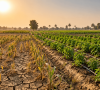
The root zone is the area of soil and oxygen surrounding a plant’s roots. Understanding it is essential for effective horticulture, as healthy roots help plants grow properly. Deep-rooted plants have deeper root zones and rely more on groundwater. Identifying the root zone’s drip line also helps gardeners water plants efficiently during droughts. Gardeners sometimes overlook the root zone when fertilizing plants, even though it is essential for nutrient absorption. Deep root feeding encourages fibrous root growth and helps plants access nutrients in dry or overheated soil. Maintaining a healthy root zone temperature and soil condition is also important. Soil compaction, extreme temperatures, and improper watering can weaken roots and reduce a plant’s ability to absorb water and nutrients.
Root zone research has been conducted for several decades, though the underlying principles of root management and processes in concentrated cropping systems remain largely undetermined. Better grain production to meet the food demands of a growing population has relied heavily on chemical fertilizer inputs, particularly based on the traditionally assumed principle of ‘high input, high output’. This has ultimately led to fertilizer overuse while overlooking the biological role of roots in efficiently acquiring and mobilizing soil nutrients. Root zone management plays a crucial role in assessing root interactions with soil nutrient resources and root-driven processes that influence nutrient transformation, efficient nutrient acquisition, and utilization, ultimately improving crop productivity. The efficiency of roots in enhancing nutrient acquisition, mobilization, and use can be fully exploited through:
Researches have revealed that root zone management is a proficient approach to escalate both nutrient use efficacy and crop productivity for maintainable crop production. The ultimate objectives of this article are to summarize the principles of root zone management and how it affects in increasing efficiency of the crop as well as delivering an overview of the biological potential of root zone system and processes to increase the productivity of the crop and nutrient use productivity.
An EnviroSCAN plays a crucial role in ascertaining the root zone development of a crop. An EnviroSCAN provides soil-content-water summaries for irrigation arrangement or other water movement mechanisms. The range of measurement is oven dry to saturation. EnviroSCAN probes measure soil moisture at manifold depths and are very simple to install. An EnviroSCAN is suggested for higher precision research measurements, measurements deeper around 80 cm and stony soils. It is customizable through adding sensors at user-quantified depths.
At Farm Dynamics Pakistan, EnviroSCAN provides you full control of irrigation planning by: