7-J1, Main Canal Bank, Johar Town, Lahore.
  Info@farmdynamics.pk
7-J1, Main Canal Bank, Johar Town, Lahore. Info@farmdynamics.pk


 July 24, 2026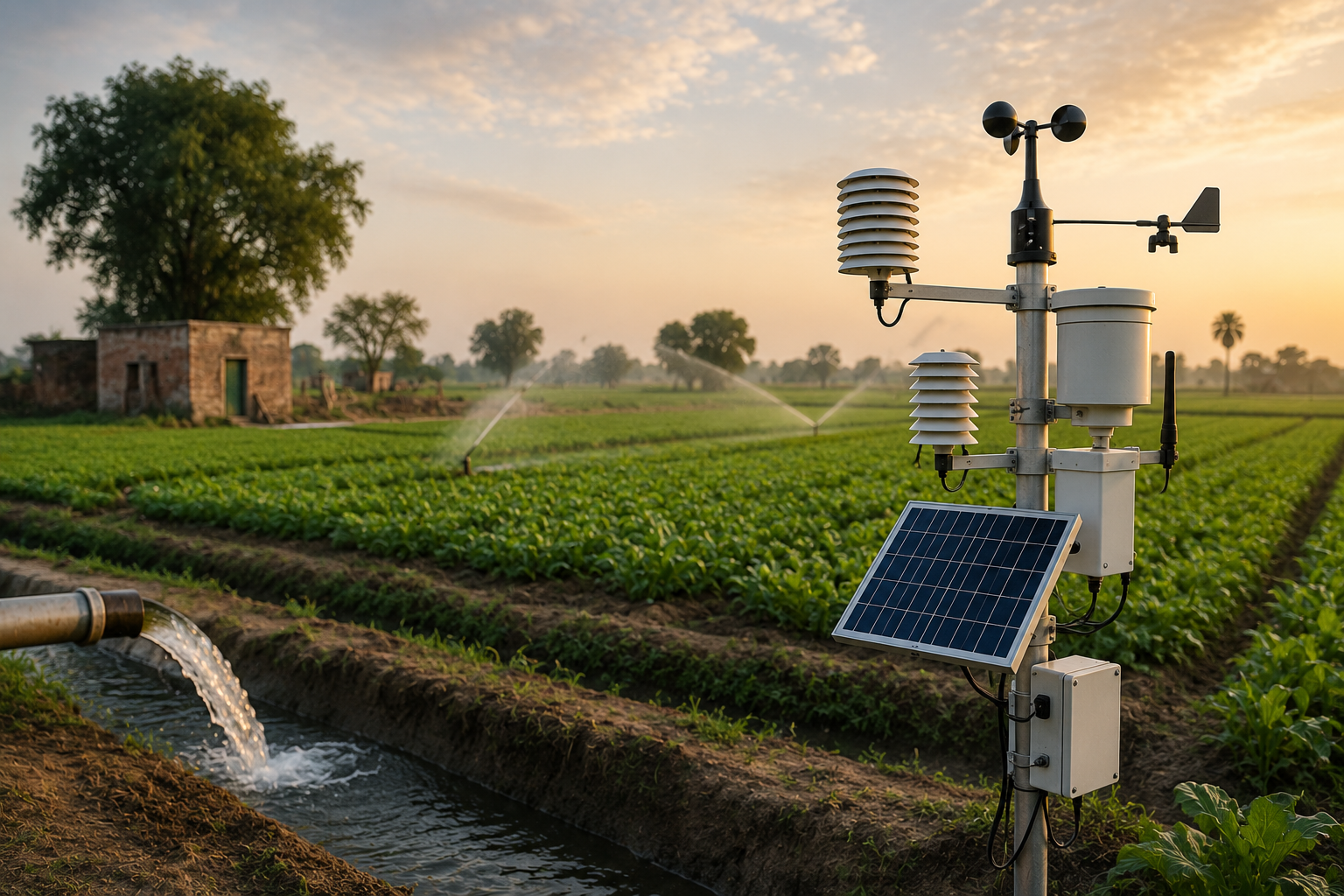
Every farmer looks at the sky before starting work. Will it rain today? Will it stay hot? Is a storm coming? These simple questions affect almost every farming activity. In the past, farmers depended largely on experience and seasonal patterns. But the weather is not as reliable as it once was. Some places get less rain. Other places get sudden storms or long heat waves. The changes mean farmers need to have better information to make the right decisions. This is where weather and climate monitoring can help. It gives farmers real-time information about conditions on their own farms. Instead of guessing, they can make decisions based on actual data. Farm Dynamics Pakistan is supporting this change by providing modern on-farm climate monitoring systems that help farmers improve productivity and reduce risks.
Although many people use their phones to check the weather, these forecasts typically cover large cities or regions. Conditions on a farm might differ from those in the closest town. For example, one village may receive rain while another area only a few kilometers away stays dry. Wind speed, humidity, and temperature can also change from place to place. This is why local weather information matters. An on-farm climate monitoring system collects data directly from the field, allowing farmers to monitor temperature, rainfall, humidity, wind speed, soil conditions, and solar radiation in real time. This information helps farmers understand exactly what is happening on their land at any moment, making it easier to respond to changing conditions and make informed farming decisions.
Water is one of the most important resources in farming. Using too much water wastes money and energy. Using too little can reduce crop growth. Weather monitoring helps farmers decide when irrigation is really needed. For example, if rain is expected tomorrow, farmers may delay watering their fields. If temperatures are very high, they may increase irrigation to protect crops from heat stress. This approach saves water and lowers costs. It also helps plants grow in healthier conditions. When weather data is used together with soil moisture sensors, irrigation becomes even more accurate. Farmers apply the right amount of water at the right time.
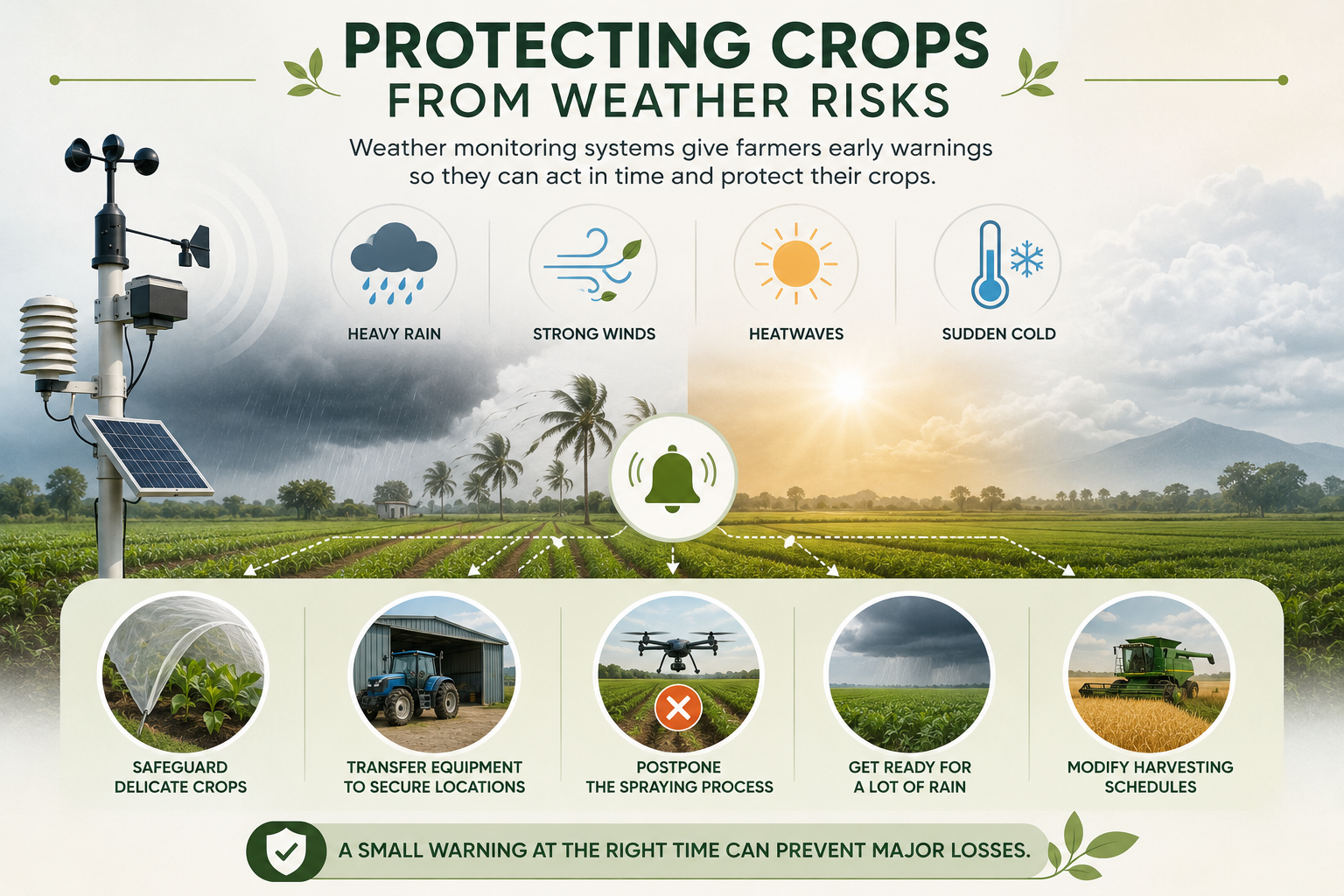
Bad weather can damage crops very quickly. Heavy rain, strong winds, heatwaves, and sudden cold temperatures can all affect farm production. Weather monitoring systems give farmers early warnings before these events happen. This makes it possible for farmers to:
Many insects and plant diseases are affected by weather conditions. Warm weather can make insects more active. Excess moisture encourages fungal diseases. Rain can also bring some plant diseases. Farmers who can see these weather patterns can respond more quickly. If humidity stays high for days, a farmer can go out and check crops before disease spreads. This reduces crop damage and can reduce the need for unnecessary pesticide use. Taking the right decision at the right time saves money and effort.
Farming is all about timing. Planting too early or harvesting too late can affect crop quality and yield. Weather information helps farmers plan many important activities. Good timing leads to better results and fewer problems during the season. Farmers around the world are seeing changes in the climate. Some areas face longer dry periods, while others receive unexpected rainfall. These changes make farming more difficult. Climate monitoring helps farmers understand long-term weather patterns. Over time, they can see trends such as:
This information helps farmers plan for the future. They can choose better planting dates, improve irrigation systems, and prepare for changing conditions. Check On-farm Climate & Weather Monitoring System Catalogue by Farm Dynamics Pakistan.
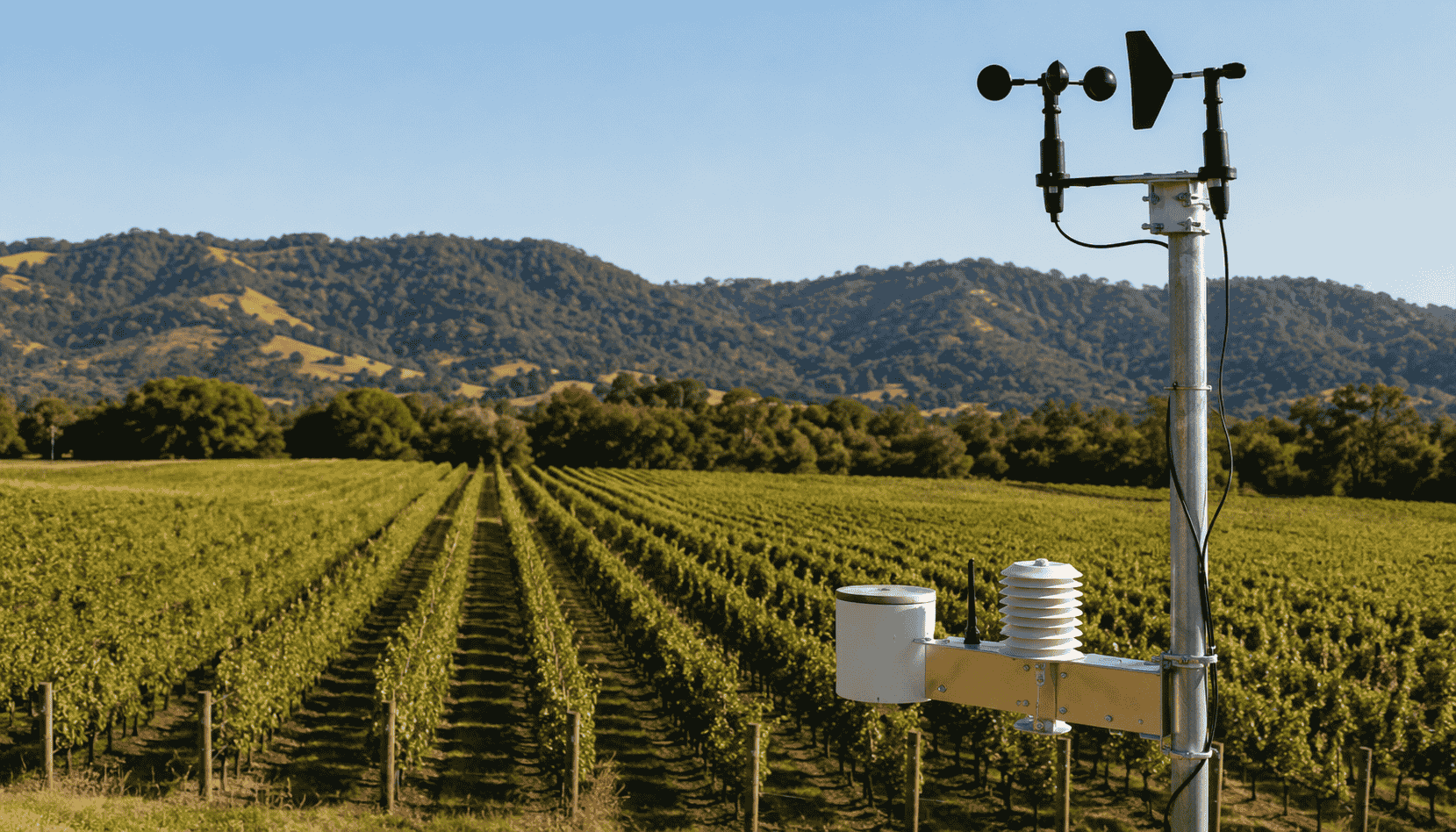
Many farmers manage large fields that are spread over different locations. Visiting every area every day takes time. This is made simpler by contemporary climate monitoring systems. Farmers can use computers or mobile phones to check the weather. A few systems offer current weather conditions, cell phone access, SMS notifications, automatic reports, and historical weather records. These features allow farmers to stay informed about changing conditions without needing to visit every field, helping them monitor their farms more efficiently and make timely decisions.
Modern farming needs more than experience alone. It also needs accurate information. Farm Dynamics Pakistan offers on-farm climate monitoring systems that help farmers collect weather data directly from their fields. These systems monitor rainfall, temperature, humidity, wind speed, and other important conditions. With this information, farmers can make better decisions about irrigation, crop protection, fertilizer use, and harvesting. This supports a more efficient and sustainable farming system. As precision agriculture grows in Pakistan, weather monitoring will continue to play an important role in helping farmers improve yields while reducing risks. Every farming decision matters.
Choosing the right day to irrigate, spray, plant, or harvest can make a big difference. Weather and climate monitoring remove much of the guesswork from farming. Instead of depending only on experience, farmers can use real information from their own fields. As weather patterns continue to change, farmers who use modern tools will be better prepared for future challenges. Better information leads to better decisions, healthier crops, and stronger farms.
It is a process of gathering information about temperature, rainfall, humidity, wind, and other weather conditions to help farmers make better decisions.
It reduces water waste by assisting farmers in knowing when irrigation is required and when rain is anticipated.
Yes. Early warnings about storms, heatwaves, or heavy rainfall help farmers protect crops and plan field activities.
It can provide data about rainfall, temperature, humidity, wind speed, soil conditions, and solar radiation.
Farm Dynamics Pakistan provides advanced climate monitoring systems that help farmers improve irrigation, manage crops better, and make informed decisions.