7-J1, Main Canal Bank, Johar Town, Lahore.
  Info@farmdynamics.pk
7-J1, Main Canal Bank, Johar Town, Lahore. Info@farmdynamics.pk


 October 12, 2026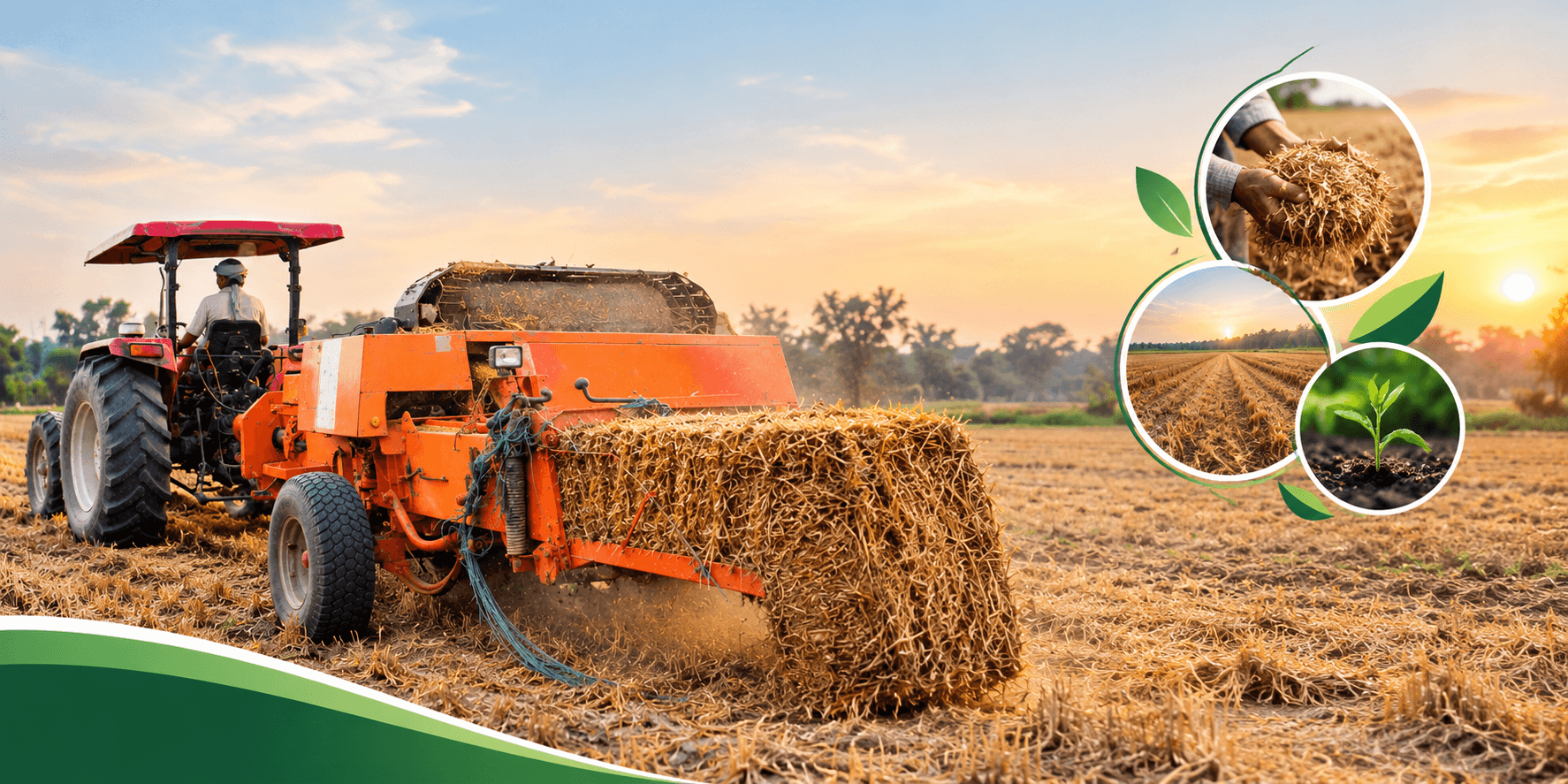
Punjab’s agriculture sector is moving toward modern farming practices that improve efficiency, strengthen climate resilience, and reduce environmental impacts. The Punjab Climate-Resilient and Low-Carbon Agriculture Mechanization Project (P-CLAMP) aims to support this transition through advanced machinery, improved access to mechanization services, and stronger agricultural research facilities. Running from 2025–26 to 2030–31, the project has a total estimated cost of Rs. 36.12 billion, with Rs. 3.4 billion allocated for 2026–27. Its planned investments include rice harvesters, mechanical transplanters, nursery-raising machines, and crop-residue balers. Supported by the Asian Development Bank (ADB), the initiative also aims to improve rural livelihoods and promote more sustainable agricultural practices across Punjab.
P-CLAMP is a Government of Punjab initiative designed to improve agricultural productivity, sustainability, and climate resilience. With support from the Asian Development Bank, it focuses on expanding access to modern machinery, encouraging sustainable crop-residue management, and strengthening institutional capacity. The project aims to help smallholder farmers access advanced machinery services without requiring every farmer to purchase expensive equipment independently. Private-sector machinery service providers will help improve farmers’ access to modern agricultural equipment. P-CLAMP is expected to improve livelihoods for approximately 220,000 rural farm households in Punjab’s major crop-producing districts.
Its key priorities include:
These priorities connect agricultural modernization with environmental protection and rural economic development.
According to the Punjab Agriculture Department’s scheme details, P-CLAMP has a total estimated cost of Rs. 36,120 million, equivalent to Rs. 36.12 billion. The listed allocation for 2026–27 is Rs. 3,400 million, or Rs. 3.4 billion. A key part of the project is its proposed cost-sharing arrangement for eligible agricultural machinery. The published scheme outlines the following funding structure:
| Funding component | Share of eligible machine cost |
|---|---|
| Government matching grant | 30% |
| Farmer or service provider contribution | 20% |
| Bank financing | 50% |
| Total | 100% |
The government grant is capped at Rs. 5 million per machine, according to the published scheme details. The applicant is expected to contribute 20% of the eligible machine cost, while bank financing covers the remaining 50%, subject to applicable conditions. This arrangement aims to reduce the initial financial burden of acquiring expensive equipment. It could also encourage machinery service providers to invest in equipment and serve multiple farms. However, the funding structure does not guarantee approval for every applicant. Eligibility, machine specifications, bank lending decisions, and application procedures must be confirmed through official project announcements before applicants make financial commitments.
The Punjab Agriculture Department lists six major machinery categories under the Punjab Climate-Resilient and Low-Carbon Agriculture Mechanization Project (P-CLAMP), with a combined target of 10,858 machines. These machines are intended to improve access to modern agricultural equipment, support timely farming operations, and encourage more efficient crop-residue management across Punjab. The planned machinery includes rice combine harvesters, mechanical rice transplanters, nursery-raising machines, and balers.
Each category serves a specific purpose. Combine harvesters help mechanize crop harvesting, while rice transplanters can make seedling transplantation more efficient and reduce dependence on manual labour. Rice nursery-raising machines support the preparation of seedlings, and crop-residue balers help collect and compress leftover plant material for easier handling and transportation.
The published machinery targets are outlined below:
| Machinery category | Target units |
|---|---|
| Head/Half-Feed Rice Combine Harvesters | 3,050 |
| Full-Feed Rice–Wheat Combine Harvesters | 1,052 |
| Riding-Type Rice Transplanters | 800 |
| Walk-Behind Rice Transplanters | 4,000 |
| Rice Nursery Raising Machines | 1,506 |
| Balers for Crop-Residue Management | 450 |
| Total | 10,858 |
These figures represent the project’s published machinery targets, not confirmation that all machines have already been purchased or distributed. Actual implementation will depend on the project’s rollout, eligibility requirements, and applicable funding arrangements. The targets indicate the planned scale of investment in agricultural mechanization and crop-residue management under P-CLAMP.
Rice combine harvesters perform harvesting and grain-separation operations mechanically. They can help farmers complete harvesting more efficiently and reduce dependence on manual labour during busy periods. P-CLAMP includes both head/half-feed and full-feed rice combine harvesters. This investment supports harvesting operations across rice and rice–wheat cropping systems. Timely harvesting can also help farmers prepare fields for the next crop. However, actual benefits depend on machinery availability, field conditions, operator skills, and proper maintenance.
Rice transplanting can require substantial labour, particularly during peak planting periods. Mechanical transplanters help place seedlings more efficiently when fields and seedlings are properly prepared. The project lists 800 riding-type rice transplanters and 4,000 walk-behind units. These different machine types can serve varying operational needs and machinery-service arrangements. Mechanized transplanting may improve planting efficiency and consistency. Nevertheless, results depend on seedling quality, nursery preparation, field levelling, water management, and operator training.
Healthy seedlings are essential for successful rice establishment. Nursery-raising machines can support more organized seedling preparation and improve the availability of seedlings for mechanical transplanting. P-CLAMP includes a target of 1,506 rice nursery-raising machines. This investment complements the planned transplanters because efficient mechanical planting requires suitable seedlings at the right time. Together, nursery preparation and transplanting equipment can support better-coordinated rice production operations.
Crop-residue management is an important part of P-CLAMP’s environmental objectives. In some farming areas, crop residues are burned to clear fields quickly, contributing to smoke and air pollution. Balers collect and compress loose crop residues into manageable bundles. These bales can then be transported for suitable agricultural or industrial uses, depending on local demand and available infrastructure. The project lists 450 balers for crop-residue management. By making residue collection easier, this equipment could support alternatives to burning and encourage more productive use of agricultural resources. However, balers alone cannot eliminate crop-residue burning. Their effectiveness depends on timely machinery access, affordable collection services, transportation, suitable markets, and reliable demand for collected material.
Climate-resilient agriculture aims to protect farming systems against climate-related risks while improving resource efficiency. In Punjab, this includes managing seasonal uncertainty, maintaining productive farming operations, and reducing avoidable environmental impacts. P-CLAMP supports these objectives in three main ways.
These measures may improve farm efficiency and support more sustainable practices. Nevertheless, machinery is only one part of climate adaptation. Effective water management, suitable crop varieties, sound agronomic practices, and access to reliable agricultural advice remain important.
Smallholder farmers can face high machinery costs, labour shortages, and limited access to farm services during critical planting and harvesting periods. P-CLAMP aims to address some of these barriers by improving access to modern agricultural equipment.
The project could create several benefits:
The ADB’s projected improvement in livelihoods for approximately 220,000 rural farm households highlights the project’s intended reach. However, the scale of these benefits will depend on implementation, affordable access to machinery services, and whether rural businesses can operate sustainably.
Agricultural mechanization can change traditional farm tasks and affect rural workers differently. P-CLAMP therefore includes alternative livelihood opportunities for women agricultural workers as part of its broader development objectives. Suitable training and access to economic opportunities could help women participate in changing rural economies. Depending on local demand and the support provided, possible pathways might include nursery-related activities, agricultural service businesses, and other suitable rural enterprises. These are potential opportunities, not guaranteed benefits or confirmed commitments to specific businesses. Inclusive implementation is important. Women need access to relevant information, practical skills development, and realistic employment or business opportunities. Barriers such as access to finance, mobility, and the availability of suitable work should also be considered. The project’s success should therefore be assessed not only by the number of machines introduced but also by whether agricultural workers can access meaningful livelihood opportunities during the transition to mechanized farming.
P-CLAMP includes two planned institutional investments that could strengthen Punjab’s long-term agricultural capacity.
The project includes the establishment of a Machinery Testing and Evaluation Centre at the Agricultural Mechanization Research Institute (AMRI), Faisalabad. A dedicated centre could strengthen the technical evaluation of agricultural machinery and support more informed decisions about equipment suitability and performance. Over time, stronger testing capacity may help improve machinery selection and the reliability of mechanization services. The centre’s specific testing services and operational arrangements should be confirmed through official project updates as implementation progresses.
The project also includes a Speed Breeding Facility at the Ayub Agricultural Research Institute (AARI). Speed breeding uses controlled growing conditions and research techniques to accelerate plant breeding cycles. Under suitable conditions, it can help researchers evaluate and develop crop varieties more quickly than conventional breeding timelines allow. This research could contribute to longer-term efforts to improve crop characteristics, including productivity and adaptation to environmental stresses. However, specific varieties, research outcomes, and delivery timelines should not be assumed without published results. Together, the planned facilities address complementary needs: machinery evaluation and agricultural research.
Punjab’s wider climate priorities include strengthening resilience, reducing environmental risks, supporting lower-emission development, and promoting sustainable investment. P-CLAMP connects these priorities with agricultural modernization. Its planned investments in machinery and crop-residue management may help reduce some of the practical barriers that encourage inefficient farming operations and residue burning. The research facilities could also strengthen the technical capacity needed to support future agricultural improvements. The project’s inclusive development objectives are equally important. Supporting alternative livelihood opportunities for women agricultural workers recognizes that the transition to mechanized farming must consider rural employment alongside productivity and environmental outcomes. However, the project’s contribution to Punjab’s climate goals will depend on effective implementation. Access to machinery, viable residue-use markets, appropriate training, and continued investment in research will influence its overall impact.
The Punjab Climate-Resilient and Low-Carbon Agriculture Mechanization Project (P-CLAMP) is planned for 2025–26 to 2030–31, with a total estimated cost of Rs. 36.12 billion and an allocation of Rs. 3.4 billion for 2026–27. The project aims to expand access to modern agricultural machinery, improve farming efficiency, and promote more sustainable crop-residue management across Punjab. Farmers and agricultural machinery service providers interested in participating should review the latest official announcements before making any decisions. In particular, they should check the eligibility criteria, application schedule, approved machinery specifications, government grant conditions, and bank financing requirements. Meeting the published project targets does not necessarily mean applications are currently open or that machinery is immediately available.
P-CLAMP aims to modernize Punjab’s agricultural sector by improving access to modern machinery, promoting sustainable crop-residue management, and strengthening agricultural research. These efforts could make farming operations more efficient, reduce labour challenges, and create new business opportunities for rural communities. Since Punjab plays a major role in Pakistan’s agricultural economy, improvements in the province could also support national priorities such as food security, rural incomes, and environmental sustainability. Crop-residue balers may provide alternatives to burning, while better access to machinery could help farmers manage essential seasonal activities more effectively. However, these benefits will depend on effective implementation, affordable machinery services, practical training, and reliable markets for collected crop residues. Ultimately, P-CLAMP’s success will depend on how well it turns planned investments into lasting improvements for farmers, rural communities, and the environment.