7-J1, Main Canal Bank, Johar Town, Lahore.
  Info@farmdynamics.pk
7-J1, Main Canal Bank, Johar Town, Lahore. Info@farmdynamics.pk


 August 7, 2026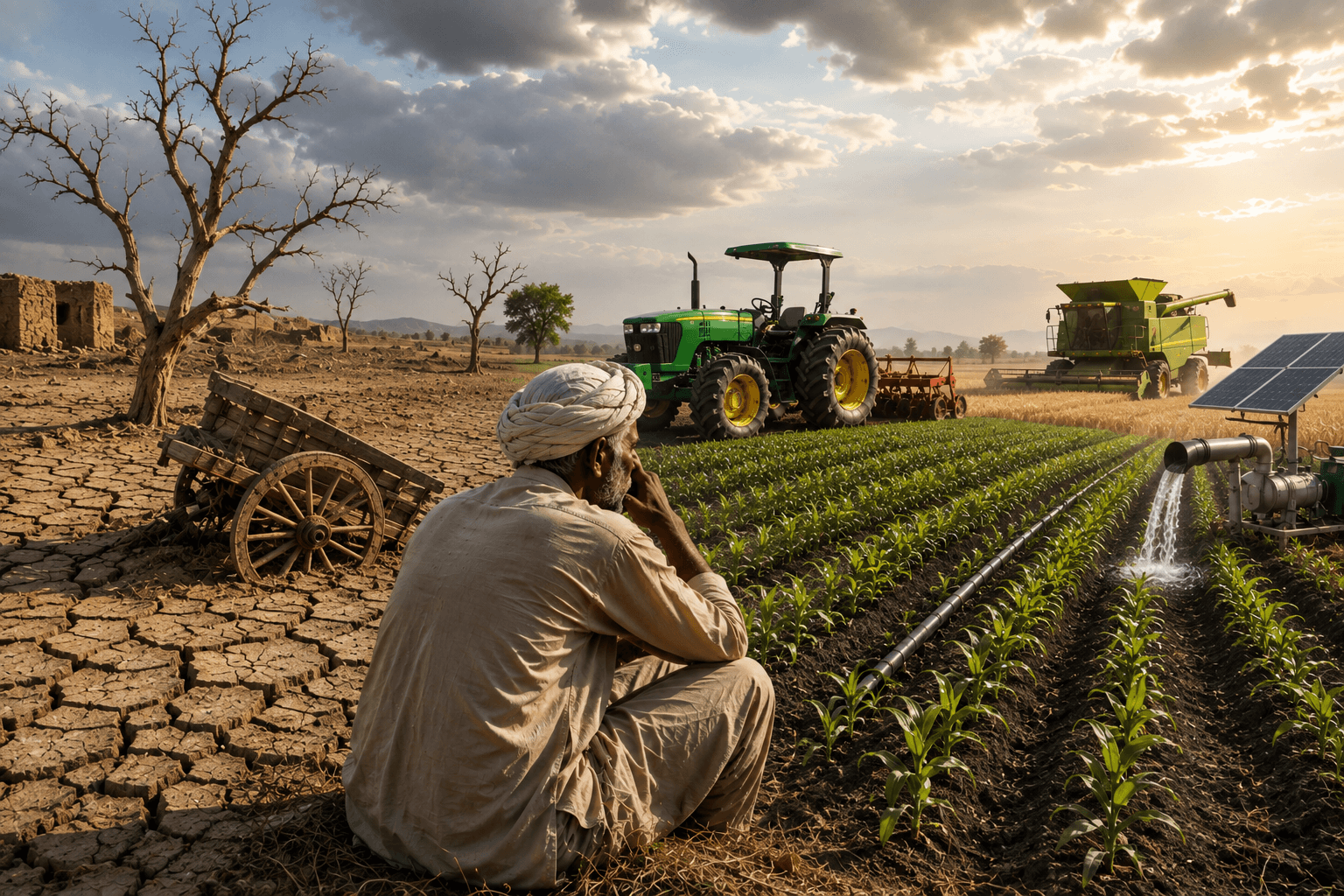
Agriculture remains one of Pakistan’s largest economic sectors, contributing approximately 22–24% of the country’s GDP and employing nearly 37–38% of the labor force. Millions of smallholder farmers depend on agriculture for their livelihood, producing wheat, rice, cotton, sugarcane, maize, fruits, and vegetables. Although agricultural machinery has transformed farming worldwide, many Pakistani farmers continue to face significant barriers to adopting modern equipment. Limited mechanization affects productivity, profitability, labor efficiency, and sustainability. Estimates put Pakistan’s overall mechanization rate at roughly 35% versus about 70% in Europe. This isn’t just a productivity issue; commentators increasingly frame it as a food-security risk.
With increasing labor shortages, climate change, rising input costs, and growing food demand, agricultural mechanization has become essential rather than optional.
This is arguably the root structural problem. Pakistan’s first digital agricultural census (2026) confirms how severe fragmentation has become: nearly six of every ten farms — about 6.55 million holdings — are smaller than 2.5 acres, yet together they occupy barely 17 percent of total farm area. At the other extreme, farms of 25 acres and above make up just 1.4 percent of all farms but control roughly 15 percent of the land. Business Recorder Business Recorder
Fragmentation isn’t only about small size — it’s about scattered plots. The census found that a fragmented farm in Balochistan is broken into 12 pieces on average, followed by Punjab at eight, Khyber Pakhtunkhwa at seven, and Sindh at four. This raises costs for farmers, wastes water and fuel moving between plots, and makes mechanized farming far harder on land that is already small. Economically, mechanizing small and non-contiguous groups of small farms works against the economies of scale needed for individual ownership of farm machinery. A combine harvester simply doesn’t make sense for a two-acre plot.
The biggest obstacle facing Pakistani farmers is the high cost of agricultural machinery. The prices of tractors, combine harvesters, laser land levelers, rotavators, planters, and precision farming equipment have increased significantly over recent years due to inflation, currency depreciation, import duties, and rising manufacturing costs. For many small-scale farmers, purchasing modern machinery requires an investment that exceeds several years of farm income. Because of these financial constraints, many producers continue using older machines that consume more fuel, require frequent repairs, and deliver lower operational efficiency. Others rely on renting equipment during peak seasons, often facing delays that can negatively affect crop yields.
Climate change is reshaping agriculture across Pakistan. Rising temperatures, irregular rainfall, prolonged droughts, floods, and shifting growing seasons make farming increasingly unpredictable. These changing conditions require machinery capable of supporting climate-smart agriculture. Precision irrigation systems, conservation tillage equipment, residue management tools, and water-efficient technologies can help farmers adapt to these challenges. However, the high cost of climate-smart machinery remains a major barrier for widespread adoption.
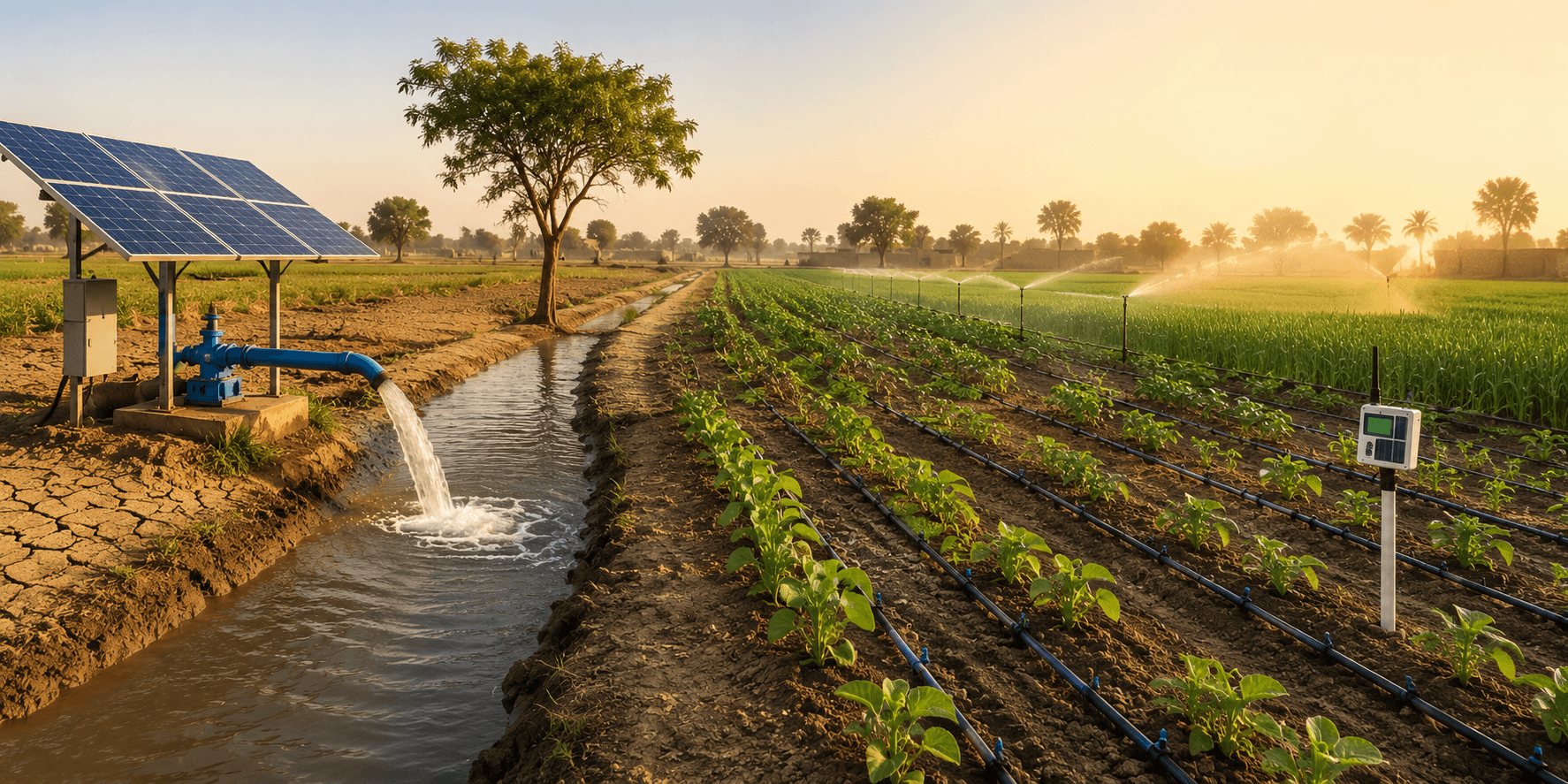
Pakistan is among the countries facing increasing water stress. Traditional flood irrigation methods waste significant amounts of water and reduce irrigation efficiency. Modern irrigation technologies such as drip irrigation, sprinkler systems, solar-powered pumps, and soil moisture monitoring equipment can dramatically improve water conservation while maintaining crop productivity. Encouraging farmers to adopt water-efficient technologies will become increasingly important as water resources continue to decline.
Pakistan imports a significant portion of its advanced agricultural machinery and replacement components. This dependence makes equipment prices vulnerable to currency fluctuations, international shipping costs, import regulations, and global supply chain disruptions. Encouraging domestic manufacturing of agricultural machinery would help reduce costs, improve spare parts availability, and create employment opportunities within the country.
Both federal and provincial governments have introduced various initiatives to encourage mechanization. These include tractor subsidy schemes, laser land leveler programs, agricultural credit facilities, farmer training workshops, and demonstration projects promoting modern farming equipment. While these programs have benefited many farmers, greater outreach, simplified application procedures, and stronger private-sector partnerships are needed to ensure that smallholder farmers can also benefit from mechanization support.
Ownership is out of reach for the majority. 86% of farmers are below roughly 12 acres, and machinery costs are steep relative to their incomes. Tractor prices now start at around Rs 2.5 million, with a popular 50-HP model like the MF 240 priced around Rs 2.4 million. Combine harvesters run into the millions more. As a result, small and subsistence farmers remain unable to afford tractors due to high upfront costs, relying instead on rental services. Amar Razzaq + 2
Financing exists but is imperfect. The manufacturers themselves note that farmers have often informal financial histories, which makes bank lending difficult. Agricultural credit is expanding — disbursement is expected to exceed Rs 3 trillion in FY2025-26 for the first time, up about 19% on the prior year — and subsidy schemes like Punjab’s Green Tractor Scheme and the Kissan Card offer help. But a persistent problem across the region is that subsidy capture by larger, better-connected farmers limits the reach of public investment to those who need it most.
Even where farmers want to buy, the supply side has been destabilized by tax policy. Pakistan’s tractor industry is well-established — tractors have been manufactured since 1964 with over 90% localization — but recent years have been brutal. The trigger was tax volatility: sales-tax rates on tractors swung from 10 percent to 5 percent, then to zero, and abruptly to 14 percent, raising tractor prices and weakening sales. The consequences have been severe. The industry recorded its worst year in two decades as sales dipped to a historic low, and a refund regulation (SRO 563) that limits refunds to verified farmer buyers, but lacks a clear verification mechanism, has resulted in billions of rupees being withheld. That cash-flow crunch forced over 250 suppliers to halt operations and put major assemblers like Millat and Al-Ghazi at risk of shutting down. When the industry contracts, fewer machines reach farmers precisely when demand is rising.
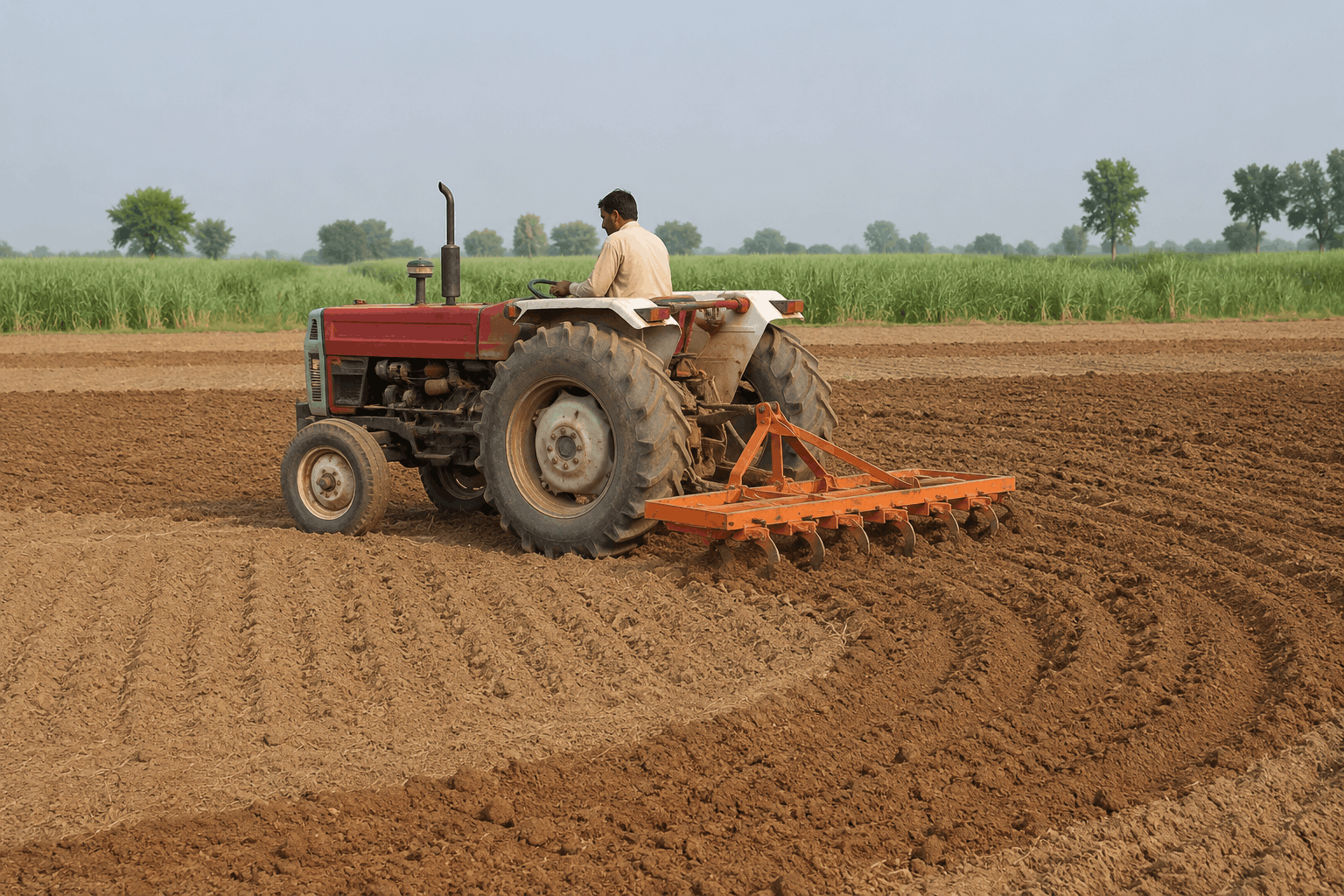
Pakistan’s mechanization is lopsided. Land preparation is nearly 100% mechanized, and cereal threshing is almost fully mechanized, supported by an active market of 20,000–30,000 threshers annually. But fundamental operations including sowing, transplanting, weeding, and harvesting remain insufficiently mechanized. For decades the concept has effectively meant “tractors and cultivators” and little else. Combine harvesters are old and mismatched: they average around 40 years old, are typically imported near the end of their lifecycle, and kept running through temporary fixes, which leads to grain losses of 10–15% in major crops like wheat and rice — equivalent to about USD 1.5 billion annually. Using the wrong tool compounds it: wheat combines are used for rice harvesting, further reducing quality and increasing losses. There are also stark regional gaps — Punjab is relatively more mechanized, while Sindh relies heavily on manual harvesting due to soil conditions unsuitable for heavy machinery.
Modern farm machinery depends primarily on diesel fuel, making fuel prices a major concern for farmers. Over recent years, repeated increases in diesel prices have significantly raised the operational costs of tractors, harvesters, irrigation pumps, and transportation vehicles. Higher fuel costs affect nearly every stage of crop production, from land preparation and planting to harvesting and transportation. As production expenses continue to rise, farmers experience shrinking profit margins despite maintaining similar crop yields. The growing interest in fuel-efficient machinery and renewable energy-powered irrigation systems reflects the need to reduce long-term operating costs.
Owning a machine is only useful if you can keep it running and operate it well. Here Pakistan struggles on several fronts. There are around 500 small and medium-scale units manufacturing farm implements, but locally manufactured machinery lacks standardization and quality, which complicates repair and interchangeability of components. When machines break, repair capacity is often unavailable locally, leading to costly delays and lost harvests — equipment can lie idle because no one in the village can diagnose an electrical fault or fuel-injection problem.
The human-capital gap is just as real. Analysts point to shortages of skilled operators and mechanics, weak repair systems, and poor suitability of machines to local conditions. Field-level issues include inefficient selection of implements mismatched to the field, poor operation and maintenance by operators, and poor-quality repairs at under-equipped local workshops. And because many farmers lack knowledge of advanced techniques and access to agricultural extension services is limited, technology adoption stays slow.
Addressing these challenges requires collaboration between farmers, government agencies, financial institutions, equipment manufacturers, and agricultural researchers. Affordable financing, local machinery manufacturing, expanded repair networks, farmer training, cooperative machinery ownership, and stronger extension services can all contribute to increased mechanization. Investing in technology alone is not enough. Farmers also need ongoing technical support, education, and access to reliable service providers to maximize the benefits of modern agricultural equipment.
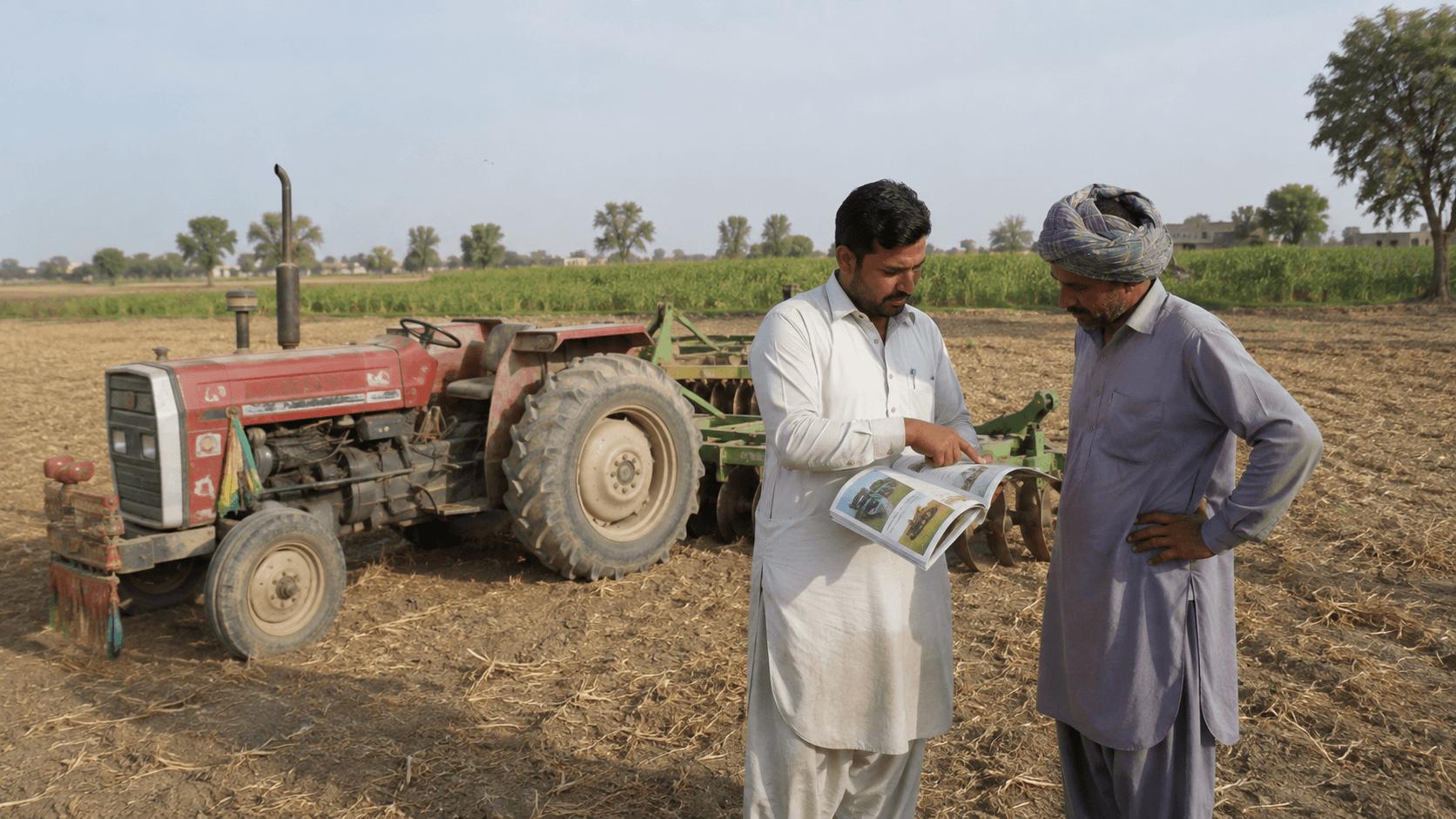
Because most can’t own, Pakistan’s mechanization increasingly runs on rentals — the census found farmers rented nearly as many cultivators as were privately owned, and for rotavators, rentals outnumbered owned units by more than two and a half to one. Rental (custom-hiring) markets are a genuine lifeline, but they have a structural flaw: everyone needs the same machine at the same moment. Crops must be planted and harvested within narrow windows to avoid yield losses, which makes access to tractors, combines, threshers and levelers absolutely critical during peak seasons. Service providers face inconsistent demand, limited scale, and peak-season shortages, so timely availability of machinery remains a persistent issue.
The mechanization gap extends past the field into handling and storage. By one Asian Development Bank estimate, Pakistan loses between 20 and 40 percent of its agricultural output post-harvest due to outdated manual methods, inefficient handling and poor storage. Crop-specific figures are lower but still heavy — roughly 15.3% for wheat, 14% for rice, and more than 14% for maize. Poor mechanization here means manual harvesting causes mechanical damage, grading is rudimentary, optical sorting is rare, and storage infrastructure is underdeveloped.
It’s not all bleak. There are real bright spots worth noting for balance. A growing ecosystem of agri-tech startups is addressing mechanization through digital machinery-hiring platforms, drone spraying services, IoT crop monitoring, and soil testing. Rising fuel and electricity costs have driven significant expansion in solar-powered tube well adoption, particularly in Punjab. And targeted public interventions have shown what’s possible — the successful promotion of laser land levelling in Punjab shows that targeted support and private-sector engagement can drive adoption. The consensus among analysts is that Pakistan’s mechanization challenge is large but not intractable, given its functioning domestic tractor industry and international development interest.
Agricultural machinery has the potential to transform farming in Pakistan, but many farmers continue to face challenges that slow its adoption. High equipment costs, fragmented landholdings, water scarcity, climate change, limited access to financing, and a lack of skilled operators all make mechanization more difficult than it should be. Overcoming these barriers will require cooperation between farmers, government institutions, equipment manufacturers, and the private sector.
As modern farming practices continue to evolve, investing in the right machinery, improving technical knowledge, and adopting smart agricultural technologies will become increasingly important. With the right support and access to reliable equipment, Pakistani farmers can improve productivity, reduce production costs, use natural resources more efficiently, and build a more sustainable future for agriculture. Farm Dynamics Pakistan is committed to helping farmers make informed decisions by providing modern agricultural solutions that support long-term growth and farm success.