7-J1, Main Canal Bank, Johar Town, Lahore.
  Info@farmdynamics.pk
7-J1, Main Canal Bank, Johar Town, Lahore. Info@farmdynamics.pk


 June 11, 2026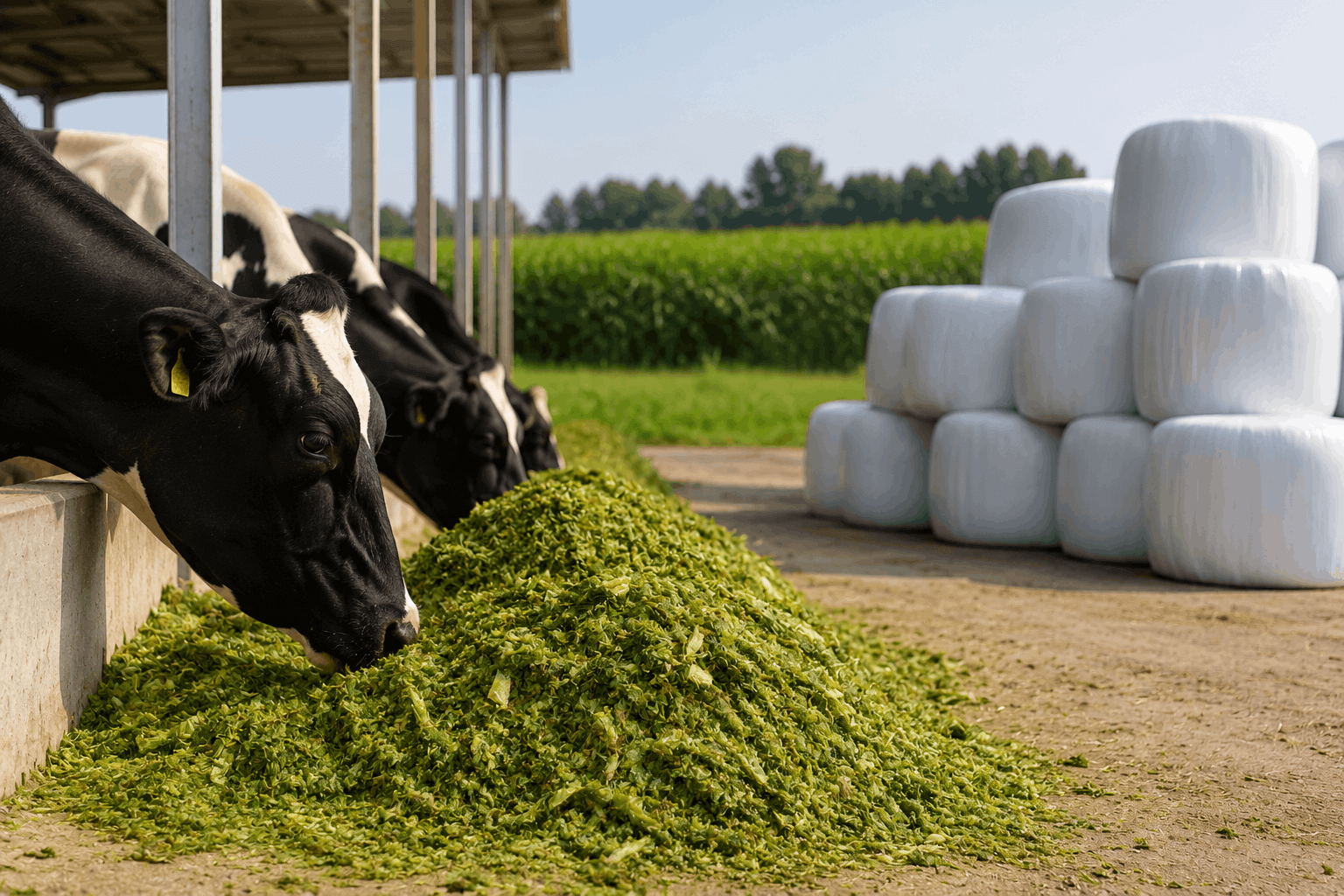
If you ask livestock farmers about their biggest expense, most will give the same answer: feed. In cattle farming in Pakistan, feed can account for more than half of a farm’s total operating costs. When fodder prices increase, profits quickly become smaller. That’s why successful farmers pay close attention to feed management, not just milk production or herd size.
Many farmers in cow farming Pakistan operations spend unnecessary money buying fodder year-round instead of producing and storing it efficiently.
The good news is that reducing feed costs doesn’t mean feeding animals less. It means planning better. With proper fodder planning, silage making, efficient irrigation, and the right equipment, farms can significantly lower feed expenses without affecting animal performance. This is where Farm Dynamics Pakistan helps farmers improve feed management and build more profitable livestock operations.
One of the easiest ways to lower feed costs is to grow quality fodder throughout the year instead of depending on expensive market purchases. A proper fodder plan helps farmers maintain a steady supply of feed during every season. Instead of facing shortages, they can harvest different fodder crops at different times of the year. This approach offers several benefits:
For many farms involved in dairy farming in Pakistan, better fodder planning has become one of the most effective ways to improve profitability.
Let’s be honest. Every farmer has experienced periods when green fodder becomes difficult to find. This is where silage changes the game. Silage allows farmers to preserve green fodder when it is abundant and use it later when fresh fodder becomes limited. Instead of rushing to buy expensive feed during shortages, farmers already have quality feed stored and ready to use. Animals receive consistent nutrition, and feed costs remain under control. Even better, silage helps reduce wastage. Rather than losing valuable fodder in the field, farmers can store it properly and use it year-round.
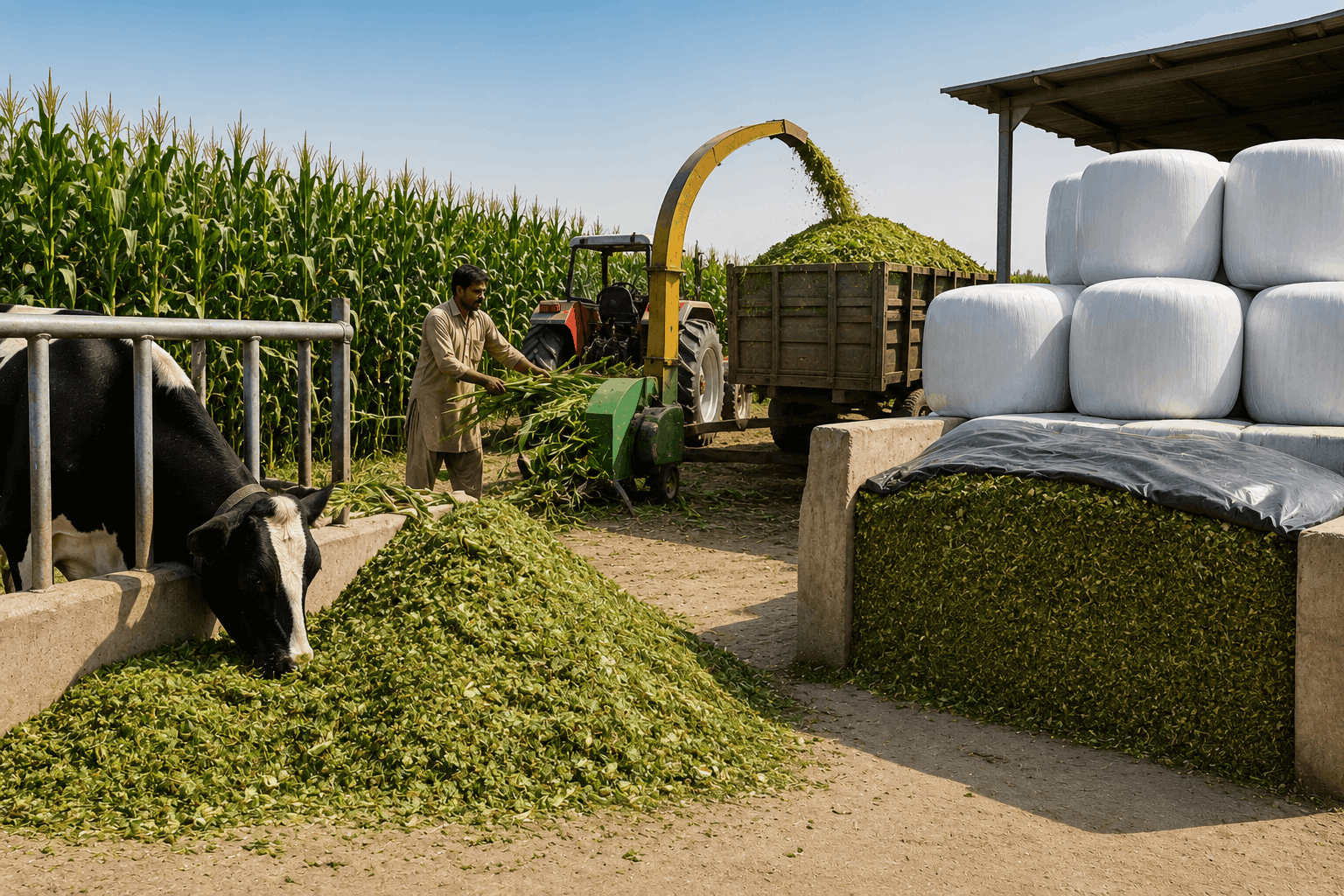
As cattle farming in Pakistan grows, especially cow farming, handling fodder manually becomes difficult and time-consuming.That’s why many commercial farmers invest in baling equipment. Baled fodder is easier to transport, stack, store, and manage. It takes up less space and helps reduce losses caused by poor storage practices. Many farmers searching for the silage baler machine price in Pakistan initially focus only on the purchase cost. But the bigger picture is the long-term savings.
A quality baler can help reduce labor costs, minimize fodder wastage, improve storage efficiency, and support large-scale silage production. Over time, these savings can make a significant difference to overall farm profitability. To help farmers improve feed management, Farm Dynamics Pakistan provides modern silage and fodder solutions that support efficient storage, handling, and year-round feed availability.
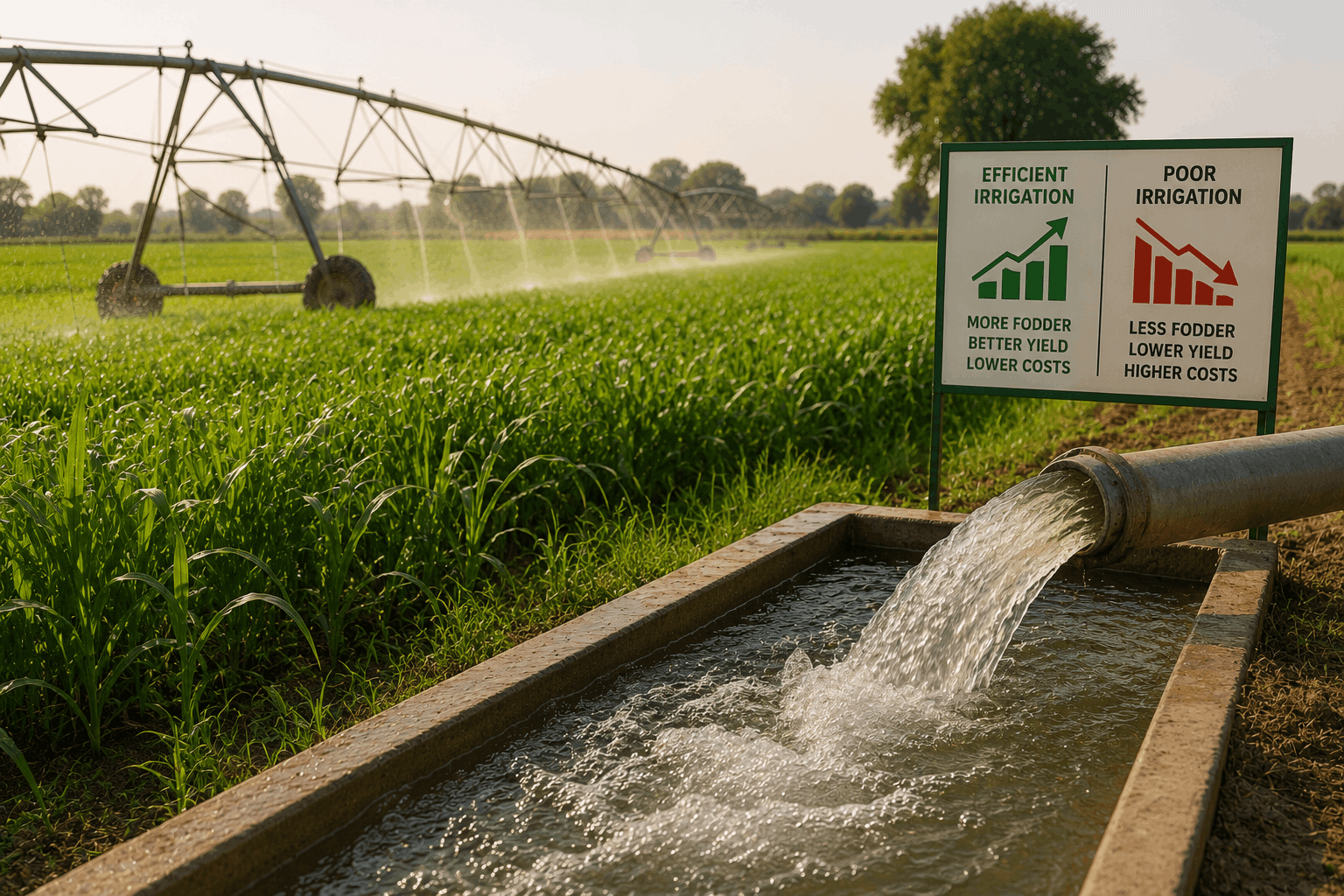
Feed costs don’t start at feeding time. They start in the field. Poor irrigation often leads to lower fodder yields. When fodder production drops, farmers usually compensate by purchasing expensive feed from the market. Efficient irrigation helps produce healthier fodder crops and better yields per acre. More fodder from the same land means lower feeding costs per animal. Simple improvements in irrigation management can often generate noticeable savings over an entire season.
You’d be surprised how much feed gets wasted every day on many farms. Feed falls on the ground. Animals trample it. Poor storage damages it. Rain ruins it. Small losses may not seem important at first, but they add up quickly over months and years. Simple practices such as proper feed storage, organized feeding areas, and controlled feed distribution can significantly reduce waste. When less feed gets wasted, more money stays in the business.
The most successful farmers don’t look at feed as just another expense. They look at it as something that directly affects the farm’s income. When animals get quality feed, they stay healthier, produce more milk, and perform better overall. That’s why every rupee spent on feed should deliver value in return. This way of thinking helps farmers make smarter choices about fodder production, silage making, irrigation, and farm equipment. Instead of reacting to problems, they prepare for them. In fact, some of the most profitable farms in cattle farming in Pakistan aren’t the biggest ones. They’re the farms that manage their resources carefully and avoid unnecessary costs.
These same feed management practices are also important for farmers involved in cow farming Pakistan, where better feeding control can support healthier animals and improved farm productivity.
Feed will always be one of the biggest expenses on a livestock farm, especially for cow farming Pakistan operations.. But with the right planning, it doesn’t have to eat into your profits. Growing quality fodder, making silage, improving irrigation, and reducing feed waste can all help lower costs over time. These may seem like small steps, but together they can make a huge difference to a farm’s bottom line. Ultimately, cutting back on animal expenses is not the key to profitable farming. It’s about making the best use of your resources and maximizing the value of each acre, bale, and kilogram of feed.
That’s exactly why more farmers are turning to Farm Dynamics Pakistan‘s practical solutions. With better fodder management, modern equipment, and smarter planning, livestock farms can control feed costs and build a stronger future for their cattle farming business.
You can reduce feed costs by improving fodder planning, making silage, reducing feed waste, and using efficient irrigation methods. Good-quality feed helps maintain milk production while keeping expenses under control.
Silage helps farmers store green fodder for future use. It provides a reliable feed supply during fodder shortages and reduces the need to buy expensive feed from the market.
A good baler reduces labor costs and fodder losses and improves feed storage, even as many Pakistani farmers compare silage baler prices before buying.
Proper irrigation boosts fodder yield and quality. Growing more fodder reduces farmers’ feed purchases, lowering overall costs.
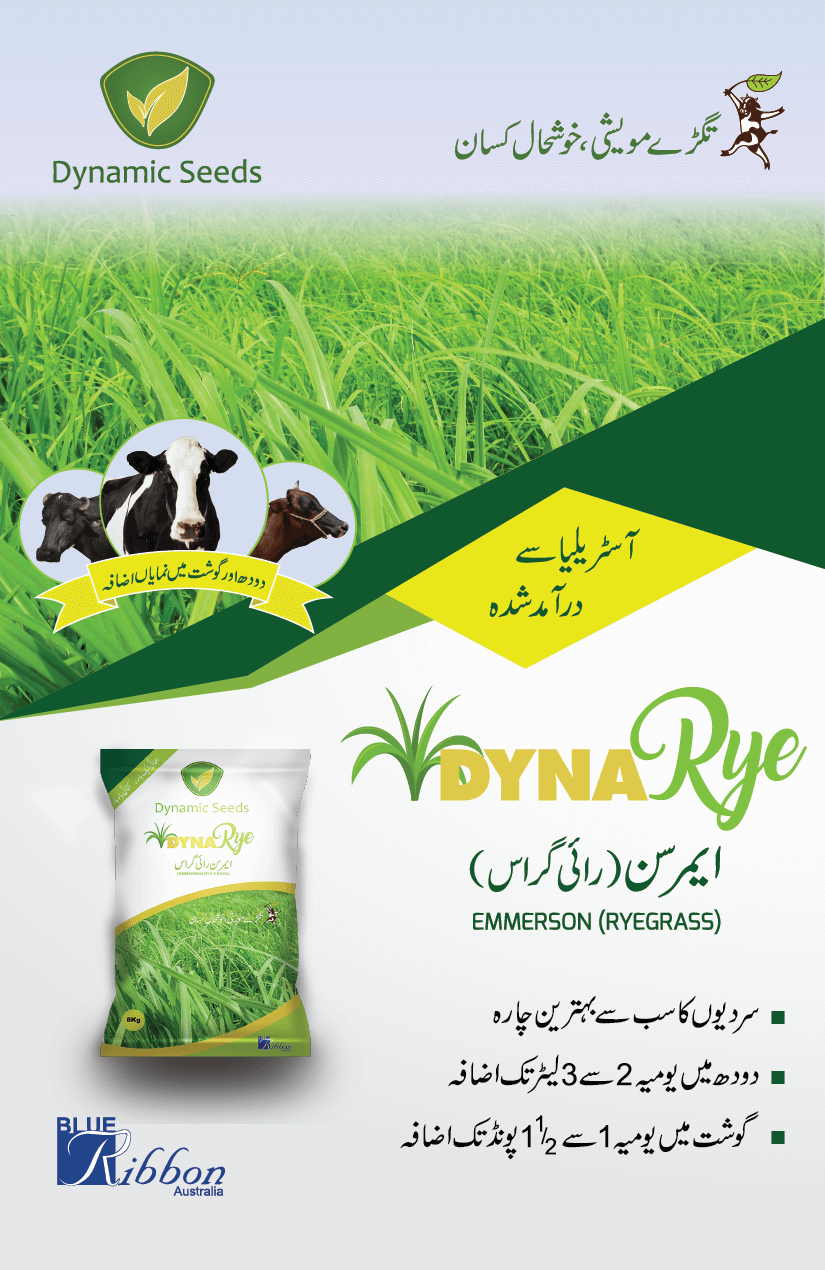
Dairy and livestock farming in Pakistan play a major role in food production, rural employment, and the agricultural economy. This blog explains the importance of cattle farming, essential farm equipment, livestock care, fodder planning, and how quality seeds like Rhodes Grass and Rye Grass can support better milk and meat production.