7-J1, Main Canal Bank, Johar Town, Lahore.
  Info@farmdynamics.pk
7-J1, Main Canal Bank, Johar Town, Lahore. Info@farmdynamics.pk


 July 7, 2026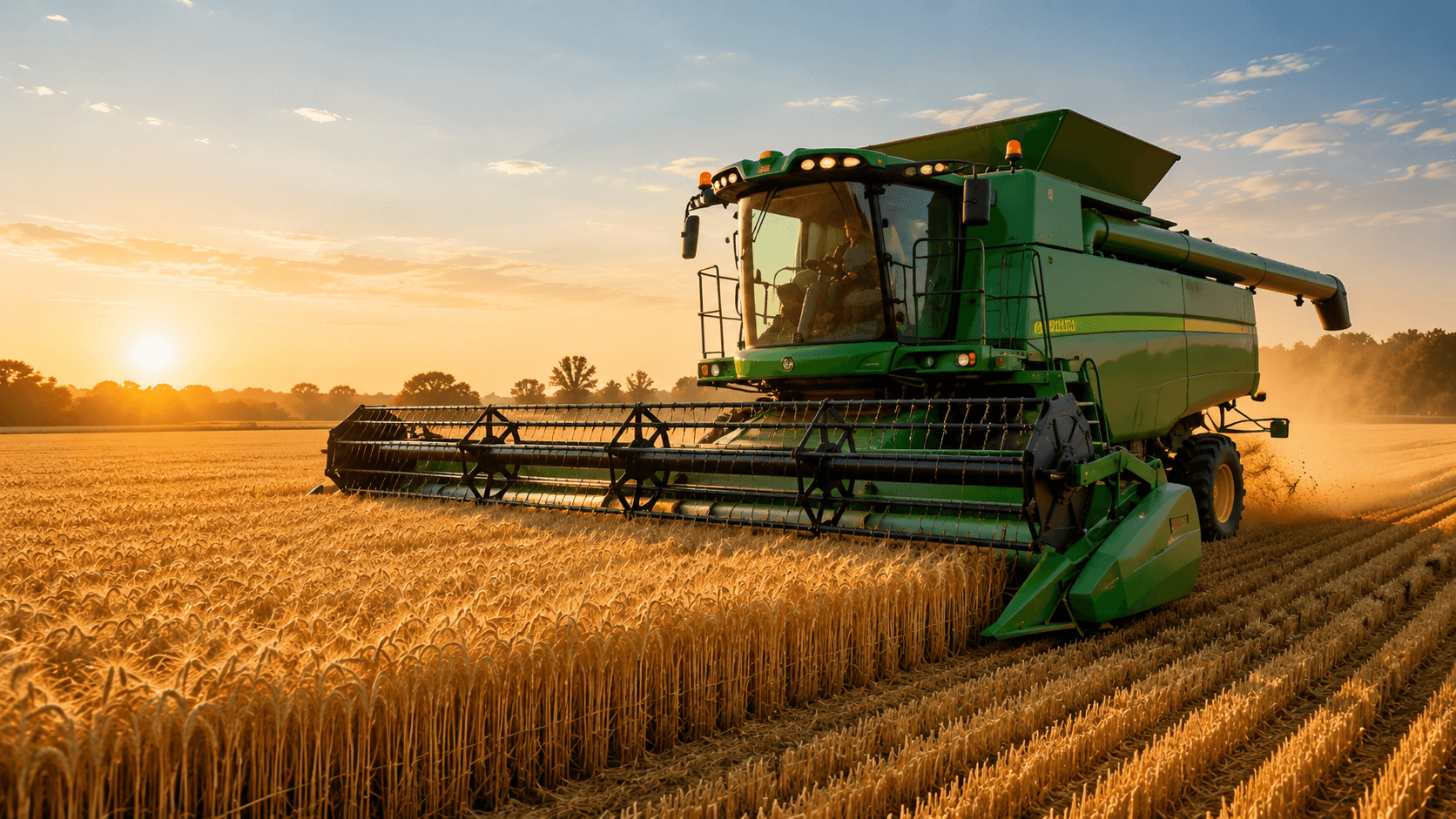
Every farmer has felt this. The crop looks great in the field. Then it goes through the combine harvester. Something goes wrong. Some grains are cracked. Some are lost in the straw. The yield is lower than you hoped. Most of the time, the crop is not the problem. The problem is the combine harvester settings. Good settings mean a clean harvest. Bad settings mean waste. This guide will show you the simple adjustments that matter most. We will also look at how this connects to farming here in Pakistan.
A harvester machine does three jobs. It cuts the crop. It threshes the crop. It separates the grain from the plant. If one part is off, you lose grain. Or you damage the grain. Both hurt your profit. Crop conditions change all the time. They change from field to field. They even change from morning to evening. So you cannot set the machine once and forget it. Moisture, crop type, and ground conditions all matter. You need to check and adjust often.
Many farmers think a machine problem means a broken part. But often, it is just the wrong setting. Learning to read your grain sample is a skill. Once you know what to look for, you can fix small problems fast, right in the field.
Every field is different. The crop changes from one farm to another, and even from morning to evening. That is why one machine setting does not work all day. Before you start harvesting, spend a few minutes checking your combine harvester. Small changes can help you collect cleaner grain, reduce waste, and save money.
The cylinder helps separate grain from the crop. If it spins too fast, the grain can break. If it spins too slowly, some grain stays in the straw instead of going into the tank. The best way to check is to stop the machine after harvesting a short distance. Look at the grain in the tank and the straw behind the combine. If you see broken grain, slow the cylinder down. If you find whole grain heads in the straw, increase the speed a little.
The concave works with the cylinder to remove grain from the crop. Both settings should work together. If the gap is too small, the grain may get crushed. If the gap is too wide, some grain will not separate properly. Make only small changes and check the grain each time. This helps you find the right setting without wasting grain.
The cleaning fan blows away light material like chaff and small pieces of straw. It should be strong enough to clean the grain but not so strong that it blows grain out of the machine. Keep checking the grain during the day. Crops are usually wetter in the morning and drier in the afternoon. You may need to change the fan speed as field conditions change.
The sieves help clean the grain before it reaches the grain tank. If they are not set correctly, the grain may not be as clean as it should be. If you see too much chaff in the grain tank, adjust the sieves a little. If good grain is coming out with the straw, check the openings again. Small adjustments usually give the best results.
The front of the combine harvester is where harvesting begins. If the header is too high, it can leave grain behind in the field. If you drive too fast, the machine may not have enough time to thresh and clean the crop properly. Walk through the field before you start. If the crop is lying down or uneven, lower the header and slow the machine a little. It may take a few extra minutes, but you will collect more grain and reduce waste.
Many farmers stick to the same settings throughout the season. However, weather and crop conditions can vary, and that is a mistake. Others rush the harvest by speeding up the machine, without making any other adjustments. This leads to more waste. It also raises fuel and repair costs. Another common mistake is ignoring small warning signs. A little grain loss behind the machine may seem small. But over a full field, it adds up to a real loss in income. Checking often is the only way to catch this early.
Take a few minutes each day to check your settings. Do this again if the weather changes. It is a small step, but it saves a lot in the long run.
Farming in Pakistan has its own challenges. The irrigation system of Pakistan is not the same everywhere. Some fields use canals. Some use tube wells. This means crop moisture can differ, even in the same area. So harvester settings become even more important. A setting that works in one field may not work in the next. This is why the right agricultural machinery matters so much. A good, well-kept combine harvester gives you more control. It lets you fine-tune settings easily. An old or poorly built machine makes this much harder.
Local dealers and service teams also matter a lot. Good support means faster repairs and better advice during harvest season. This is often more important than the price alone. Planning to buy a harvester machine? Or thinking of an upgrade? Talk to a trusted supplier first. Farm Dynamics Pakistan is known for quality agricultural machinery built for local conditions. They can also guide you on the right settings for your harvest.
Even the best settings will not help if the machine is not well-maintained. Here are a few simple habits that keep your combine harvester working right. Before each harvest season, inspect belts and chains. Worn-out or loose parts may cause your settings to change without you realizing it. Clean the concave the concave the concave the concave the concave. Grain flow can be altered by accumulated dust and debris. Monitor both ground speed and tire pressure simultaneously. Cutting height can be impacted by the header sitting unevenly due to uneven tire pressure. Little problems like this are frequently attributed to “bad settings” when basic maintenance is the true cause.
Getting the right settings on your combine harvester isn’t just about small details—it’s about making sure as much of your crop as possible makes it to market in the best condition. Taking the time to learn about your cylinder speed, concave clearance, airflow, and sieve settings can really make a difference. It helps reduce waste and boosts your grain quality, giving you a more successful harvest. Additionally, little habits have a big impact. Check your computer every day. Observe the samples of your grain. Change the settings according to the crop and weather. These small actions add up to significant savings over the course of a season.
Do you need assistance selecting the best harvester or farm equipment? Get in contact with Farm Dynamics Pakistan; our team can help you pick the right machine and the right settings for every harvest.
It cuts the crop. It threshes it. It cleans the grain. All three steps happen in one machine. This saves farmers a lot of time.
The harvester price in Pakistan changes with brand, model, and features. Header size and tank size matter too. Ask a trusted supplier for exact prices.
Prices in 2026 will be influenced by import costs and currency fluctuations. Keep in mind that prices may change throughout the year. It’s a good idea to check with your current supplier for the most up-to-date prices.
With good care, it can last 10 to 15 years. This depends on how much it is used. It also depends on how well it is serviced. Regular checks help it last longer.
Yes, it helps a lot. It saves time and labor. It also reduces grain loss. For big farms, it is one of the best tools to own.
Corn needs a wider concave clearance and a medium cylinder speed. Since the kernels are large, they crack easily, so adjusting the fan speed is essential to remove husks without losing kernels. Regularly check grain samples during harvest.