7-J1, Main Canal Bank, Johar Town, Lahore.
  Info@farmdynamics.pk
7-J1, Main Canal Bank, Johar Town, Lahore. Info@farmdynamics.pk


 September 2, 2026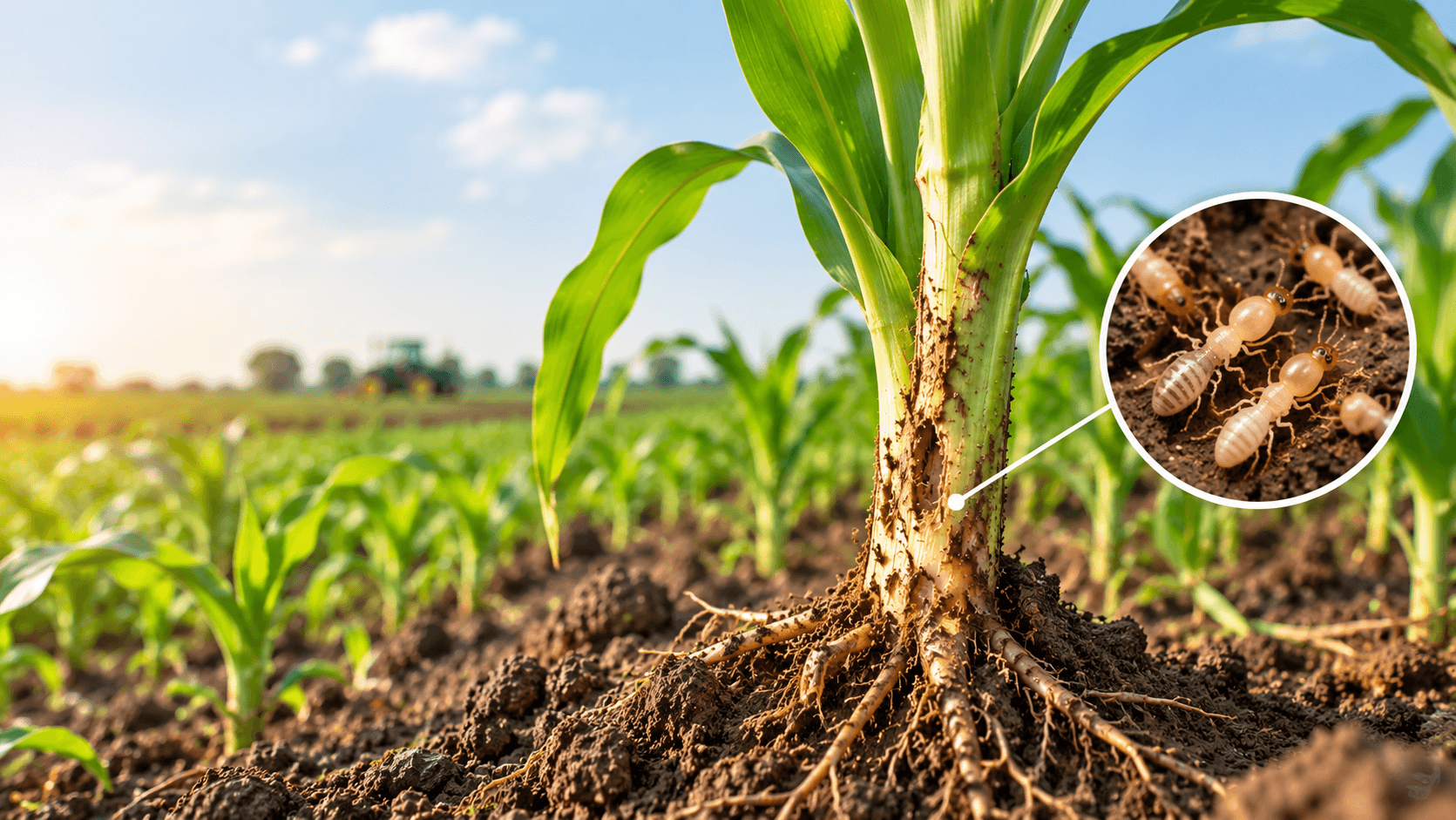
Termites are commonly associated with wooden structures, but they can also become an agricultural pest. In farming areas, certain termite species may attack seeds, roots, lower stems, seedlings, or weakened plants. Because most termite activity takes place below the soil surface, damage can remain unnoticed until plants begin to wilt, dry out, or develop uneven growth. For farmers, effective termite treatment should begin with proper identification. Finding a few termites in crop residue does not automatically mean that a field requires pesticide treatment. Termites also help break down dead organic matter. The problem starts when active colonies begin damaging living crops and reducing plant establishment or yield. The most effective approach is therefore a combination of field monitoring, residue management, healthy crop establishment, irrigation management, and targeted control when necessary.
Termites normally feed on cellulose-rich material such as dead roots, plant residues, wood, and decomposing vegetation. Under certain field conditions, however, they may also attack living plants. Damage commonly begins underground. Termites may feed on newly planted seed, young roots, or the lower portion of a stem. A plant can appear normal above ground while its root system is gradually being damaged. Young plants are often more vulnerable because they have smaller root systems and limited ability to recover from feeding injury. In established crops, termite pressure may become more noticeable when plants are already stressed by drought, poor soil conditions, or inadequate irrigation. Termite activity can also be concentrated rather than evenly distributed. Farmers may find healthy plants in most of the field but notice several weak or dying patches where colonies are active.
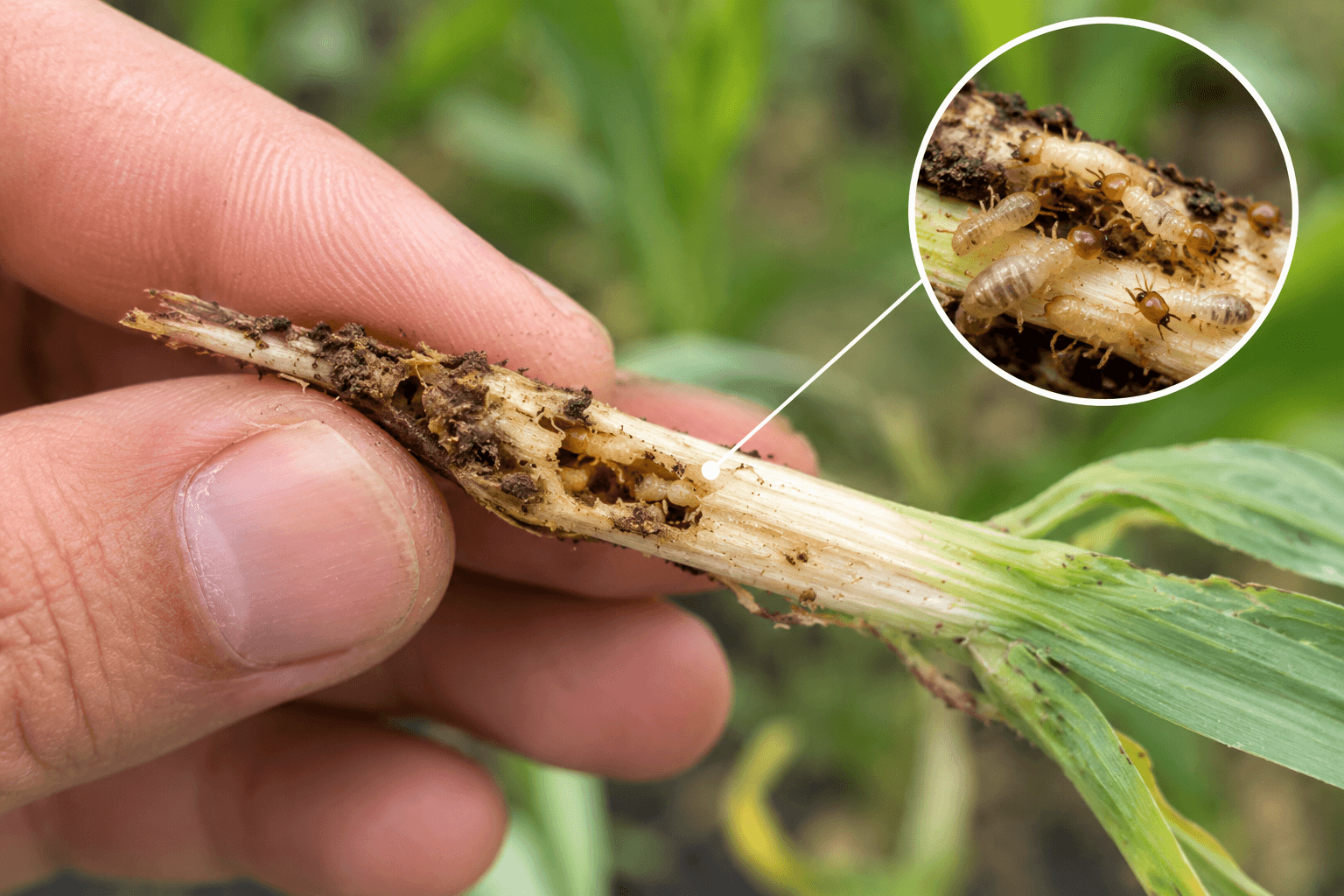
Farmers should look at the whole plant and the surrounding soil rather than relying on one symptom. Possible warning signs include:
These symptoms can also be caused by diseases, drought stress, nutrient deficiencies, root-feeding insects, or soil problems. A farmer should therefore confirm termite activity before applying treatment.
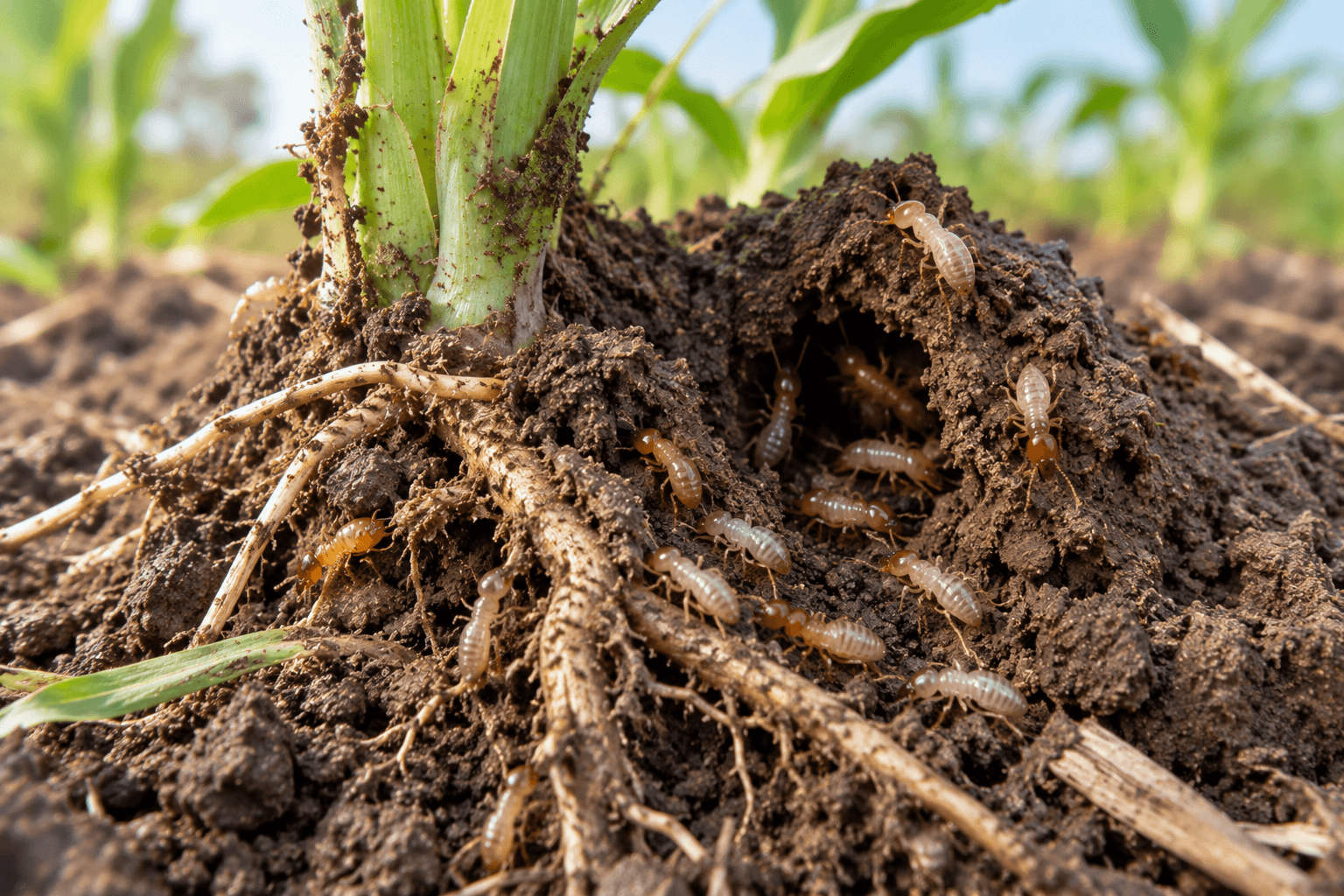
Termites are not limited to one crop. Their importance varies according to region, species, soil conditions, crop stage, and field management. They can occasionally cause problems in cereal crops, sugarcane, pulses, oilseeds, vegetables, orchards, plantations, and fodder fields. Young plants and newly established stands deserve particular attention because early root or stem damage can reduce the final crop population. Fodder-producing farms should also monitor new stands carefully. Crops such as rhodes grass, alfalfa grown from alfalfa seeds, and berseem seed plantings depend heavily on successful establishment. If plants are repeatedly disappearing or weakening in specific patches, farmers should inspect the root zone before assuming that irrigation or seed quality is responsible. Termite management can therefore also matter in cattle farming and dairy operations where reliable fodder production is essential.
There is no single reason why termites become damaging. Usually, several field conditions interact. Dry or stressed crops can be less able to tolerate root damage. Large amounts of old wood, tree roots, poorly distributed residue, or other cellulose-rich material may also provide termites with food and shelter. Fields that have remained under the same management system for many seasons can sometimes develop persistent pest pockets, particularly around old trees, field boundaries, storage areas, irrigation channels, or unmanaged residue piles. Crop stress is another important factor. Problems with irrigation, soil compaction, nutrient availability, or crop establishment can weaken plants and make termite feeding more damaging than it would be in a vigorous crop.
A farmer should not begin termite control by selecting an insecticide. The first step is to understand where the problem is occurring. Walk through the affected area and compare healthy and damaged plants. Remove a few weak plants carefully and inspect the roots and lower stem. Then examine the surrounding soil for termites, tunnels, or feeding damage. It is also useful to record where the problem appears.
| Field Observation | What It May Suggest |
|---|---|
| Damage mainly around old roots or wood | A local termite colony may be nearby |
| Seedlings disappearing soon after emergence | Possible seed or root-zone feeding |
| Weak plants only in dry patches | Water stress may be increasing susceptibility |
| Root damage with visible termites | Active infestation requires closer attention |
| No termites around damaged roots | Investigate diseases, irrigation, nutrients, or other pests |
This type of inspection can prevent unnecessary pesticide applications and help farmers select a more appropriate management strategy.
Crop residues are valuable and should not automatically be removed from farmland. They can improve soil organic matter, protect the surface, and contribute nutrients as they decompose. The problem occurs when residues, dead wood, old tree roots, or plant material remain concentrated in places where termite colonies can establish close to growing crops. Good residue management means spreading, chopping, incorporating, composting, or otherwise managing material according to the farming system rather than simply leaving large piles in the field. Modern agricultural machinery can help with this process. Cultivators, disc harrows, shredders, and other agriculture equipment can distribute or incorporate residues more consistently after harvesting. Where a combine harvester is used, farmers should also pay attention to how evenly straw and crop residue are distributed behind the machine. Good residue handling supports both field preparation and pest management.
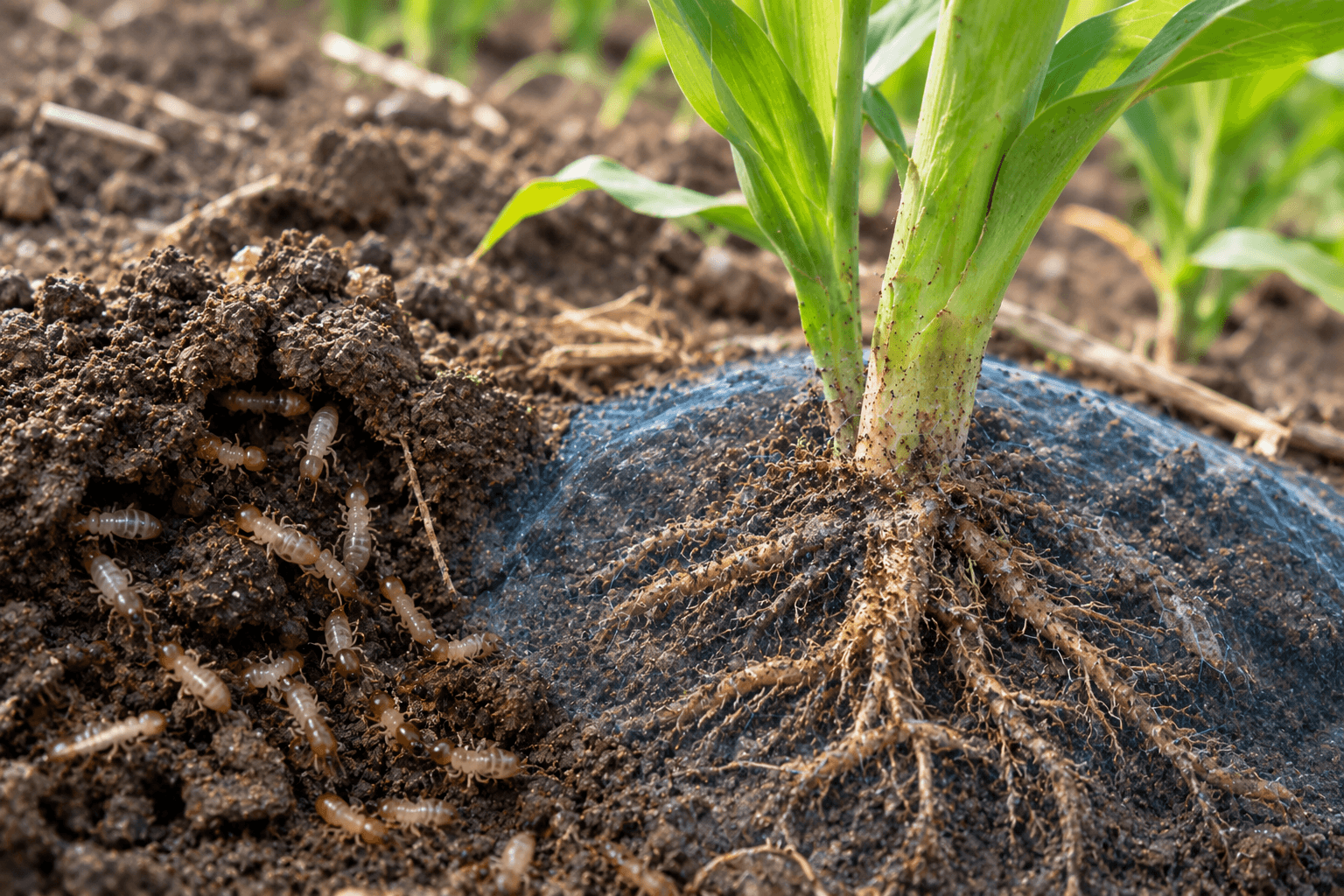
Water management is an important part of overall crop health. A crop suffering from severe moisture stress has less capacity to recover from root or stem injury. Maintaining suitable soil moisture can therefore reduce the impact of several crop stresses, including pest damage. Farmers using drip irrigation have greater control over water placement around the root zone, provided the system is correctly designed and managed. Other types of irrigation systems can also support healthy crop establishment when water is distributed evenly. However, irrigation should not be presented as a direct termite treatment. Its role is mainly to maintain crop health and reduce severe moisture stress. Farmers should base irrigation frequency on:
Excess irrigation is not a solution either, as waterlogging can create completely different crop and root problems.
Crop rotation is another useful preventive measure. Growing the same crop continuously can allow certain pest and disease problems to persist. Rotating between cereals, fodders, legumes, or other suitable crops can alter the food sources and field conditions available to pests. For mixed agriculture farming systems, crop rotation can also contribute to better soil structure, nutrient management, and fodder planning. Rotation should not be viewed as a guaranteed termite treatment, but it is a useful component of a broader integrated pest-management strategy.
The establishment stage is particularly important in fields with a known history of termite damage. Farmers should use healthy seed, prepare the seedbed properly, and avoid planting directly into areas containing unnecessary woody material or large concentrations of poorly decomposed residue. Where an approved seed treatment is recommended for a specific crop and termite problem, it may help protect seedlings during their vulnerable early growth stage. Farmers should always follow the registered product label and local agricultural recommendations. More pesticide does not mean better protection. Correct application rate, timing, crop registration, and personal protection requirements are essential.
Chemical treatment may become appropriate when field inspection confirms active termite feeding that is causing economically important crop damage. The type of treatment will depend on the crop and local recommendations. Depending on what is legally registered for the crop, options may include seed treatment, targeted soil treatment, localized applications, or other approved approaches. A useful principle is:
Treat the confirmed problem, not the entire farm automatically.
If termite damage is restricted to several small patches, localized treatment may sometimes be more appropriate than treating the whole field. Before using an insecticide, farmers should confirm:
Pesticide registrations and recommendations can change, so farmers should verify current guidance from local agricultural authorities or a qualified crop-protection professional.
Farmers often look for one product that will permanently solve a termite problem, but long-term control usually works better when several management practices are used together. A practical approach starts with regular field monitoring and correct diagnosis, followed by better residue management, suitable irrigation, crop rotation, targeted treatment where required, and continued follow-up after treatment. This approach is more effective than repeatedly applying the same insecticide without understanding why termite activity is returning. Integrated termite management can also reduce unnecessary chemical use, lower treatment costs, and support a healthier soil environment while giving farmers better control over recurring infestations.
Termite damage can have an indirect effect on livestock businesses when fodder crops are affected. A dairy farm or cattle operation may depend on a consistent supply of berseem, alfalfa, maize fodder, rhodes grass, or other forage. Poor crop establishment can reduce available feed and increase the cost of replacing lost production. Farmers involved in dairy farming in Pakistan should therefore treat pest monitoring as part of fodder management rather than waiting until large areas of crop have already been damaged. Regular field walks are particularly useful during establishment. Weak patches should be inspected early so that farmers can distinguish termite problems from irrigation failure, nutrient deficiencies, seed germination problems, or other causes.
Machinery does not replace pest control, but it can improve the conditions in which crops grow. Proper land preparation can create a more uniform seedbed. Residue-management equipment can distribute plant material more evenly. Accurate planting can improve crop establishment, while well-managed irrigation can reduce severe crop stress. This is where the broader use of agriculture machinery in Pakistan becomes relevant. Machinery should be selected as part of an overall production system rather than considered separately from soil management, irrigation, crop establishment, and pest management. For larger farms, better mechanization can also make field operations more timely, which is especially important when residues need to be managed quickly between one crop and the next.
Termite control should continue with regular field monitoring after any treatment is applied. Revisit the affected areas over the following days and weeks to check whether plant damage has stopped, new plants are wilting, or termite activity is appearing in nearby sections of the field. Pay particular attention to the root zone, lower stems, and areas where damage was previously concentrated. Farmers should also compare treated areas with healthy parts of the field. This makes it easier to see whether the crop is recovering and whether the treatment is providing acceptable control. If fresh damage continues, the problem may require further inspection rather than simply repeating the same treatment. Over time, these records can reveal recurring problem areas, show which management methods worked best, and help farmers plan preventive measures before the next crop is planted.
One of the biggest mistakes is treating every termite as a crop pest. Termites naturally occur in agricultural environments and can contribute to decomposition. Control becomes necessary when they are actively damaging the crop. Another mistake is using pesticide without diagnosing the actual cause of weak plants. Root diseases, water stress, nutrient deficiencies, and other insects can produce similar symptoms. Farmers should also avoid repeatedly applying the same treatment without changing field management. If poor residue handling, crop stress, or another underlying condition is contributing to the problem, termites may return. The aim should be to reduce damaging populations while keeping the crop healthy, not simply to eliminate every termite present in the soil.
Agricultural conditions vary considerably across Pakistan, so termite problems should not be treated with a one-size-fits-all approach. Irrigated farms, rain-fed areas, sandy soils, heavier soils, orchards, and livestock-based farms can all experience different levels of termite activity. Local temperature, soil moisture, crop type, residue levels, and previous pest history can influence how serious the problem becomes. Before selecting a termite treatment, farmers should look at the crop stage, severity of damage, irrigation method, soil condition, and whether the infestation is limited to a few patches or spread across a larger area. Young crops and newly established fields may need quicker attention because root or stem damage at an early stage can reduce plant population and affect final yield.
Field management should also be part of the decision. Uneven irrigation, poorly managed crop residues, old roots, or stressed plants can create conditions where termite damage becomes more noticeable. In these cases, treatment may work better when combined with better residue handling, improved irrigation, and regular field inspection rather than relying only on chemicals.
Where damage is severe, recurring, or difficult to identify, farmers should seek advice from a qualified agricultural or crop-protection professional. Proper diagnosis helps confirm whether termites are actually responsible and can prevent unnecessary pesticide use, extra cost, and avoidable crop losses.
Termites do not damage every agricultural field, but they can become an important crop pest when colonies begin attacking seeds, roots, stems, or young plants. Farmers should therefore respond to confirmed crop damage rather than simply to the presence of termites. Good termite management starts with field inspection and continues through residue management, suitable irrigation, crop rotation, strong crop establishment, and targeted treatment where required. Regular monitoring after treatment is equally important because it shows whether the management approach is actually working. Farm Dynamics Pakistan (FDP) supports modern farming through agricultural machinery, irrigation technologies, field-management equipment, and practical solutions for commercial agriculture. Farmers improving land preparation, residue handling, irrigation, or crop-production systems can consider these technologies as part of a broader strategy for healthier and more productive fields.
Yes. Some termite species can damage seeds, roots, lower stems, seedlings, and other plant tissues. The risk is often greater when plants are young, stressed, or growing in fields with active termite colonies.
Common signs include wilting plants, weak or missing seedlings, damaged roots, hollow lower stems, mud-like soil tunnels, and termites around the root zone. Since similar symptoms can come from diseases or water stress, farmers should confirm the cause before treatment.
Termites can affect cereals, sugarcane, fodder crops, pulses, oilseeds, vegetables, orchards, and other crops. The level of damage depends on crop type, termite species, soil condition, moisture, and field management.
No. Chemical treatment is not always required. Farmers should first confirm active crop damage and consider field sanitation, residue management, irrigation, crop rotation, and other preventive measures. Chemicals should be used when damage is significant and the product is approved for the crop.
Crop residues can provide food for termites, especially when dead wood, old roots, or large piles of organic material remain concentrated in one area. Proper residue management is usually better than removing all residues, because crop residues can also benefit soil health.
Irrigation is not a direct termite treatment, but maintaining suitable soil moisture can reduce crop stress and help plants remain healthier. Uneven or poorly managed irrigation can make some parts of the field more vulnerable to pest damage.
Not always. If termite damage is limited to a few areas, targeted treatment may be more appropriate. The decision should depend on the severity and spread of the infestation, crop stage, and local agricultural recommendations.
Regular field monitoring, proper residue management, crop rotation, healthy crop establishment, balanced irrigation, and timely treatment of confirmed infestations can reduce the risk of repeated termite damage. Keeping simple field records can also help identify recurring problem areas.